04.09.2026 10:31
In Nepal's Rasuwa district, 2 workers trapped in a hydroelectric tunnel after flooding were rescued after 9 days. While it is estimated that 115 workers were trapped in the tunnel, 1,254 people died in the floods, and more than 4,000 people are missing.
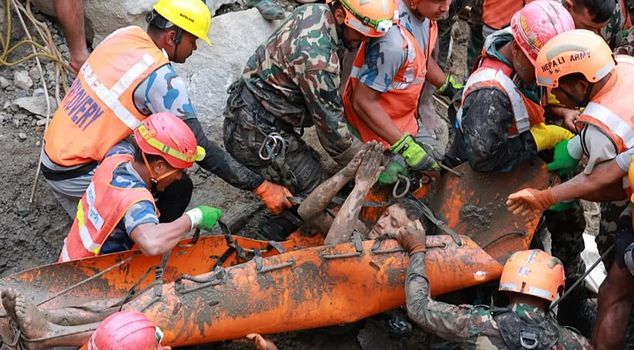
Two workers trapped in a hydroelectric tunnel in Nepal's flood-hit Rasuwa district since August 26 were rescued alive after 9 days. The workers, who were taken to hospital for observation, are among an estimated 115 people believed to be trapped in the tunnel.
Good news came from search and rescue efforts following the massive flood disaster in Nepal's Rasuwa district near the Chinese border.
Nepali lawmaker Shri Ram Neupane announced that 2 workers, trapped for 9 days in a hydroelectric tunnel in the flood-hit area, were rescued alive.
THEY HAD BEEN IN THE TUNNEL SINCE AUGUST 26
According to information provided by Neupane, the 2 workers had been trapped in the tunnel since August 26 when the flood occurred. The workers, reached as a result of search and rescue teams' efforts, were removed from the tunnel.
Local media reported that the rescued workers were taken to the hospital for health checks and kept under observation.
AN ESTIMATED 115 WORKERS ARE TRAPPED IN THE TUNNEL
Nepal's Communications Minister Bikram Timilsina stated that he believes the teams can bring more people out of the tunnel alive.
According to data from the Independent Power Producers' Association, an estimated 115 workers are trapped in the tunnel built as part of the Trishuli 3A Hydroelectric Project.
Search and rescue teams continue their efforts in the area to reach the other workers.
1254 PEOPLE DIED IN THE FLOOD
The flood that struck Rasuwa and its surroundings on August 26 caused great destruction in the region. Many bridges collapsed, roads were damaged, and helicopters also joined the search and rescue operations.
According to the latest information shared, 1254 people died in the disaster. Efforts continue to find more than 4,000 missing people.
EXPERTS POINT TO A GLACIAL COLLAPSE
The US Geological Survey (USGS) later updated its data regarding the seismic movement of magnitude 5.2 in the region, initially assessed as an earthquake. It was stated that the source of the movement was a glacial collapse.
Experts from Kathmandu-based International Centre for Integrated Mountain Development also pointed out that an avalanche triggered by glacier fragments breaking off from the mountainous area caused the flood.