20.08.2026 21:20
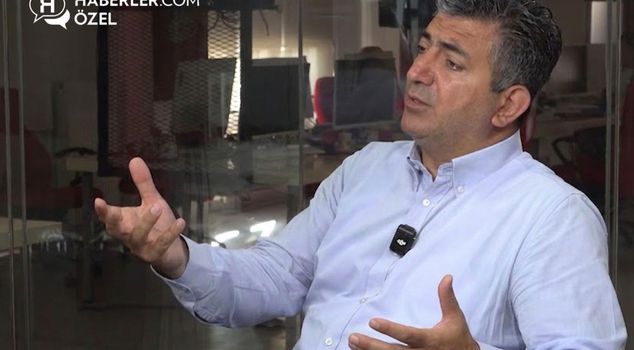
Foreign policy writer Hüsamettin Aslan, who was a guest of Olgun Kızıltepe at Haberler.com studio, evaluated the drone attack on the office of Iraq Kurdistan Regional Government (KRG) Prime Minister Masrour Barzani in Erbil, the US-Iran tension, the Mecca Agreement between Turkey, Saudi Arabia, and Pakistan, and President Erdoğan's upcoming visit to Syria. Aslan said that the tension in the region will continue, but he does not expect it to turn into an all-out war.
Foreign policy writer Hüsamettin Aslan, who was the guest of Olgun Kızıltepe at Haberler.com studio, made comprehensive assessments regarding the latest developments in the Middle East.
On Aslan's agenda were the drone attack on the office of Iraqi Kurdistan Regional Government (KRG) Prime Minister Masrour Barzani in Erbil, the US-Iran tension, the Mecca Pact signed between Turkey, Saudi Arabia, and Pakistan, and the visit expected to be made by President Recep Tayyip Erdoğan to Damascus.
"THE ATTACK HAS TWO DIMENSIONS, VISIBLE AND INVISIBLE"
Aslan, who evaluated the drone attack on Barzani's working office in Erbil and the home of the KRG intelligence chief, stated that the attack was seen to be largely of Iranian origin, but he was cautious in his statements since there was no official statement.
Reminding that shortly before the attack, KRG President Nechirvan Barzani made statements that Iranian-backed militias from the Diyala, Sulaymaniyah, and Kirkuk regions had carried out drone attacks, Aslan drew attention to the fact that the attack took place following these developments.
Aslan stated that the attack should be evaluated in two separate dimensions, saying, "In the visible dimension, the working office of the regional administration's prime minister, Masrour Barzani, the son of Masoud Barzani, and the home of the intelligence chief were subjected to a drone attack."
Arguing that Iran's choice of these targets carries a symbolic meaning, Aslan said the attack contained the message, "I am striking from the home of the man at the very top of your security apparatus, I am striking the working office of the person at the very top of the political and administrative point."
"THE MESSAGE OF 'WE ARE AWARE OF THE TALKS BETWEEN THE US AND IRAN'"
According to Aslan, the timing of the attack is also striking.
Stating that the attack in Erbil occurred following the statement by a US administration official that behind-the-scenes talks were held with some individuals within Iran's Islamic Revolutionary Guard Corps and an agreement was reached on a specific ceasefire, Aslan claimed that Iran was disturbed by these talks.
Recalling that Iran's Ministry of Foreign Affairs denied any connection with the attack, Aslan argued that developments on the ground showed that the attack had taken place.
Stating that Iran has long warned the KRG not to become closer to the US and Israel, Aslan claimed that more than 700 attacks have occurred in the region since February 28.
Aslan said that Iran, from time to time through its proxy forces in Iraq and from time to time through drone attacks carried out from the border, sends messages to the regional Kurdish administration.
"IRAN IS TRYING TO PREVENT ELEMENTS CLOSE TO ISRAEL IN NORTHERN IRAQ"
Aslan argued that Tehran is also trying to prevent attempts by some elements close to Israel in Northern Iraq to carry out armed intervention against Iran.
Stating that for this reason, the Erbil attack did not stem solely from the recent US-Iran tension, Aslan expressed that the attack was part of a longer-running regional rivalry.
Claiming that the US is trying to create a "division" within the Iranian administration, Aslan said that the contacts carried out with some groups within the Revolutionary Guard are also part of this strategy.
Stating that a 60-day ceasefire expectation is being discussed in international circles, Aslan stressed that it is significant that the attack took place exactly during this process.
THE INVISIBLE DIMENSION OF THE ATTACK: OIL AND ENERGY LINES
Aslan said that the second and less visible dimension of the attack is Iraq's energy exports.
Stating that there is an agreement to deliver approximately 750 thousand barrels of Iraq's daily production capacity of about 1.5 million barrels to the Mediterranean via Turkey, Aslan stated that this development also holds strategic importance for Turkey.
Drawing attention to the fact that the Kirkuk-Ceyhan Oil Pipeline has been non-functional for a long time, Aslan said there are also efforts to repair and reactivate the line.
Stating that Iraq delivering its oil to the Mediterranean through northern and northwestern lines instead of the Strait of Hormuz would create a significant strategic consequence for Iran, Aslan made the following assessment:
"It does not want an alternative. Because it does not want the strategic importance of the Strait of Hormuz to be devalued. It does not want an alternative to be created."
"IRAN DOES NOT WANT TURKEY TO GAIN MORE INFLUENCE IN IRAQ"
Stating that Iraq's ability to deliver its oil to Turkey via the north and, via another route, to Syria and the Mediterranean, would weaken Iran's strategic leverage over the Strait of Hormuz, Aslan said this would also have important consequences for Turkey.
Saying, "Opening the northern line means there is no need for the southern line," Aslan argued that Iran does not want both the decrease in the strategic importance of the Strait of Hormuz and the increase in the influence of Turkey, which it sees as one of its biggest rivals in the region, in Iraq.
Aslan stated that for this reason, the attack could also be read as an indirect message directed at Turkey.
THE "CLIMATE OF FEAR" MESSAGE TO ENERGY COMPANIES
Stating that the attacks could also affect the activities of energy companies in the region, Aslan said this is a method different from a direct attack.
Aslan said, "Sometimes you don't need to threaten someone. If you create a climate of fear there or increase costs, you get ahead of investments without needing to threaten those companies."
Stating that insurance, personnel, transportation, and technical expenses could increase if the drone attacks continue, Aslan said this could make energy production in Iraq and rapprochement with Turkey difficult.
"THE BARZANI ADMINISTRATION HAS NO CHANCE OF GIVING A MILITARY RESPONSE TO IRAN"
Stating that the KRG does not have the capacity to give a direct military response to Iran, Aslan said a possible reaction could emerge in the form of further deepening security cooperation with the US and Turkey.
Stating that there is Iranian influence in Sulaymaniyah, Aslan stated that Turkey's security presence and effectiveness in the region could increase even further.
Stating that Turkey's economic influence in Northern Iraq is also very strong, Aslan said Turkey has a significant weight in the regional economy, from food to white goods, from paint to mobile phones.
Arguing that Iran, due to being excluded from the international system, is at an economic disadvantage in competition with Turkey, Aslan stated that for this reason, the KRG establishes more economic and commercial relations with Turkey day by day.
"IF OIL IS BELOW 100 DOLLARS, A NEW WAR IS NOT EXPECTED"
In his assessment regarding the future of the US-Iran tension, Aslan drew attention to oil prices.
Aslan, who interpreted the oil price remaining below $90 per barrel as a sign that there is no expectation of a new and major tension in the region, said energy markets provide important indicators regarding the risk of war.
"When war breaks out, oil and natural gas products are the elements most affected by tension in the region," Aslan said, adding that the absence of a major surge in energy prices reduces the likelihood of an all-out war.
"THIS IS NOT A WAR, BUT A CONTROLLED CONFLICT"
Aslan, who argued that developments in the Middle East should be described as a "controlled conflict" rather than a "war," stated that in an all-out war, the parties would deploy all of their armies and military infrastructure.
Stating that attacks in the region are carried out against limited and symbolic targets, Aslan argued that the US, instead of targeting the entire Iranian army, has carried out attacks particularly against the Revolutionary Guards.
Noting that Iran has similarly struck limited targets, Aslan said the parties are maintaining tension in a controlled manner in order to weaken each other's hand at the negotiation table and to steer their own domestic publics.
DOMESTIC POLITICAL CALCULATIONS IN ISRAEL, THE US, AND IRAN
Aslan said the tension in the region cannot be evaluated independently of the domestic politics of the parties.
Drawing attention to the election process in Israel, Aslan argued that Netanyahu is trying to consolidate his own voter base through security and the Iranian threat.
Stating that the Donald Trump administration in the US faces a similar political picture, Aslan said Trump is trying to create a political narrative for his own public.
Noting that the war has also increased public support for the current administration in Iran, Aslan stated that despite economic problems, a segment of the public has positioned itself alongside the administration against foreign intervention.
"THE REGIME IN IRAN IS AMONG THE WINNERS, WHILE THE PEOPLE ARE THE LOSERS"
Also touching on Iran's economic problems, Aslan said there was a serious economic and financial crisis in the country before the war.
Stating that problems in the banking system, the depreciation of the currency, and economic hardships have increased pressure on the public, Aslan argued that the war has given the Iranian administration the opportunity to rally social support through the external threat.
Aslan stated that the Iranian regime, by remaining in power, is not among the losers politically, but the Iranian people have paid a heavy price economically and socially.
"Iran also has a government. Changing it is the job of the Iranian people. It is not the job of an American or an Israeli," Aslan said, adding that the problems between the administration and the people in Iran should not be resolved through foreign intervention.
"TRUMP AND THE US GOVERNMENT ARE THE BIG LOSERS"
Also making assessments regarding the US, Aslan argued that the Trump administration faces serious political and economic costs due to the war.
Stating that Trump's public support has declined and he could face serious problems in the Congressional elections, Aslan said the war has also negatively affected the US's relations with Europe, Asia, and the Gulf countries.
Arguing that Gulf countries have also begun to question US security policies, Aslan stated that Gulf countries trying to reach an agreement with Iran are reevaluating their dependence on Washington.
Noting that Israel is also facing serious economic costs due to the war, Aslan nevertheless said Netanyahu's political support in his own country continues.
MECCA PACT: IT SHOULD NOT BE READ AS AN ISLAMIC ARMY
Also evaluating the Mecca Pact signed between Turkey, Saudi Arabia, and Pakistan, Aslan said the agreement did not emerge suddenly.
Stating that the Gaza war, conflicts in Yemen and Sudan, the Iran-US tension, and the security vacuum in the region have increased the need for such a structure, Aslan said Turkey, Saudi Arabia, and Pakistan possess different advantages.
Noting that a complementary structure has emerged with Pakistan's nuclear capacity, Turkey's defense industry and military capability, and Saudi Arabia's economic power, Aslan said he believes Qatar and Egypt could also join this structure in the future.
However, emphasizing that it would be wrong to describe the agreement as an "Islamic army" or a "Middle East NATO," Aslan stated that the structure should primarily be seen as a defense, intelligence, air defense, and deterrence mechanism.
"ARTICLE 5 IS NOT FOR ENTERING A WAR, BUT FOR PREVENTING WAR"
Also touching on the mutual defense provision in the agreement, Aslan said an attack on one country triggering a security mechanism concerning the other parties does not automatically mean entering a war.
Stating that this article primarily serves a deterrent purpose, Aslan said the combination of Pakistan's nuclear capacity, Turkey's defense industry, and Saudi Arabia's economic power would constitute a significant calculation for rival countries.
Arguing that there is a particular message directed at India, Aslan said a deterrent framework has been established indicating that a possible attack on Pakistan would not go unanswered by Turkey and Saudi Arabia.
Noting that Iran has also made positive statements regarding the Mecca Pact, Aslan stated that Tehran might prefer regional countries establishing a security mechanism among themselves rather than moving closer to the US.
"THE MECCA PACT WAS NOT ESTABLISHED AGAINST ISRAEL"
Stating that Israel and Greece are uncomfortable with the Mecca Pact, Aslan said Israel perceives the agreement as a structure created against it.
Noting that Greece fears its existing strategic relations with Egypt could be damaged if Egypt joins such a structure, Aslan reminded that Turkey is also uncomfortable with Egypt's developing relations with Greece and the Greek Cypriot Administration.
Aslan said that for this reason, including Egypt in the pact would not be easy for the parties, but normalization is possible over time.
"TRUMP'S SUPPORT FOR THE PACT SHOWS DISAGREEMENT WITH ISRAEL"
Also evaluating US President Donald Trump's support for the Mecca Pact, Aslan said this reveals certain differences of opinion in US-Israel relations.
Stating that a significant portion of the Republican base in the US consists of pro-Israel evangelical groups, Aslan said arms manufacturers and oil companies are also influential over this political structure.
Aslan, who argues that Israel imposes economic, political, and military costs on the US, also stated that Trump is trying to create a different balance in the region by establishing good relations with the administrations of Turkey, Saudi Arabia, and Pakistan.
Aslan noted that this does not mean a complete rupture in US-Israel relations, but he expressed that there are serious differences of opinion between the parties.
ERDOĞAN'S VISIT TO DAMASCUS: EXTREMELY STRONG SYMBOLISM
Aslan also evaluated President Erdoğan's possible visit to Damascus.
Stating that the visit taking place after the 13-year Syrian civil war carries symbolic meaning in itself, Aslan recalled Erdoğan's past statements about praying at the Umayyad Mosque.
Aslan said that Erdoğan's visit to Damascus would contain not only diplomatic but also military, political, and psychological messages, and argued that Turkey's influence in Syria would become visible with a visit at the level of head of state.
“THE VISIT TO THE UMAYYAD MOSQUE IS NOT JUST WORSHIP”
Drawing attention to the regional symbolism of the Umayyad Mosque, Aslan recalled that Russian President Vladimir Putin also visited the Umayyad Mosque during his visit to Damascus.
Aslan, who evaluated Putin's visit to the mosque despite being an Orthodox Christian as a “strategic message,” said that such visits symbolically reveal the political and strategic presence of states in the region.
According to Aslan, Erdoğan's visit to Damascus will also be an indicator of Turkey's political, military, and administrative weight in Syria.
“CONFLICT WILL NOT END, BUT WAR WILL NOT BREAK OUT”
At the end of the program, Aslan shared his assessment of the general picture in the region, saying that conflicts in the Middle East will continue, but he does not expect an all-out war.
Noting that the actors in the region with the capacity for regular armies capable of fighting are limited, Aslan stated that countries such as Turkey, Iran, Egypt, and Saudi Arabia have regular military capacity; he expressed that many other actors are more in the nature of paramilitary or armed groups.
Aslan argued that Israel's capacity to wage a large-scale war with its ground forces is dependent on US support, and therefore, the current picture in the region will continue mostly through limited conflicts.
Finally, Aslan made the assessment, “Conflict will not end, but war will not break out either.”
Stating that attacks in the region are carried out against strategic and symbolic targets with low-cost UAVs, Aslan expressed that the main purpose of these attacks is not to completely destroy the other side, but to deter, send a message, and strengthen the position at the negotiation table.