11.08.2026 12:02
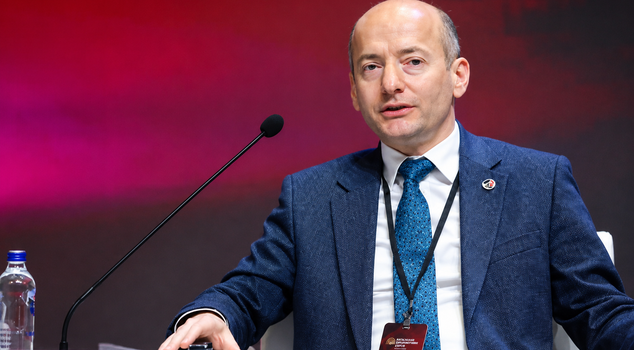
ORSAM President Dr. Kadir Temiz wrote for AA Analysis about the effects of the Terror-Free Turkey process on the Middle East and the dimension of regional ownership.
ORSAM President Dr. Kadir Temiz wrote for AA Analysis about the effects of the Terror-Free Turkey process on the Middle East and its regional ownership dimension.
Turkey has reached a historic threshold in the terrorism problem that has directly affected the country's security, politics, economy, and social life for over 40 years. With the regulation, accepted after 17.5 hours of discussions in the Justice Commission of the Grand National Assembly of Turkey (TBMM), becoming law, a new and perhaps the most critical phase is being entered in the Terror-Free Turkey process.
It would be insufficient to read this phase merely as a technical legal arrangement regarding the PKK's disarmament or the elimination of a terrorist organization that Turkey has been fighting for many years. The new period opened in Turkey, beyond strengthening the country's internal solidarity, has the potential to produce results that could affect the security order of the Middle East, especially in Iraq and Syria.
To understand the current point, it is necessary to correctly assess the conditions under which the process began. Turkey is discussing social consensus at a time when it has rendered the organization's armed strategy unsuccessful. The near-total elimination of the organization's operational capacity within Turkey, the extension of counter-terrorism capacity beyond borders in Iraq and Syria, the transformation in intelligence and defense industries, and the security cooperations developed with regional countries are the fundamental elements behind the new process.
Turkey is trying to transform the power it possesses into a political capacity that can produce stability and prosperity. This situation also means overcoming the false dichotomy frequently established between peace and power in the Middle East. Power is not only the capacity to punish rivals or eliminate threats. Real power is the capacity to end conflict when necessary and establish a new order.
TURKEY'S OFFER TO THE REGION
The main element that makes the Terror-Free Turkey process regionally significant is Turkey's experience. From Turkey's experience emerges a conflict resolution approach based on regional ownership. This approach requires building security capacity, preventing the perpetuation of non-state armed actors, taking political risks when necessary, and most importantly, not deferring the resolution of regional problems to powers outside the region.
The recent history of the Middle East is largely filled with examples of the opposite. Disputes among regional actors have become increasingly internationalized, local conflicts have become part of global rivalries, and non-state armed actors have turned into instruments of these rivalries. As a result, problems have been frozen or become even more complex instead of being resolved.
What Turkey is telling the region today based on its own experience is something much simpler but ambitious: Let us discuss our problems ourselves and take the political risk of the solution ourselves.
FROM SECURITY TO DEVELOPMENT IN IRAQ
One of the first and most direct effects of this new period outside Turkey's borders will be seen in Iraq. The presence of the terrorist organization PKK in Iraq has long been not just a security problem for Turkey. The organization's military presence, especially in northern Iraq, limits Iraq's sovereignty, complicates the Kurdistan Regional Government's (KRG) authority over its own territory, and creates security-related obstacles to regional economic integration.
Erbil and Sulaymaniyah do not have the same approach regarding the PKK. Nevertheless, both centers cannot remain outside the emerging new regional equation. Therefore, Turkey's recent intense diplomacy with Baghdad, Erbil, and Sulaymaniyah is not only about the elimination of the PKK. On a broader scale, it concerns clearing Iraq's security sphere from non-state armed actors and strengthening the country's sovereignty capacity.
The economic effects of this situation could be as important as the security outcomes. A northern Iraq where the PKK's armed presence disappears will reduce the weight of security issues in Turkey-Iraq relations and bring the economic agenda to the forefront. It will be possible for topics such as the Development Road, energy connections, border trade, transportation lines, and water management to progress much faster.
In this respect, there is a stronger relationship between the Terror-Free Turkey process and the Development Road than meets the eye. On one hand, the maneuvering space of armed organizations will narrow, while on the other, the maneuvering space for roads, railways, energy lines, trade, and people will expand. In this context, security and development will become two complementary elements.
The more fundamental issue for Iraq, however, is state capacity. The path to sustainable stability in the Middle East lies not in the fragmentation of state authority, but in central governments achieving the capacity to provide security, justice, and economic opportunities to their own citizens. It is no coincidence that Turkey has shaped its Iraq policy in recent years towards strengthening Baghdad's sovereignty and institutionalizing Erbil-Baghdad relations.
A MORE DIFFICULT TEST IN SYRIA
The second regional consequence of the process in Turkey will be seen in Syria. The PKK ending its armed presence will also eliminate the ground for structures with organic ties to the organization to maintain a separate armed and political order in Syria.
Turkey has long advocated three fundamental principles regarding Syria's future: preserving the country's territorial integrity, integrating non-state armed structures into the central system, and establishing a strong and inclusive state authority operating across all Syrian territory.
The progress of the process in Turkey is also a development that could accelerate the integration of the SDF with the Damascus administration.
Of course, the Syria issue is much more complex than the process in Turkey. The long-running civil war has created serious trust problems among Kurds, Arabs, Druze, Alawites, and other social segments. It is not possible to eliminate these problems solely through security measures.
However, the way forward does not lie in each social group maintaining its own armed organization and de facto sphere of control. On the contrary, the state must be rebuilt in a way that can provide security for all its citizens. The integration of the SDF into the central government is therefore not only a security demand of Turkey, but also an important part of Syria's re-statalization process.
In this regard, the elimination of the PKK could also open a new political space for Syrian Kurds. An order where the future of the Kurds is not dependent on an armed organization's regional strategy, and where political rights and security demands can be negotiated within Syria's new institutional structure, will strengthen both Syria's territorial integrity and the long-term security of the Kurds.
FROM A TERROR-FREE TURKEY TO A TERROR-FREE REGION
The transformation to take place in Iraq and Syria can be seen as the beginning of a broader regional perspective before Turkey. The fundamental principle revealed by Turkey's experience is this: Security problems cannot be managed forever solely through military means; however, political solutions cannot be established independently of security and state capacity.
The new diplomatic initiatives that have recently emerged for solving regional problems are therefore important. The value of initiatives that highlight regional ownership, such as the Mecca Joint Defense Agreement, does not stem only from their potential to resolve individual crises. More importantly, it lies in the formation of political and security mechanisms through which regional countries can directly discuss their own security issues.
The Middle East has consumed enormous power over the last quarter-century. From the invasion of Iraq to the Syrian civil war, from Yemen to Libya, from Gaza to Lebanon, wars have cost hundreds of thousands of lives, displaced millions of people, and caused trillions of dollars in economic losses. While regional countries increased their military capacities, they also consumed a significant portion of this capacity in their internal conflicts and proxy struggles with each other. Despite this, the region did not become safer.
What is needed today is not to renounce power. On the contrary, it is for the region to decide what to use its own power for. The regional perspective that Turkey has tried to put forward in recent years gains meaning precisely at this point.
Strong states, legitimate authority within their borders, the gradual transformation of non-state armed actors into political and institutional structures, increased economic connectivity, and the resolution of security problems as much as possible by regional actors could be the fundamental elements of a new Middle East security order.
TURKEY'S MESSAGE IN THE NEW ERA
Perhaps the most important message Turkey puts forward today is this: Real and sustainable prosperity and stability are possible when actors with the power to defend themselves use this power to establish a new order.
At a time when it has defeated the PKK's terror strategy, Turkey is transforming its security capacity into political capacity by opting for social consensus.
Now, the region needs the same political courage. Instead of using their power to exhaust each other, regional countries can direct it toward strengthening their states, increasing economic connectivity, and solving common security problems together. Instead of constantly referring their problems to the intervention of actors outside the region, they can take on the responsibility for solutions, and when necessary, the political risk themselves.
In this context, a Terror-Free Turkey is no longer solely Turkey's issue. The existence of a Middle East that uses its power not to exhaust each other but to establish its own order, and that can solve its problems through dialogue rather than leaving them to external interventions, is crucial.
In conclusion, the new order Turkey has established could be the door to peace for the region.