03.11.2026 14:35
In SETA’s analysis of Israel’s 26th Knesset elections, it was assessed that although Netanyahu lost power, his political elimination was not in question. According to experts, while the most realistic formula is a unity government, if consensus cannot be reached, the country may go to the polls again. The analysis predicted that a possible change of government would not create a radical break in policies toward Gaza, Iran, Syria, and Lebanon.
The Foundation for Political, Economic and Social Research (SETA) addressed the reflections of the Israeli elections on domestic politics and the region within the scope of its “Experts Answer” series. Three experts from different institutions contributed to the analysis prepared by Sibel Düz of SETA.
NO BLOC REACHED A MAJORITY
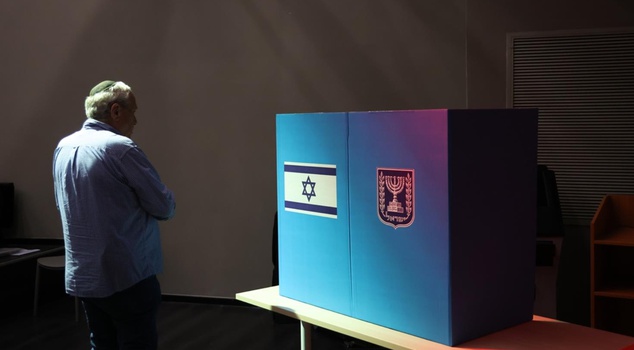
According to the data presented in the analysis, in the October 27 election, Likud led by Netanyahu became the first party with 20.52 percent of the vote. Gadi Eisenkot’s party Yashar received 16.05 percent, Naftali Bennett’s party Beyahad received 9.34 percent, and the Joint List received 8.79 percent. In the 120-seat Knesset, the Netanyahu bloc won 53 seats, the opposition bloc around Eisenkot 48, and the Arab parties 19. No bloc alone reached the 61 seats needed to form a government. Final results are expected to be confirmed by November 4.
“DECLINE IS NOT THE SAME AS ELIMINATION”
Tuğçe Ersoy Ceylan from İzmir Katip Çelebi University interpreted the results as a decline in Netanyahu’s power but a continuity in the fundamental dilemmas of Israeli politics. Ceylan argued that Likud’s emergence as the first party and the opposing bloc’s failure to secure a majority prevented Netanyahu’s political elimination. According to Ceylan, the real issue is that Netanyahu’s decline and the transition to a post-Netanyahu era are separate processes.
4 COALITION SCENARIOS
Ceylan stated that the most realistic formula was a unity government. She said that in this scenario options such as Netanyahu’s leadership, a rotating premiership, or a leadership change within Likud were being discussed. She said that an opposition government with the participation or external support of Arab parties was arithmetically possible, but vetoes within the opposition blocked it. Ceylan also added that it would be difficult for the Haredi parties to join an alternative coalition without resolving the issue of military service obligation. Noting that if consensus cannot be reached, new elections would remain on the agenda, Ceylan recalled that Netanyahu would remain at the head of the transitional government during this process.
RISK OF CONFLICT WITH IRAN IS INCREASING
Serhan Afacan from the Center for Iranian Studies (IRAM) stated that there is a cross-party security consensus in Israel on the Iranian threat. According to Afacan, Eisenkot also has a clear stance that includes regime change in Iran, but his influence over the United States is more limited than Netanyahu’s. Afacan argued that Netanyahu’s remaining in office during the transition period and the possibility of sabotaging the Trump administration’s potential diplomacy with Iran increase the risk of conflict.
Afacan said that normalization between Israel and the Gulf countries would be affected by the elections to a limited extent, and that Saudi Arabia was not expected to take a step in the current conjuncture. According to Afacan, Israel could try to weaken the Mecca Alliance and draw Saudi Arabia to its side by using Houthi-originated security problems in Yemen.
“METHODOLOGICAL DIFFERENCE” IN SYRIA AND LEBANON
Abdulgani Bozkurt from Recep Tayyip Erdoğan University stated that the difference between Netanyahu and Eisenkot was in the means rather than the goals. According to Bozkurt, both figures want Hezbollah to be disarmed in Lebanon. While Netanyahu prioritizes unilateral deterrence, Eisenkot highlights internationally supported arrangements that include France.
In Syria, Bozkurt stated that both leaders approach the administration of Ahmed al-Sharaa with suspicion, and argued that Netanyahu views Israel’s presence in Syria as a means of limiting Turkey’s regional influence. He stated that Eisenkot is more inclined toward a new agreement that would develop the 1974 disengagement arrangement, but that he does not view Turkey’s military presence in Syria favorably. Bozkurt assessed that a possible change of power would create a methodological differentiation rather than a strategic rupture.
NO RADICAL CHANGE EXPECTED IN PALESTINIAN POLICY
Sibel Düz from SETA stated that the elections indicated that security-justified policies would be maintained through different methods rather than a radical transformation. According to Düz, Netanyahu sees the elimination of Hamas’s military capacity and the disarmament of Gaza as non-negotiable and ties reconstruction to this condition. Netanyahu also displays a more open attitude toward settlement expansion and annexation demands in the West Bank.
Stating that Eisenkot does not support an independent Palestinian state, Düz reported that he opposes unauthorized settlements, settler violence, and the E-1 project. According to Düz, Eisenkot’s objection is centered not on Palestinian rights but on Israel’s demographic and political concerns. Düz emphasized that Arab parties could be influential in government negotiations, but this did not mean that policy toward Gaza and the West Bank would change on its own.
Düz stated that a radical change in the Palestinian issue required recognition of Palestinian sovereignty and an end to the occupation, and that these conditions were not visible today.