28.06.2026 17:01
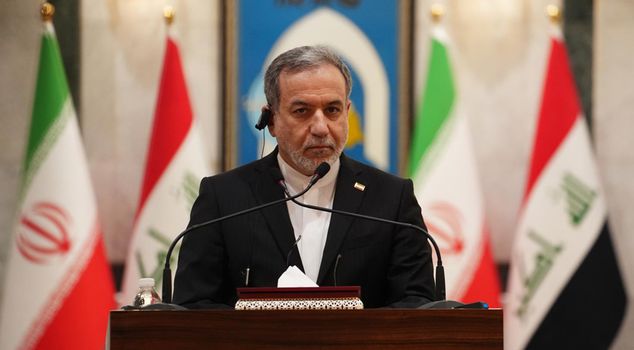
Iranian Foreign Minister Abbas Araghchi made notable statements regarding the Strait of Hormuz during a joint press conference with his Iraqi counterpart Fuad Hussein in Baghdad. Araghchi stated that the strait will remain under Iran's full surveillance and control for the next 30 days, adding that any interference will delay the reopening process.
Iranian Foreign Minister Abbas Araghchi arrived in Iraq for official contacts. Araghchi met with Iraqi Foreign Minister Fuad Hussein in the capital Baghdad. Following the meeting, the two held a joint press conference. The Iranian Minister stated that he and his counterpart discussed developments in the Strait of Hormuz and regional security.
Referring to the purpose of his visit, Abbas Araghchi said, "The first purpose of this visit is to thank the Iraqi government and people for their valuable support and solidarity with Iran. The second purpose of the visit is to congratulate the new government in Iraq. This is my first visit following the formation of the new government under Mr. Ali Zeydi. Taking this opportunity, I congratulate him on the formation of the new government and also my dear brother Mr. Fuad Hussein on his re-election as Foreign Minister. I emphasize the importance of maintaining good relations and strategic partnership between Iran and Iraq."
Regarding the agreement signed with the US, Araghchi stated that all parts of the agreement, including articles related to Lebanon, must be adhered to in order to end the war. Araghchi said, "Unfortunately, the Zionist entity continues its airstrikes against Lebanon," and emphasized that Washington must fulfill its responsibilities and force Israel to stop its attacks on Lebanon. Abbas Araghchi stated, "This was the first article of the agreement."
"ANY INTERVENTION WILL DELAY THE REOPENING OF THE STRAIT"
Stating that the Strait of Hormuz is completely under Iranian control, Abbas Araghchi said, "I informed my counterpart about the latest developments in the war imposed on Iran and also the developments regarding the memorandum of understanding signed between Iran and the US. The Strait of Hormuz will remain under the full surveillance and management of Iran for the next 30 days, and after all obstacles are removed, the full capacity of the waterway will be restored. This is what we are working on. This responsibility belongs to Iran. No other party or state has the authority in this regard. This is completely clear under the agreement, and any intervention or unilateral step will worsen the situation and delay the reopening of the strait."
"WE MUST ACHIEVE A NEW FRAMEWORK COVERING ALL COUNTRIES IN THE REGION"
Calling for the establishment of a security framework with Gulf countries, Araghchi said, "We must achieve a new framework covering all countries in the region, without the presence or intervention of any country from outside the region."
THANKS TO IRAQ
Thanking the Iraqi government and people, Araghchi said, "The Iraqi people and government have always offered their support during the war. They have always supported the Iranian people who are victims of Israeli-American aggression. The Iraqi people have always supported their Iranian brothers."
The Iranian Minister also stated that a funeral ceremony for Iran's former supreme religious leader Ali Khamenei, who died in the Iran-US war, will be held at holy sites in Iraq, and said, "Coordination efforts regarding the planned funeral ceremonies are still ongoing."
"REGIONAL SECURITY SHOULD BE THE RESPONSIBILITY OF THE REGION'S PEOPLE"
Iraqi Foreign Minister Fuad Hussein, referring to the ongoing conflicts in the region, said, "The war in the region continues in a different form, and military clashes are taking place around the Strait of Hormuz. Ending the war is a priority for all of us. Regional security should be the responsibility of the region's people. The region can protect itself in various ways."
Hussein stated that the war in the region should not expand further and said, "Iraq is ready to host talks between Gulf countries and Iran to ensure security and stability."
"BAGHDAD CONTRIBUTED TO ESTABLISHING CONTACTS BETWEEN IRAN AND THE US"
Emphasizing the opening of the Strait of Hormuz and the lifting of the naval blockade, Hussein said that the tension in the strait directly affects Iraq's economy and that the disruption of oil exports due to the war has caused serious losses to the country's economy. Stressing that Iraq's foreign policy is based on rejecting war and resolving problems through dialogue, Hussein said, "Baghdad, as in the past, contributed to establishing contacts between Iran and the US." Drawing attention to the historical, geographical, economic, and strategic dimensions of relations between Iran and Iraq, Fuad Hussein stated that the agreement reached between Washington and Tehran in Switzerland is important, but military activity around the Strait of Hormuz continues. Hussein also conveyed in his speech that Araghchi provided them with detailed information about the negotiations with the US and the talks in Switzerland.