22.08.2026 09:10
The new vehicle inspection system, which concerns 34.5 million vehicles in Turkey, was introduced at the Sample Center in Arnavutköy, Istanbul. In the new era, which will begin on August 15, 2027 under TURKA, advanced technologies such as AI-powered imaging, robotic headlight inspection, and contactless tire checks will be used. The new stations, which will serve with 352 centers in 81 provinces, will also function as field hospitals in potential disasters and as first-response points in forest fires.
The new vehicle inspection system, which closely concerns nearly 34.5 million vehicle owners in Turkey, was introduced at the Sample Center established in Arnavutköy, Istanbul. The new era, which will feature technologies ranging from laser measurements to robotic headlight checks, contactless tire analysis, and artificial intelligence-supported imaging, will begin on August 15, 2027.
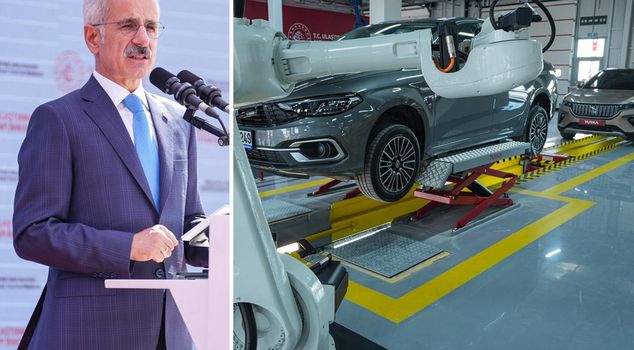
TURKA, which will undertake vehicle inspection services for 20 years starting from August 15, 2027, introduced its next-generation inspection infrastructure at the Sample Center it established in Yeşilbayır District, Arnavutköy, Istanbul. At the center, which will serve as the foundation for stations in 81 provinces, artificial intelligence and robotic technologies were tested live on real vehicles.
Transportation and Infrastructure Minister Abdulkadir Uraloğlu, General Director of Transport Services Regulation Dr. Çağlar Tabak, Head of the Privatization Administration Bekir Emre Haykır, TURKA's international partners, and members of the press attended the promotional meeting hosted by TURKA Board Chairman Halis Ezer.
"WE WILL ESSENTIALLY TAKE AN MRI AND TOMOGRAPHY OF THE VEHICLE"
Speaking at the promotional meeting, Transportation and Infrastructure Minister Abdulkadir Uraloğlu emphasized that Turkey's vehicle inspection infrastructure is undergoing a radical transformation. Minister Uraloğlu stated: "In Turkey, we are transforming vehicle inspection from being merely a control procedure into a new system where technology, safety, citizen satisfaction, and environmental awareness come together. In our new vehicle inspection stations, we will utilize today's most advanced technologies, from artificial intelligence-supported image processing systems to high-resolution cameras, from laser measurement technologies to advanced sensors and robotic systems. In this sense, we will take the MRI and tomography of the vehicle."
1.5 YEARS OF PREPARATION REFLECTED IN THE FIELD
TURKA Board Chairman Halis Ezer stated that the system to be established is the product of a long-term R&D effort. Expressing that they have been examining vehicle inspection systems worldwide for about 1.5 years, Ezer said, "Instead of bringing a single country's model to Turkey, we combined the strengths of different applications according to Turkey's needs. The Sample Center is the field reflection of this preparation. Here, we will test the equipment, software, and operational processes on real vehicles and compare different technologies. We will transfer the experience we gain to our centers in 81 provinces."
WILL BE AN R&D AND TRAINING BASE FOR 81 PROVINCES
The center in Arnavutköy will operate as the testing, training, and R&D base of the new era until August 15, 2027. All equipment, software updates, and operational processes will be verified on real vehicles. Additionally, personnel who will serve across Turkey will complete their practical training at this facility after their theoretical training.
FIELD HOSPITAL IN CASE OF DISASTER
According to the report by Taylan Özgür Dil from Hürriyet; TURKA will serve with a total of 352 centers, including 249 fixed and 103 mobile units, and approximately 900 inspection lines in 81 provinces starting from August 15, 2027. In addition to passenger and commercial vehicles, motorcycles and agricultural vehicles such as tractors will also be inspected at these centers. Another notable element in the system, where the expertise of TURKA's partners in the USA, Spain, and Argentina will be transferred alongside domestic technologies, is social responsibility and disaster planning. The 249 fixed inspection centers will be equipped with firefighting equipment to support initial response to forest fires. Additionally, infrastructure work is being carried out so that the centers can be converted into field hospitals during disasters and emergencies.
WHAT WILL CHANGE IN THE NEW ERA?
The new standards and technological innovations that will come into effect as of August 15, 2027, are as follows:
- TIRES WILL BE CHECKED WHILE THE VEHICLE IS IN MOTION: While the vehicle is moving, tire sidewall information will be read automatically, compatibility with the vehicle will be checked, and tread depth will be measured contactlessly. Defects posing life-threatening risks such as cracks, cuts, and bulges will be detected instantly.
- UNDERBODY AND BODY WILL BE SCANNED: The underside and body of the vehicle will be thoroughly imaged using high-resolution cameras, and dimension measurements will be made automatically through the cameras.
- ROBOTIC HEADLIGHT AND LIGHTING MEASUREMENT: Robotic mechanisms will be activated in the inspection of headlight adjustments and lighting systems.
- ARTIFICIAL INTELLIGENCE-SUPPORTED TECHNICIAN EVALUATION: Artificial intelligence will detect defects in the vehicle and provide real-time data to the inspection technician. This will eliminate evaluation differences that can vary from person to person.
- LIVE INSPECTION MONITORING OPPORTUNITY: Vehicle owners will be able to follow their vehicle's inspection processes live via digital platforms or from waiting areas.
- WAITING TIMES WILL BE SHORTENED: Thanks to increased line capacity and automation, waiting times at stations will be minimized.