21.11.2026 16:50
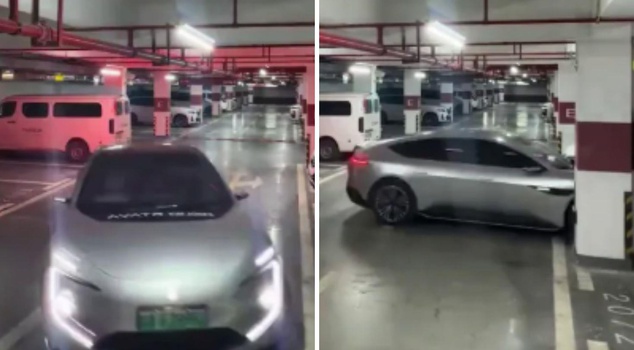
In China, driverless electric cars tried to park automatically in an underground parking lot for hours. The parking attempts, which were tried 868 times, attracted great interest on social media as part of Huawei's smart driving competition.
When a driverless electric car could not manage to park all night, extremely interesting footage emerged. In an incident at an underground parking lot in China, the vehicle moved back and forth repeatedly for hours trying to enter the same parking space.
In footage captured by security cameras, the car was seen constantly maneuvering even though no one was behind the wheel. However, on every attempt, just as it was about to enter the parking space, it backed out again and repeated the same process.
The car's endless effort did not escape the attention of the parking lot's security guard. The guard watched the self-moving vehicle in astonishment.
The owner learned of what happened later when checking the car's records. According to the records, the automatic parking system had activated exactly 868 times during the night.
Footage of the incident, said to have continued from midnight until the early morning hours, drew great interest on social media after spreading in the Chinese media.
Moreover, similar footage was not limited to this car. In other underground parking lots in China, moments were also recorded of driverless electric vehicles trying to park by themselves over and over again.
One of the shared videos drew particular attention. In the footage, two cars, the Avatr 06 and Avatr 12 models, were seen performing parking maneuvers at around 06:00 in the morning almost simultaneously.
As both vehicles repeatedly reversed and repositioned one after another, footage emerged that resembled a synchronized robot dance.
However, there may also be a competition behind these strange movements of the cars.
The footage was reportedly captured during Huawei's second Qiankun Smart Driving Competition, which encourages drivers to use their vehicles' automatic parking features. The competition began on October 31 and continued until November 13.
More than 190,000 drivers reportedly registered to participate in the 14-day event. In the competition, participants tried to rank in various categories using Huawei's driving assistance technologies.
One of these categories was "Parking Elite" (Parking Master). Participants were ranked according to how successfully they used automatic parking and remote parking features.
It was planned to give Huawei points to the drivers who made the top 100 in the competition.
However, there was a striking detail in the competition rules: Only parking maneuvers performed between 06:00 in the morning and 22:00 in the evening were taken into consideration.
Therefore, the efforts of the cars that tried to park hundreds of times throughout the night would not earn their owners any points in the competition.
So why did the cars repeat the same movements for hours?
So far, there is no definitive answer to this question. It is also not clear whether the vehicles were controlled remotely by their owners.
Possible causes cited include a software-related problem, insufficient lighting, or the parking lines in the parking lot having been erased. These conditions may have made it difficult for the vehicles to correctly perceive the parking area and complete the maneuver.
It was reported that the vehicles in question use Huawei Qiankun smart driving technology, which helps vehicles move and park by themselves in parking lots.
The system also offers the possibility to park remotely via a smartphone. Thus, drivers can direct their vehicles to a suitable parking area without getting behind the wheel.
This technology, developed to make daily life easier, this time came to the agenda with failed parking attempts lasting for hours.
However, it has not yet been verified whether there really was a technical malfunction behind the 868 attempts. To understand this, the vehicles' operating records need to be examined in detail.
For now, the footage captured by security cameras reveals how surprising situations driverless cars can sometimes lead to.