21.11.2026 16:51
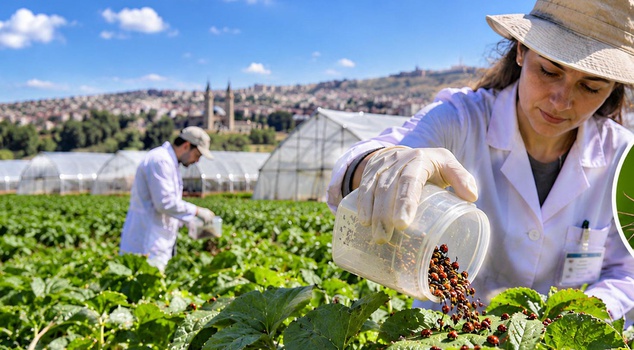
At Sivas Cumhuriyet University, production of beneficial insects has begun in order to combat tomato moths and whiteflies without using chemical pesticides. The insects named "Nezi," reproduced in the laboratory, prevent pests from multiplying by eating their eggs. The method, which will first be applied in greenhouses, is aimed at reducing chemical pesticide use and preventing soil and water pollution by later introducing it to farmers.
SCÜ Sivas Vocational School of Technical Sciences, Department of Plant and Animal Production, has launched a new project aimed at using 'beneficial insects' instead of chemical pesticides in the fight against tomato pests. The beneficial insects, reproduced in a laboratory environment and with the scientific name Nesidiocoris tenuis (Nezi), will be used first in tomato greenhouses in Sivas, and then in farmers' fields and gardens. These insects stand out for their effective predatory characteristics against tomato moths and whiteflies.
"WE ARE PREVENTING SOIL CONTAMINATION"
Lecturer Volkan Yörük, who provided information about the project, said, "There are increasingly more cancer cases both in our country and around the world. Unfortunately, a large portion of these cases are caused by chemical pesticides used unconsciously in agriculture. As a department, we have launched a study against this problem. We are producing beneficial insects, especially against harmful insects on tomato plants. By making regular releases into greenhouses, we ensure that these beneficial insects neutralize the pests. In this way, we are preventing both unconscious chemical use and the pollution of water and soil."
"WE WILL SHOW IT TO FARMERS IN THE FIELDS"
Yörük, stating that they will also bring this practice together with farmers, said, "The beneficial insect called Nezi is the natural enemy of tomato moths and whiteflies, which are the most harmful species on tomatoes. By releasing these natural enemies into the environment, we keep the pests under pressure. We will later implement this in farmers' practices as well. We will demonstrate this method to farmers in fields and gardens in practice. Our aim is that the more we reduce chemicals, the cleaner we can keep our environment, soil, and water. This beneficial insect actually exists in nature. We only find it, reproduce it, and release it onto harmful insects. This beneficial insect, which we call Nezi, finds and eats the eggs of the harmful insect and neutralizes them. Therefore, the harmful insect cannot find an environment in which to grow, and its population rapidly decreases. Since the eggs do not hatch, it cannot harm the plant."