29.10.2026 11:13
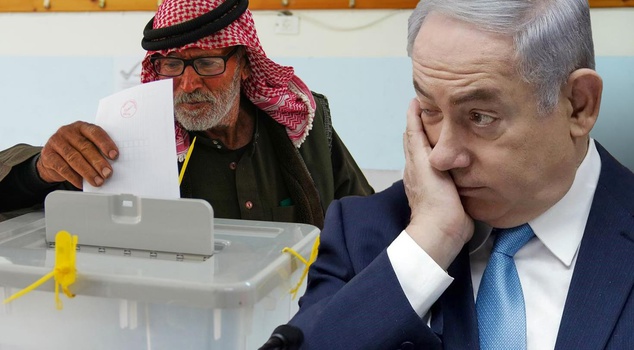
The counting of 430,000 to 480,000 special votes that could change the election results in Israel has begun. These votes, cast through the double-envelope system, belong to soldiers, diplomats, prisoners, and voters who were unable to vote at their registered polling stations. It is stated that the votes counted after duplicate-vote checks could change the number of seats of some parties. While the count is expected to be completed on Thursday evening, Netanyahu's bloc is behind the 61-seat majority.
Political uncertainty continues in Israel following the general elections held on October 27. With most of the votes counted, the bloc led by Prime Minister Benjamin Netanyahu reached 53 seats, while the opposition bloc led by Gadi Eisenkot remained at 48 seats. While the Arab parties' reaching a total of 19 seats drew attention, no main bloc was able to secure the 61-seat majority needed to form a government. Counting of hundreds of thousands of special votes that could affect the result has begun.
NETANYAHU'S BLOC REMAINS AT 53 SEATS
Vote counting continues in Israel after the elections held to determine the new members of the 120-seat parliament.
According to partial results announced as of the morning of Thursday, October 29, the bloc consisting of right-wing and religious parties led by Netanyahu is in a position to win 53 seats, while the opposition bloc led by Yashar Party leader Gadi Eisenkot is in a position to win 48 seats.
The total number of seats of the parties predominantly supported by Arab voters reaches 19.
According to this picture, Netanyahu's bloc is 8 seats short of the 61 seats needed to form a government on its own, and the bloc led by Eisenkot is 13 seats short.
BREAKING: COUNTING OF AROUND 500,000 VOTES HAS BEGUN
Counting of the special votes that could affect the fate of the election began in the early hours of Thursday.
The votes of soldiers, diplomats, police officers, voters in hospitals and citizens who voted outside their registered polling stations are collected through a double-envelope system.
In this system, the voter's identity information is on the outer envelope, while the inner envelope containing their choice is kept secret. After officials check that no duplicate votes have been cast, they separate the outer envelope and include the ballot in the counting process.
While initial reports mentioned more than 500,000 special votes, the Israeli Central Elections Committee later reported that it estimated the number of double-envelope votes to be between 430,000 and 480,000. It was stated that the number has not been finalized and verification procedures are continuing.
While vote counting is expected to be completed by Thursday evening, it was also stated that the process could extend into Friday.
LIKUD IS THE FIRST PARTY, EISENKOT IS SECOND
In the announced partial results, Netanyahu's Likud Party took first place with 26 seats.
Gadi Eisenkot's Yashar Party placed second with 21 seats, while the Joint List and the Bennett-Lapid alliance reached 12 seats each.
The Democrats Party was calculated to win 8 seats; the Ra'am, Yisrael Beytenu, United Torah Judaism, Otzma Yehudit and Shas parties 7 seats each.
The Religious Zionism-Zehut alliance was projected to have 6 seats.
However, this distribution is not the final election result. With the counting of the remaining votes, the number of seats of some parties may change.
HISTORIC SURGE BY ARAB PARTIES
One of the most striking results of the elections was the increase in the representation of Arab parties in parliament.
The Joint List is projected to win 12 seats, and Ra'am, also known as the United Arab List, 7 seats.
Thus, the total representation of Arab parties is expected to reach 19 seats. This number points to a historic level for these parties.
The emerging picture has made the stance of Arab parties important in the process of forming a new government. However, there are disagreements among opposition parties regarding cooperation with Arab parties.
CALL FROM PRESIDENT HERZOG TO PARTIES
Following the election results, Israeli President Isaac Herzog also addressed the political parties.
Herzog stated that every possible effort must be made to prevent the country from going to elections again and asked leaders to approach coalition negotiations with an open mind.
Herzog, who announced that he expects the final results to be submitted to him next week, will then meet with the parties in parliament and determine whom to assign the task of forming the government.
In Israel, the support of at least 61 lawmakers in the 120-seat parliament is required to form a government.
DEBATE OVER ARAB PARTIES IN THE OPPOSITION
After the elections, coalition options also began to be discussed on the opposition front.
Democrats Party leader Yair Golan called for anti-Netanyahu parties to form a government by cooperating with Arab parties.
However, the opposition of some parties within the opposition to forming a joint government with Arab parties constitutes a significant obstacle to this option.
Netanyahu, in his post-election statement, stated that he wanted to form a new government led by right-wing parties and reiterated that he was against a coalition that would rely on Arab parties.
HIGHEST TURNOUT SINCE 1999
Turnout in the elections reached 77.7 percent, the highest level since 1999.
It drew attention that the turnout rate, which was 70.6 percent in the 2022 elections, increased significantly in this election.
In the elections, in which approximately 5.7 million voters cast ballots, the high turnout was particularly effective in increasing the representation of Arab parties in parliament.
The election also has the distinction of being the first general election held in Israel after the Gaza war that began on October 7, 2023.
NEW ELECTIONS MAY BE ON THE AGENDA IF A COALITION CANNOT BE FORMED
In Israel, the finalization of election results does not mean that political uncertainty will end.
If Netanyahu cannot secure a majority with his current allies, and Eisenkot cannot persuade the entire opposition regarding cooperation with Arab parties, coalition negotiations are expected to drag on.
In political corridors, options such as a national unity government, new alliances between parties and a minority government are being discussed.
If attempts to form a government fail, the country going to elections again is also among the possibilities.
While the final and official election results are expected to be published on November 4, it is assessed that the real struggle in Israeli politics will take place during coalition negotiations.