05.08.2026 19:31
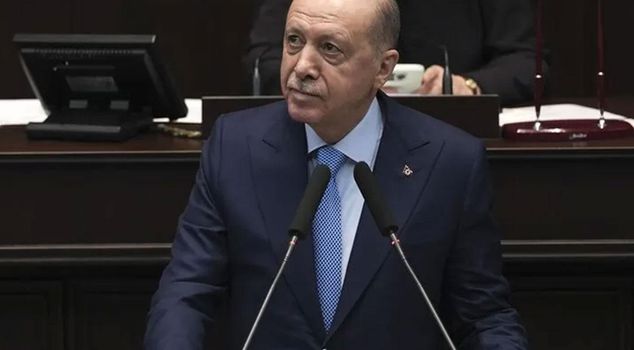
President Recep Tayyip Erdogan, who made evaluations regarding the framework law submitted to Parliament, said, "I hope that this step, which aims to permanently save Turkey from the threat of terrorism, to strengthen our national unity and solidarity, and to strengthen the climate of peace in our country and region, will bring goodness."
President Recep Tayyip Erdogan made evaluations regarding the 'Law Proposal on Strengthening National Solidarity and Social Cohesion,' which was submitted to Parliament and is known publicly as the 'framework law.'
"MAY IT LEAD TO GOOD OUTCOMES"
In a statement on his social media account, Erdogan stated that the law proposal, prepared as a result of comprehensive consultations, was submitted to the appreciation of the Gazi Parliament "with a broad consensus reflecting the resolution will of our noble nation."
Erdogan, expressing that the law proposal aims to permanently save Turkey from the threat of terrorism, strengthen national unity and solidarity, and reinforce the climate of peace in the country and the region, said, "I hope that this step, which aims to permanently save Turkey from the threat of terrorism, strengthen our national unity and solidarity, and enhance the climate of peace in our country and region, will lead to good outcomes."
In his statement, President Erdogan also thanked those who contributed to the preparation of the law proposal and the execution of the process, expressing gratitude to the MHP, the partner of the People's Alliance, especially MHP Chairman Devlet Bahceli, as well as to political party groups and members of parliament.
President Erdogan's statement is as follows;
The AK Party TBMM Group evaluated the Law Proposal on Strengthening National Solidarity and Social Cohesion, consisting of 12 articles, in a closed group meeting. Following the meeting, the proposal, given its final form, was submitted to the TBMM Presidency.
AK Party Group Chairman Guler, providing information about the proposal submitted to Parliament, said, "We presented our proposal to our Parliament Presidency with nearly 360 signatures."
"THERE WILL ALSO BE MEMBERS OF PARLIAMENT WHO WILL STATE THEY SIGNED IT LATER"
Guler continued his words as follows:
Dear members of the press, I greet our noble nation watching us on their screens with love and respect. We are in your presence. Together with Nationalist Movement Party Deputy Chairman Mr. Feti Yildiz, Nationalist Movement Party Deputy Group Chairs Mr. Erkan Akcay and our esteemed Filiz Hodja, our AK Party Deputy Group Chairman Mr. Abdulhamit Gul, our Justice Commission Chairman Mr. Cuneyt Yuksel, and our fellow members of parliament, we will inform you about the framework law that we submitted to our parliament presidency and general secretariat a short while ago, and whose details I will explain shortly along with its name.
Very esteemed members of the press, our 'Law Proposal on Strengthening National Solidarity and Social Cohesion,' as its name suggests, consists of a total of 12 articles, along with the execution and enforcement articles. Shortly, we will provide you with a technical explanation of what the law entails regarding its content and article headings.
Before this process, I would like to first express our thanks to our esteemed President Recep Tayyip Erdogan, to the esteemed Chairman of the Nationalist Movement Party Devlet Bahceli, and, as signatories, to the DEM Party group, to the Republican People's Party group and its co-chairs and chairs, whom we will elaborate on shortly. We also thank HUDAPAR, which has not withheld its signatures on this matter, our independent members of parliament, and some fellow members of parliament from the New Path Group. In total, we presented our proposal to our Parliament Presidency with nearly 360 signatures.
Of course, there will also be members of parliament who will later state, within the scope of the internal regulations, that they technically support and have signed this proposal. In terms of the process, it will continue in this manner. Of course, our commission, our Justice Commission chairman, within his own planning and within the scope of the internal regulations, will make the necessary invitations for the commission meeting after 48 hours, that is, around 14:30-15:00 on Friday afternoon, God willing.
"WE HELD 18 MEETINGS"
Dear members of the press, now, how did we come to this point? I want to enlighten you technically on this matter.
As you know, on August 5, 2025, the National Solidarity, Brotherhood and Democracy Commission, under the chairmanship of our parliament presidency within the Grand National Assembly of Turkey, held its first meeting exactly one year ago, on August 5, 2025. Subsequently, it held approximately 18 meetings. We listened to 137 people, whether as presidents, individuals, association presidents, union presidents, bar association presidents, members of foster families, presidents of martyrs' and veterans' associations, representatives of our families, representatives of the Diyarbakir mothers, representatives of the peace mothers, many of our esteemed professors, criminal law experts, and professors who have academically studied such processes closely. In total, 137 people. Truly very valuable and precious ideas were discussed and expressed there.
Furthermore, our Ministry of Interior, our Ministry of National Defense, our MIT Presidency (National Intelligence Organization), our Ministry of Foreign Affairs, and our Ministry of Justice came to the commission at various times and informed our commission about the current situations, developments, and progress.
Well, our commission completed its work when the final phase reached February. By consolidating the reports into a whole, a report emerged as a result of long consultations and negotiations with the representatives of the groups that sent delegates there and the representatives of political parties without groups. I want to share our report with you: 'National Solidarity, Brotherhood and Democracy Commission Report.' It was published on February 18, 2026, with a common consensus. Of course, two of our members of parliament had differing opinions, but this report was published with a great majority and shared with the entire public; it is available on the website.
Here, in the sixth heading of our report, dear members of the press, there is a heading along with legal regulation proposals regarding the process. I would like to share a few topics and explanations from here with you.
The commission's another important duty is to determine the legal framework that will manage the situation arising from the organization's disarmament process. It is to ensure that steps to strengthen our national solidarity and brotherhood are taken through a broad-participation, highly representative, open, and transparent consultation process.
"THE DETECTION AND CONFIRMATION OF THE PKK'S DISSOLUTION IS THE MOST IMPORTANT HEADING OF THE REPORT"
The report continues, dear friends. Especially item 6/1: 'Critical Threshold: The Organization's Disarmament.' The report states verbatim: 'The most critical threshold in the process is the detection and confirmation by the state's security units that the PKK/KCK terrorist organization has laid down its arms with all its elements and dissolved itself.'
Our report's important heading.
Again, in the report here: "The healthy completion of the detection and confirmation process will not be limited merely to declaring that the threat posed by the armed organization has ended, but will also serve as a starting point for its implementation within the legal and political framework required by the new situation that has emerged."
The existence of a general understanding and consensus among all parties regarding the dissolution of the organization with all its elements and the making of the necessary legal arrangements for the delivery and surrender of weapons is also reflected in the report.
"A STANDALONE LEGAL REGULATION"
So, what about Article 6, paragraph 2: "What will be the content of the legal regulations that will strengthen social integration?" There, the report states verbatim: "In order to ensure the strengthening of social integration, there is also a need for a standalone and temporary legal regulation, dedicated to the purpose of managing the process and its aftermath following the abandonment of weapons."
Of course, the existing law here; our report also states that it aims at the reintegration of individuals who reject weapons and violence into society, the permanent end of weapons and violence, and the complete transfer of the issue to the legal and political ground.
Of course, here again, in the report, in the final phase, the verification here, the events developing in this direction, should not be aimed solely at determining and ascertaining the legal status of organization members after they abandon their weapons; it states that the law should also set a goal for the fair, safe, and healthy integration and reintegration of the relevant individuals into society.
NO NOTION OF IMPUNITY OR AMNESTY PERCEPTION WAS INCLUDED
Of course, here again, in Article 6, paragraph 3 of the report, it is also stated that legal regulations should never give rise to a perception of impunity or amnesty in society.
Dear members of the press, of course, here again, in the fifth paragraph of Article 6, the report says: The establishment of a mechanism within the executive branch to ensure the monitoring and reporting of the process to which organization members are subject by law was proposed here. Again, in our law, in this form, as we will explain shortly, a study was put forward in line with this goal.
Again, within the scope of the authority to be granted to the executive branch, with its framework defined in the law, ensuring coordination among public institutions and organizations and thus conducting the process effectively was also targeted in this report of ours. Again, in our law, with a consensus on this matter, we prepared it as a text by sharing it with our colleagues.
In conclusion, in its sixth article: It was also included in the report by proposing that those who took part in the process; those who attended the meetings of the National Solidarity, Brotherhood, and Democracy Commission and provided opinions, suggestions, and evaluations, those who took part in the commission's work, and the activities of the officials be granted legal assurance.
Dear members of the press, a special study has been conducted for a long time regarding all the headings in our report, that is, this report published and shared with the public on February 18. Opinions were received from institutions. We were also in close contact with the Nationalist Movement Party. We were in close dialogue with DEM Party officials; "what kind of a law text could be put forward in line with this report?" Of course, we received opinions from our expert colleagues.
"WE HELD CONSULTATIONS WITH THE PARTIES"
Most recently, as of last week, the law had reached a certain level of maturity as a proposal, and we began meetings with political party groups. As of Monday, we held consultations with the New Path Party, the New Party, the Republican People's Party, which currently have groups in parliament, the HÜDA PAR, which has no group, and other political parties, on what could be included under certain topics to meet this expectation of the report. Recently, as of yesterday or Monday, Mr. Abdülhamit Gül and our Chairman of the Justice Commission visited the party groups and stated what kind of a law proposal exists regarding the report on these topics.
As a result, after these statements, the representatives of the political parties declared their support for the law proposal and that they would sign it, and today we are announcing this to you here in your presence.
IT CONSISTS OF 12 ARTICLES
So, dear members of the press, let us go into a little more detail about our law, within the framework of our report. The law, as I said, "Our Law Proposal on Strengthening National Solidarity and Social Integration" consists of 12 articles, and together with the execution and entry into force articles, 12 articles; 10 articles in total.
We mentioned the report a moment ago. In the first article, under the heading of Article 6, we say in the report: The critical threshold is the abandonment, delivery, destruction of the weapons of the terrorist organization PKK/KCK structure, and its confirmation as a process through a mechanism.
PURPOSE OF THE LAW: SOCIAL INTEGRATION
The purpose of the law: Following the determination by security institutions that the PKK/KCK terrorist organization and all related formations have ended their de facto existence and have delivered all weapons and ammunition under their control, and upon the publication of the National Security Council decision regarding the confirmation of this determination in the Official Gazette; the deferral of the execution of ongoing investigations and prosecutions and imposed prison sentences, and the determination of other procedures to be carried out regarding this, namely the liquidation process and social integration, are within the purpose of the law proposal.
SCOPE OF THE PROPOSAL
So what is in its scope? The crimes of establishing, managing, being a member of, knowingly and willingly aiding, and making propaganda for this terrorist organization structure, and the crimes committed within the scope of this organization's activities, and those committed in favor of this organization, are also included within the scope of this proposal of ours, as per the Law on the Prevention of Financing of Terrorism No. 6415 dated 2013.
In the report's topic heading, dear members of the press, it is fair. That is, ultimately, the law should provide a response within this regulation for the fair, realistic position, social reintegration, and integration of members of an organization that has abandoned its weapons, been dissolved, and whose existence has completely ceased.
CRIMES BEFORE 2005, AGGRAVATED LIFE IMPRISONMENT AND LIFE IMPRISONMENT ARE EXCLUDED
Now, in our law, responding to this expectation, in our Article 3, an article under the heading "Deferral of Investigations and Prosecutions" was drafted. It stated verbatim: Provided that the end of the organization's de facto existence is published in the relevant Official Gazette, except for investigations and prosecutions conducted for the crime of intentional homicide committed within the framework of the organization's activities and for crimes requiring life imprisonment and aggravated life imprisonment committed before 2005.
That is, here clearly, dear members of the press, homicide crimes and, before 2005, as organization executives under TCK No. 765, TCK 125.In the context of the article, excluding members of the organization who received aggravated life imprisonment and life imprisonment sentences or whose investigation and prosecution are ongoing, we are saying something very clear, excluding the crimes of homicide and intentional homicide. Let us warn those who might speculate or interpret it differently that, excluding intentional homicide crimes and again excluding those under investigation and prosecution for life imprisonment and aggravated life imprisonment sentences before 2005, it includes a regulation regarding other crimes.
So what was taken as a basis in the regulation of other crimes? Dear members of the press, I would like to explain a few technical points to you regarding that. As you know, our relevant Article 221 of the Turkish Penal Code No. 5237 is titled "Effective Remorse." This is a complementary element, because our regulations also need to ensure integrity within the Turkish Penal Code.
Here, I would like to share with you the second, third, and fourth paragraphs of the effective remorse article so that a perspective can be developed on this article. The current second paragraph of our existing article is: "If a member of an organization, without participating in the commission of any crime within the framework of the organization's activities, voluntarily reports to the relevant authorities that they have left the organization, no penalty shall be imposed on them."
Third paragraph: "If a member of an organization who is apprehended without having participated in the commission of any crime within the framework of the organization's activities, remorsefully provides information conducive to the dissolution of the organization or the apprehension of its members, no penalty shall be imposed on them."
Fourth paragraph: "If a person who establishes, manages, or becomes a member of an organization for the purpose of committing crimes, or who, without being a member, commits crimes on behalf of the organization or knowingly and willingly aids the organization, voluntarily surrenders and provides information about the structure of the organization and the crimes committed within the framework of its activities, no penalty shall be imposed on them for the crimes of establishing, managing, or being a member of the organization."
When we drafted our third article, we adopted an approach to ensure integrity with these paragraphs of Article 221 of the TPC. In this approach, we made a regulation regarding investigations and prosecutions related to sentences given under Article 125 of the old TPC before 2005, that is, before the new TPC change, excluding intentional homicide crimes. For other types of crimes, similar to Article 221, for crimes committed within the framework of organization activities, such as organization leadership, membership, aiding and abetting, and other propaganda elements, we foresee a 5-year postponement for sentences up to 15 years, and a 10-year postponement for those involving 15 years and above, life imprisonment, and aggravated life imprisonment. This is so that, following the complete dissolution, disbandment, and elimination of the organization, these individuals can be reintegrated into society within the scope of a fair, realistic, and legally certain regulation.
After our third article, our fourth article: Files under protective measures and legal review. There are files currently under investigation, completed investigations, those that have turned into prosecutions, those approved at the appellate level if necessary, cases where the local court has decided, and those at the Court of Cassation stage. So what will be done about these? According to the third article, protective measures regarding detention and judicial control imposed for crimes for which a postponement decision will be made shall be evaluated by the authorized judge or court at the location of the investigation or prosecution, or by the relevant criminal chamber of the Regional Court of Appeal or the Court of Cassation, and if conditions arise, there is a provision for the lifting of these measures. In the second paragraph of our fourth article, regarding files under exceptional or appeal review for crimes for which a postponement decision will be made under the third article, a reversal decision shall be made and sent to the relevant local court.
The recording of postponement decisions, along with the five-year and ten-year periods, and the case of re-offending. Dear members of the press, these involve a special monitoring model, with direct surveillance of such organization members whose sentences have been postponed, and we introduce a provision that if a crime is committed again within the context of terrorism—our Anti-Terror Law is very clear, TPC 220, 314 are very clear, Articles 3 and 4 of the Anti-Terror Law are very clear—this postponement decision will be revoked.
That is, after the person benefits from this, we also desire that they lead a life integrating, adapting, and blending into society, and being a good citizen in community life. Our main aim is that they do not engage in repeated actions or different activities. If they do, we have clearly written into the law what the sanction will be.
We mentioned earlier, in the case of investigation and prosecution. So what will those with convictions do? Yes, for those convicted of these crimes, with the same clear exceptions—excluding homicide and intentional homicide crimes, and those who received life imprisonment and aggravated life imprisonment before the 2005 TPC change and whose convictions are in the execution phase—for others, as I mentioned, who have been sentenced and are in execution for actions such as being a member of an organization, managing it, aiding and abetting, and propaganda under TPC 221, there will again be a 5-year postponement for terms up to 15 years with special monitoring, and a 10-year monitoring situation for those who received sentences of 15 years and above, life imprisonment, and aggravated life imprisonment.
Again, within the scope of the provisions here, we have written clear provisions within this scope. These records will be followed within their own system. If, from the date of the postponement decision, one of the terrorist crimes is committed within the postponement period, the postponement decision shall be revoked by the execution judge, the other case subject to investigation will continue, and within the current situation, this postponement decision will be revoked.
ARTICLE 7 CONFIRMATION MECHANISM
We are moving to a very important article, Article 7. Dear friends, dear members of the press, we also said that in the current report, we passed the most important threshold, the confirmation mechanism worked, with the complete delivery, destruction, and elimination of the weapons, and the complete dissolution of the organization in this regard, in the fifth paragraph of Article 6, the establishment of a mechanism within the executive branch to ensure the monitoring and reporting of the process to which organization members are subject. In line with this goal, friends, we drafted Article 7.
In Article 7, we establish a committee chaired by our Vice President, consisting of the Ministry of Interior, Ministry of Justice, Ministry of Foreign Affairs, Ministry of National Defense, the Secretariat General of the National Security Council, the Presidency of the National Intelligence Organization, and the Secretariat General of the Presidency.It will follow this process through periodic meetings, by obtaining all kinds of information and documents from other public institutions and organizations. And if deemed necessary, it may also establish commissions that will carry out more detailed technical work.
HERE ARE THE DETAILS OF THE FRAMEWORK LAW SUBMITTED TO PARLIAMENT
The legal regulation prepared for the Terror-Free Turkey process has been completed. The regulation will be discussed in the commission on Friday and in the General Assembly on Sunday, and will become law, but for it to enter into force, the National Security Council (MGK) must determine and confirm that all formations linked to the PKK/KCK have dissolved themselves and completely abandoned their weapons.
THE FRAMEWORK LAW CONSISTS OF 12 ARTICLES
The draft law, titled the Law Proposal on Strengthening National Solidarity and Social Cohesion, consists of 12 articles. The framework law is expected to be taken up in the TBMM Justice Commission on Friday and to pass through the General Assembly of the Parliament by the end of this week.
IT DOES NOT CONSTITUTE A GENERAL AMNESTY
The draft law, named Strengthening National Solidarity and Social Cohesion, does not constitute a general amnesty. The proposal also does not include an article that would grant a status to the terrorist organization leader Abdullah Öcalan.
ORGANIZATION MEMBERS WILL BE GIVEN A SIX-MONTH PERIOD
According to the proposal, the National Security Council (MGK) decision regarding the confirmation of the dissolution of the terrorist organization and the surrender of weapons will be published. Within 6 months following the publication of the National Security Council (MGK) decision in the Official Gazette, the provisions of this law will be applied to those who apply. Additionally, a six-month application process will begin for members of the terrorist organization. Those applying in Turkey can benefit from the law by applying to judicial authorities, and those abroad can benefit by applying to the relevant authorities.
IT DOES NOT COVER THE PERIOD BEFORE JUNE 1, 2005
Those who received aggravated life imprisonment before June 1, 2005, or crimes requiring aggravated life imprisonment will be excluded from the scope of the law. In this way, the way for Öcalan and the organization's leadership cadre to benefit from the law will be blocked.
IF A TERROR CRIME IS COMMITTED, THE SUSPENSION DECISION WILL BE REMOVED
The execution of sentences for convicts sentenced to 15 years or more imprisonment will be postponed for 5 years, and for those sentenced to more than 15 years, life imprisonment, or aggravated life imprisonment, execution will be postponed for 10 years. If one of the terror crimes is committed during the suspension period, the said decision will be lifted, and the investigation and prosecution will continue. If the convict completes the specified period without committing a crime, the sentence will be considered executed. The crime of "intentional homicide" committed within the framework of organization activities will also be excluded from the scope. Reports from the National Intelligence Organization (MİT) and the National Security Council (MGK) will also be of a determining nature.
The follow-up of the law will be carried out by a board chaired by the Vice President and consisting of the Minister of Justice, the Minister of Foreign Affairs, the Minister of Interior, the Minister of National Defense, the Secretary General of the Presidency, the President of the National Intelligence Organization, and the Secretary General of the National Security Council. It is envisaged that the coordination of the board will be carried out by the Secretariat General of the Presidency.
A Turkish Grand National Assembly Monitoring Commission (17 members) will be established to monitor the activities within the scope of this Law. It is envisaged that the regulation regarding the registration process will be prepared jointly by the Ministry of National Defense and the Ministry of Interior, upon receiving the opinion of security institutions.