31.03.2026 13:33
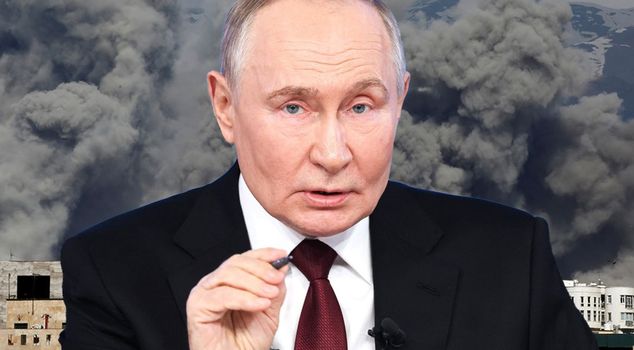
Russian Foreign Minister Sergey Lavrov said on Tuesday that the U.S. plans for regime change in Iran and Venezuela aim to gain control over oil and natural gas resources. Lavrov also stated that the U.S. and Israel do not want normalization between Iran and its neighbors, warning that the conflict in the Middle East could escalate further.
Russian Foreign Minister Sergey Lavrov argued that the underlying goal of the U.S. policies towards Iran and Venezuela is to control energy resources. Lavrov warned that Washington's "regime change" plans are part of a strategy to dominate oil and natural gas, while also cautioning that tensions in the Middle East could escalate into a broader war.
“THE U.S. IS PURSUING DOMINANCE IN THE ENERGY MARKET”
In his statement, Lavrov suggested that the U.S. aims to establish superiority in global energy markets, emphasizing that targeting countries with large energy reserves like Iran and Venezuela is not a coincidence. According to the Russian minister, Washington seeks to go beyond sanctions and aims to change the governments in these countries through military and political interventions.
Experts also point out that Venezuela and Iran play a critical role in the global energy equation. It is known that Venezuela has the largest oil reserves in the world, while Iran is a strategic player in both oil and natural gas production on a global scale.
IRAN WAR AND HORMUZ CRISIS: ENERGY LINES IN DANGER
Lavrov's statements came during a period of escalating conflicts centered around Iran. The closure of the Strait of Hormuz following the war that began in 2026 directly affected about 20% of global oil supply, and tanker traffic nearly came to a standstill.
During the conflicts, energy infrastructures were also targeted. Attacks on major natural gas and oil facilities in Iran reduced production, while mutual retaliations across the region further weakened energy security.
OIL PRICES SOAR, GLOBAL CRISIS DEEPENS
The tensions in the Middle East are causing not only military but also economic repercussions. As oil prices rose above $100, they occasionally exceeded $115.
The International Monetary Fund (IMF) warned that if the conflict prolongs, global inflation will rise and economic growth will slow down. It is noted that the increase in energy and food prices will particularly affect countries that are heavily dependent on imports.
U.S.-IRAN TENSIONS ESCALATE: DISCUSSION OF REGIME CHANGE
Discussions continue regarding the underlying regime change objective behind the military operations of the U.S. and Israel in Iran. While the Washington administration works on strategies aimed at weakening the current government in Iran, this situation further escalates tensions in the region.
U.S. President Donald Trump's occasional threats to target Iran's energy infrastructure and his statements aimed at controlling oil flow also strengthen these discussions.
WARNING THAT “WAR IN THE MIDDLE EAST COULD EXPAND”
Lavrov stated that the current conflict may not be limited to Iran, arguing that the policies of Israel and the U.S. hinder normalization processes in the region.
According to experts, mutual attacks in the region, the involvement of proxy forces, and the targeting of energy lines increase the risk of the conflict turning into a regional war. It is expressed that a larger-scale war in the Middle East, which is at the center of global energy supply, could deeply shake the world economy.