14.10.2026 19:31
MASAK Chairman Hasan Kaymak spoke at the TBMM Plan and Budget Committee about the fund crisis. Kaymak said that there was not the slightest trace of the high-value transactions mentioned, and that the assets may have been transferred from an account abroad to a cold wallet via a flash drive. Deputy Minister of Treasury and Finance Hatipoğlu, however, announced that within the scope of the fund dossier, 48 requests were sent to 29 countries and information was requested regarding the assets of 278 people.
Head of the Financial Crimes Investigation Board (MASAK) Hasan Kaymak used the statements, "There is not the slightest trace of a transaction in the amounts you mentioned," regarding high-value transactions within the scope of the "fund crisis." Kaymak, noting that it was out of the question for MASAK to pre-audit all financial transactions and that the institution receives more than 600,000 suspicious transaction reports annually, said, "Besides, there is no crypto asset service provider in Turkey that would carry out transactions with those large amounts."
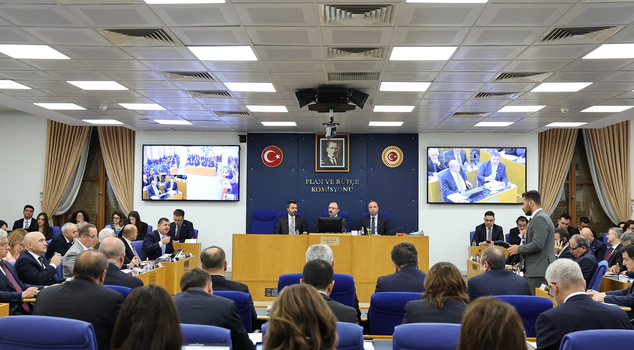
At the Grand National Assembly of Turkey Plan and Budget Committee, convened under the chairmanship of AK Party Samsun MP Mehmet Muş, discussions are being held on the Bill on Certain Investment Funds Decided to be Liquidated.
Deputy Minister of Treasury and Finance İsmail İlhan Hatipoğlu, representatives of the Banking Regulation and Supervision Agency (BDDK), Capital Markets Board (SPK), Financial Crimes Investigation Board (MASAK), Takasbank and Borsa Istanbul (BIST) answered MPs' questions regarding the bill.
Deputy Minister of Treasury and Finance İsmail İlhan Hatipoğlu, reported that 48 separate requests were made from 29 different countries within the scope of the fund file.
Hatipoğlu said, "Requests for information were made regarding a total of 278 actual private individuals, their accounts and assets; all kinds of assets, including both cash and crypto. Official communication was established with our chief public prosecutor's offices for our chief public prosecutor's offices to be included in the process through letters rogatory. With the assistance of our chief public prosecutor's offices, relevant institutions and countries, the process of clarifying the assets there is being followed closely. Apart from that, everywhere and in every country we have reached in the process, efforts to identify and bring into the country all kinds of assets of everyone involved in this crime continue without interruption."
MASAK: WE DO NOT PRE-AUDIT EVERY TRANSACTION
MASAK President Hasan Kaymak stated that the institution's working system is based on the principle of obliged parties knowing their customers and monitoring their transactions within the scope of Law No. 5549 on Prevention of Laundering of Proceeds of Crime. Expressing that if movements different from the customer's transaction profile or a suspicion of illegality are seen, a report is expected to be made, Kaymak said that if banks and brokerage houses consider transactions ordinary, they may not report them.
Noting that MASAK imposes penalties if it determines during audits that transactions that should have been reported were not reported, Kaymak stated that it was out of the question for all financial transactions to pass through the institution's audit. Kaymak spoke as follows:
"On the other hand, as far as we understand, there is a misunderstanding: It is not the case, in no way is it the case, that financial transactions, regardless of their scale, pass through the audit of the Financial Crimes Investigation Board. Ultimately, if there is no suspicious transaction report and no request for postponement, information reaching the Financial Crimes Investigation Board already arrives in 2 days at the earliest, including banking transactions and transaction records. There is no provision in the law for an application such as 'Before carrying out a transaction, let us also ask the Financial Crimes Investigation Board. Let it investigate whether there could be something here, whether there is or not, and let us carry it out that way.' "
NO SLIGHTEST TRACE IN THE 400 BILLION WORTH OF MOVEMENTS
Kaymak said that MASAK can request information from other institutions in line with information obtained from open sources, but if banks and brokerage houses consider transactions ordinary, it is possible for them not to be reported. Also stating that some transactions may not enter records and that movements such as the transfer of crypto assets to cold wallets may not be traceable, Kaymak said the following regarding high-value transactions:
"There is not the slightest trace of a transaction in the amounts you mentioned. Besides, there is no crypto asset service provider in Turkey that would carry out transactions with those large amounts. That is, maybe someone transferred this from an account abroad to another account of mine abroad somehow via computer, via a flash drive, to a cold wallet in this way. Of course, we repeatedly warn crypto asset service providers based abroad: 'Is there such a transaction, was it done, was it not done?' It is impossible without a transaction; it is not possible to request this. We are an institution that receives more than 600,000 suspicious transaction reports a year. "
Kaymak said that there is a regulation in the legislation regarding the monitoring of high-risk transactions, but which transactions are considered high-risk is determined in line with obliged parties' own scales and customer profiles.
Kaymak, stating that high-value amounts can be transferred through transfers made between subsidiaries abroad or through different methods, said that it is not possible to see all these transactions. Kaymak expressed that, as required by the risk-based approach, each brokerage house must determine high-risk transactions according to its own size and customer profile. Kaymak, made the following assessment:
"If a company has established an overseas subsidiary, and both are securities firms, it may very well be transferring its values between exchanges through a transfer it will make. One of two people can transfer a high amount of value abroad with a flash drive they put in the other's pocket. Now, of course, we have no possibility of seeing these.
We have a commitment to implement the risk-based approach. Each brokerage firm determines who is high-risk according to its own size and its own customer profile and reports this to the Presidency. We have no information about what kind of composition these 400 billion worth of movements are; there are some total allegations. When we investigate these, we cannot see large-scale movements; we looked everywhere in the system. There are different methods of this transaction. In fact, before us, there are tens of thousands of transactions probably related to imports daily, and hundreds of thousands within the context of international credit financing relationships, made every day through our Central Bank and our other banks within the framework of their own products. "
SPK: 131 FUNDS WERE TAKEN INTO LIQUIDATION
SPK Second Chairman Ahmet Aksu said that concentration in free funds began to increase last year and that after detecting extraordinary transactions, work on regulation was started. Aksu stated that the SPK was assigned in line with the statements of the Minister of Treasury and Finance and the decisions taken at the Financial Stability Committee, that within this scope the qualified investor base was raised from 1 million lira to 10 million lira, and that work on a fund guide was initiated.
Aksu, conveying that improvements were made in the TEFAS infrastructure so that investors of other funds would not be affected if some funds defaulted, noted that the TEFAS implementation principles were prepared by the SPK on June 17, regulations were made regarding the valuation of real estate and other assets in free funds, and the draft guide was announced to the public on August 29.
Aksu reiterated that the guideline covers all funds and that the funds taken into liquidation correspond to approximately 4.5 percent of all funds. He said that upon seeing default or default risk in some funds, it was decided to liquidate 131 funds as of September 17 without waiting for the deadlines set for compliance with the guideline.
Takasbank General Manager Yunus Arıcı, in his statement regarding the TLY fund, touched on the partnership structure of brokerage houses in Takasbank. Arıcı noted that when Takasbank was established as a joint-stock company in 1992, brokerage houses were included in the partnership structure with a 19 percent share, and that brokerage houses could own shares not exceeding 5 percent. Arıcı said that Murat Taci and Murat Onuk also served at Takasbank within this scope.
Noting that the TLY fund traded as a closed-end fund until July 7, 2025, Arıcı recalled that, according to the CMB communiqué dated March 1, 2024, portfolio management companies could convert their closed-end funds into open-end funds through a prospectus amendment. Arıcı said that Tera Portföy applied to Takasbank on July 7, 2025, and made a KAP notification regarding the prospectus amendment the same day.
Arıcı said that Takasbank opened the fund to TEFAS based on the notification on KAP, that after the CMB's notification on August 1, 2025 that the prospectus amendment was not correct, it stopped the fund's purchase transactions, and that it was reopened on August 6 with CMB approval, and said, "We take KAP as our basis."
BIST General Manager Korkmaz Ergün, meanwhile, stating that the institution made its notifications regarding the funds to the CMB, used the following statements: "As the exchange, we made our notifications both to the CMB and announced them on KAP. Therefore, we have done what fell to us on this matter."
İKTİSAT KATILIM BANKASI HAS NOT STARTED OPERATIONS
Chairman of the Banking Regulation and Supervision Agency (BDDK) Şahap Kavcıoğlu said that bank licenses are evaluated upon application by obtaining written information from relevant public institutions, including the banks' shareholders, the groups they are affiliated with, and their foreign connections. Kavcıoğlu noted that the file was created in line with the information received from the institutions and that the Board decided based on this file.
Referring to the history of the Tera and Destek groups in the field of finance, Kavcıoğlu explained that the approvals for the banks in question were granted in 2021 and 2022, while the factoring companies had been operating since earlier dates.
Kavcıoğlu, stating that the portfolio company of the group that owns İktisat Katılım Bankası was newly established in December 2024, when the bank approval was granted, and that its transaction volume was low, said that a group's owning a portfolio company alone did not prevent bank license approval. Kavcıoğlu stated that when the operating license stage was reached in 2026, the bank's permission to start operations was kept pending due to developments in the funds. Kavcıoğlu spoke as follows:
"Later, at the final stage, when the bank wanted to start operations on August 3, we did not grant an operating license. Its application is dated August 3; these transactions had not yet started. Therefore, when we saw the developments in the funds there, we kept the bank license pending as a precaution, without granting it, in order to see how it would conclude or what would happen. Therefore, İktisat Katılım Bankası is not a bank that has started operations or carried out transactions. It is a bank that has completely completed its operating cycles at the establishment stage but has not started operational activity. Therefore, there is no public risk or any risk or problem in that sense. "
Kavcıoğlu also touched on the transfer of the banks and factoring companies related to the Tera, Destek, and Hedef groups. Stating that the asset and liability balances of these companies were positive, Kavcıoğlu said that the companies were transferred to the Savings Deposit Insurance Fund (TMSF). He stated that the factoring companies could be taken into liquidation, but that the transfer route was preferred so that their economic values could be preserved and they could contribute to covering the losses of fund investors.
Noting that after the group's debts were deducted, the balance sheet structure of the banks and factoring companies was positive, Kavcıoğlu noted that these transfers could provide resources for fund investors. In his assessment regarding the banking sector, he said that the share of the transferred banks in the sector was low and that no significant negative effect was seen in the stress tests conducted.
.