26.04.2026 14:51
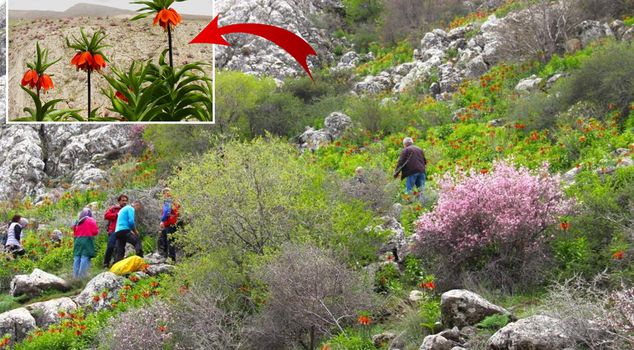
With the arrival of spring, reversed tulips have bloomed in the Afşin district of Kahramanmaraş. This endemic species, which grows at the foothills of the Binboğa Mountains and is also known as the 'weeping bride', offers a brief visual spectacle. While nature photographers flock to the region, authorities reminded that picking the flowers is prohibited. Those who damage reversed tulips face administrative fines of up to approximately 700,000 Turkish Lira.
With the arrival of spring, reverse tulips have bloomed in the Afşin district of Kahramanmaraş. Emerging from rocky areas at the foothills of the Binboğa Mountains, these rare flowers offer a visual feast for nature lovers, while authorities have issued an important warning.
THEY BLOOM IN APRIL AND WITHER QUICKLY
Reverse tulips, which begin to bloom in the first week of April each year, shed their flowers towards the end of the month. Attracting attention with their vibrant color tones ranging from yellow to orange and red, these flowers are easily noticeable in nature with their bright green leaf clusters. As one of the endemic species unique to the region, reverse tulips are among the natural riches that need protection.
“BEAUTIFUL IN ITS PLACE AND MUST BE PROTECTED”
Nature photographer Mehmet Gören, stating that they come to Afşin every year to capture images of reverse tulips, said, “These flowers bloom for a short time and create a truly impressive sight. However, they should not be picked. They are beautiful where they are and must be protected.”
KNOWN AS 'WEEPING BRIDE' AMONG THE PUBLIC
Photography artist Yasin Mortaş, noting that reverse tulips are known as 'weeping bride' among the public, said, “This flower draws attention with its bowed head posture. It has a shy appearance. It usually grows in secluded and quiet areas. It blooms with spring but has a sorrowful look. That's why it is called 'weeping bride'.”
FINANCIAL PENALTY UP TO 700,000 TL FOR PICKING
Authorities reminded that picking reverse tulips is forbidden and emphasized that those who damage this endemic plant face an administrative fine of up to approximately 700,000 TL.