21.10.2026 17:13
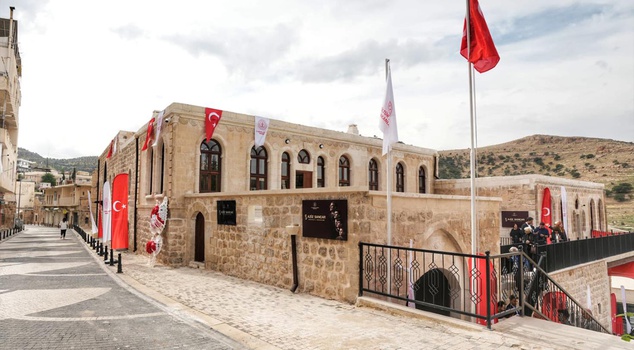
The historic house in the Savur district of Mardin, where Prof. Dr. Aziz Sancar—Turkey’s pride with his Nobel Prize in Chemistry—spent his childhood years, has been turned into a museum that will keep his scientific and cultural heritage alive. The museum, which opened its doors with the participation of Minister of Culture and Tourism Mehmet Nuri Ersoy, will exhibit personal items that shed light on Sancar’s life and scientific achievements. The other floors of the historic building will host a reading room and a science center that will bring young people together with science.
Nobel Prize in Chemistry laureate Prof. Dr. Aziz Sancar’s house, where he was born and grew up in the Savur district of Mardin, was turned into a museum with a ceremony. At the museum, opened with the participation of Minister of Culture and Tourism Mehmet Nuri Ersoy, photographs, diplomas, gowns and various awards related to Sancar’s life, scientific work and achievements will be exhibited. The other floors of the historic building are planned to be used as a reading hall and science center.
AZIZ SANCAR’S CHILDHOOD HOME BECOMES A MUSEUM
The historic house located in the Savur district of Mardin, where Nobel laureate scientist Prof. Dr. Aziz Sancar spent his childhood years, opened to visitors as a museum after the restoration work carried out.
The opening ceremony was attended by Minister of Culture and Tourism Mehmet Nuri Ersoy, as well as Aziz Sancar, his wife Gwen Boles Sancar, Mardin Governor Tuncay Akkoyun, Savur District Governor Enes Emircan Buyuran, district mayors and guests.
Speaking at the ceremony, Minister Ersoy stated that the museum would pass Sancar’s life, scientific work and achievements on to future generations.
“FROM THE STREETS OF SAVUR TO THE UNIVERSAL WORLD OF SCIENCE”
Expressing that Aziz Sancar’s scientific work showed the world what scientists raised by Turkey can achieve, Ersoy said that Sancar’s success story started in Savur and extended to the universal world of science.
Emphasizing that the museum would not be limited to telling the life of a scientist, Ersoy said they wanted children and young people to draw inspiration from here to pursue their own dreams.
Ersoy noted that success cannot be measured only by awards won, drawing attention to the importance of patience, effort, perseverance and the desire to learn in scientific work.
HISTORIC BUILDING RESTORED
In the historic house, whose history dates back to before 1938, comprehensive restoration work was carried out to preserve the building’s original architectural texture.
Within the scope of the work, structural reinforcement, stone cleaning, plaster, joint and insulation applications were carried out. In addition, various architectural elements were meticulously worked on to preserve the building’s traditional architectural features.
The museum was arranged on the 395-square-meter first floor of the four-story stone building. Special areas were created in three separate halls for displaying materials related to Aziz Sancar’s life and scientific career.
HIS DIPLOMAS, GOWNS AND AWARDS WILL BE EXHIBITED
In the museum, along with photographs presenting sections from Aziz Sancar’s life, medical instruments, his diplomas, gowns, awards and gifts he received, and files related to his scientific work will be presented for visitors’ interest.
In the exhibition areas, it is aimed to tell the story of Sancar’s life journey, starting from his childhood years and extending to the achievements he obtained in the international scientific world.
OTHER FLOORS WILL BE USED AS A SCIENCE CENTER
Minister Ersoy explained that the building will not only be used as a museum but will also function as a center that brings young people together with science.
In this context, the basement of the building and the other floors apart from the first floor arranged as a museum are planned to be used by the Mardin Governor’s Office as a reading hall and science center.
The Aziz Sancar Museum is aimed both to keep the scientist’s legacy alive and to pass Savur’s historical identity on to future generations.