12.08.2026 12:11
The disastrous Typhoon Dolphin and monsoon rains in Southeast Asia have submerged the Philippines. In the island nation where at least 15 people have lost their lives, floodwaters have clogged rivers and canals with massive piles of garbage. As the government declared a 'waste crisis' in the region and launched a cleanup mobilization, meteorologists warned that the most severe storm season in history could occur due to the El Niño effect.
Typhoon Dolphin, which has caused widespread devastation across Asia, continues to create panic. At least 15 people have died in the severe storms and floods that struck the Philippines, while tons of debris swept away by the floodwaters have triggered a major "garbage crisis" in cities.
Typhoon Dolphin, which has affected the eastern part of the Asian continent, has caused a major humanitarian and environmental disaster in the island nation of the Philippines. As the death toll rises due to the disaster that has lasted for days, infrastructure has collapsed and settlements have been reduced to ruins.
VILLAGES UNDER WATER
Tropical storms, combined with the southwest monsoon winds "Habagat," which brought enormous amounts of rainfall to the island nation, have caused massive flooding and landslides. As a result of the heavy rains, entire villages were submerged, hundreds of houses were destroyed, and main roads and bridges became unusable. According to initial reports from the region, at least 15 people have lost their lives in the disaster.
WASTE CRISIS IN THE CAPITAL
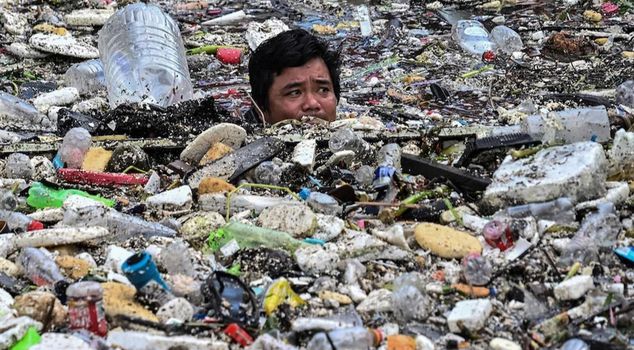
Tons of debris brought by the floodwaters have brought life to a standstill in city centers. The Redemptorist Canal in Parañaque, a suburb of the Philippine capital Manila, has become completely clogged with massive piles of garbage. As the closure of waterways made draining floodwaters difficult, a major risk threatening the environment and public health has emerged.
GOVERNMENT ISSUES SOS
Following this situation, the Philippine government declared a "waste crisis" and launched an urgent cleanup mobilization in the region. With heavy equipment, cleaning boats, and a large workforce, teams are racing against time to clean the huge, foul-smelling garbage mountains covering canals and streets.
COULD BE THE MOST SEVERE TYPHOON SEASON IN HISTORY
Meteorologists are issuing critical warnings that rainfall will continue in the region. Due to the intensification of the El Niño climate event, which triggers the formation of tropical cyclones, it is noted that the current typhoon season could be one of the most severe ever recorded. Typhoon Dolphin and the accompanying extreme rainfall continue to pose a major threat not only to the Philippines but also to regional countries such as China, Japan, and Vietnam.