28.04.2026 12:11
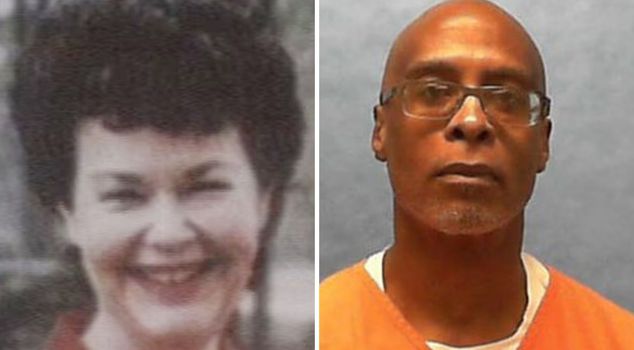
Chadwick Scott Willacy was executed by lethal injection for the murder of Marlys Sather in Palm Bay, Florida, in 1990. Willacy, who fled after the murder, faced justice 34 years later.
The final chapter has closed in the "Marlys Sather murder" case, which occurred in 1990 in Palm Bay, Florida, and is recorded as one of the most brutal murders in the state's history. Chadwick Scott Willacy, 58, was executed by lethal injection at Florida State Prison for torturing and killing his neighbor after she caught him stealing from her home. The execution was witnessed by the victim's son, John Sather, who had awaited justice for years.
In the incident on September 5, 1990, 56-year-old Marlys Sather encountered a horrifying surprise when she returned home for her lunch break. Her neighbor, then 22-year-old Chadwick Scott Willacy, was robbing Sather's house. Realizing he would be caught, Willacy attacked the unfortunate woman with a blunt object, fracturing her skull.
According to the investigation file, after binding Sather's hands and feet with wire, Willacy attempted to strangle her with a telephone cord.
However, his murderous plan did not end there; he doused the woman with gasoline and set her on fire. The autopsy revealed smoke in Sather's lungs, proving that she was still alive when set on fire and died from being burned alive. After the murder, Willacy stole the victim's car and bank card, fleeing the scene.
Willacy was found guilty in 1991 of first-degree murder, theft, robbery, and arson. Florida courts deemed the death penalty appropriate due to the "brutality and cold-bloodedness" of the crime's execution. However, the execution process was delayed for over 30 years due to objections from the defense regarding jury selection and access to public records.
The Florida Supreme Court and, ultimately, the U.S. Supreme Court rejected Willacy's last-minute appeals, removing all obstacles to the execution. With Governor Ron DeSantis signing the execution order, the search for justice concluded after 34 years.
The execution process, which began at 6:00 PM on Tuesday, was completed when Willacy died at 6:15 PM. The convicted man chose chicken, french fries, ice cream, and pie for his last meal before the execution. In his final words, he apologized to his family and, addressing the victim's family, said, "I hope this brings you peace, but this is not right," maintaining his claim of innocence.
Prison officials reported that the execution process went smoothly, and the triple-drug combination (sedative, paralytic, and cardiac arrest agent) was administered according to protocol.
Following the execution, the Sather family released a written statement. The statement noted that their mother had lost her husband to cancer just weeks before her murder and was a newly grieving widow. The family said, "We waited 36.5 years for justice (the time since the incident). Our mother, Marlys Mae Sather, should be remembered as a loving person—a daughter, wife, mother of three children, grandmother of five, and great-grandmother of five."
While this execution has been recorded as one of the most notable capital punishment decisions in Florida in recent years, it has also reignited debates over the death penalty in the state. However, for the Sather family, this evening marked the end of a dark period that had lasted for decades.