29.06.2026 00:20
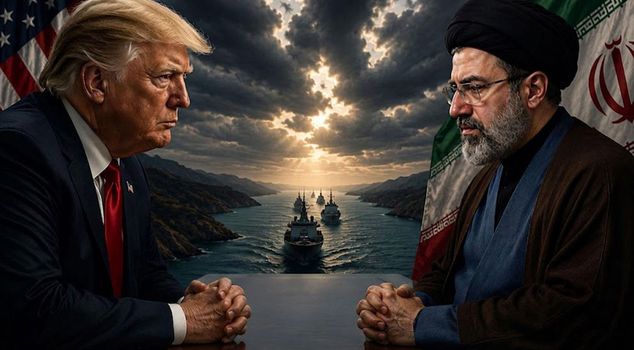
The diplomatic channels between the US and Iran, blocked due to military conflicts in the Strait of Hormuz, have reopened. The parties ceased hostilities, canceled the planned nuclear summit in Switzerland, and agreed to hold an emergency meeting on Tuesday in Doha, the capital of Qatar, to resolve the crisis in the Strait of Hormuz.
According to the US-based Axios news site, diplomatic channels between the US and Iran, which had reached a breaking point after reciprocal retaliations in the Strait of Hormuz, are being reopened.
RISING TENSION IN HORMUZ STEMS FROM DIFFERENT INTERPRETATIONS OF MEMORANDUM PROVISIONS
A senior US official confirmed that both sides are stepping back on the ground, saying, 'We have decided to cease all kinetic activities.' According to the statement, the recent clashes that escalated tension in Hormuz stemmed from differing interpretations by the parties of the Memorandum of Understanding (MOU) that had brought the two countries to the brink of ending the war, particularly its provisions concerning the Strait of Hormuz.
A 'RED LINE' WAS ESTABLISHED IN SWITZERLAND, BUT...
In negotiations held in Switzerland last week, US Vice President JD Vance and the Iranian delegation took a vital step. The two sides shook hands on establishing a direct red line (hotline) between the US military and Iran's Revolutionary Guard Corps to safely coordinate international maritime traffic in Hormuz.
However, according to the report, as of Saturday, this communication line had not yet been activated because Iran continues to assert its unilateral coordination of ship transits in the region, leading to new frictions on the ground.
NUCLEAR SUMMIT IS OUT, HORMUZ SUMMIT IS IN
According to details reported by Axios, the parties were scheduled to meet in Switzerland on Tuesday under normal circumstances to discuss Iran's nuclear program. But the latest military escalation in the Strait of Hormuz and attacks on cargo ships have completely changed priorities.
As the crisis deepened, the meeting venue was moved from Switzerland to Qatar's capital, Doha, and the main agenda item shifted entirely to security and control of ship traffic in the Strait of Hormuz.
Under the initial agreement, Iran committed to ensuring safe passage for commercial ships through the strait, while the US agreed to lift its blockade on Iranian ports. These provisions are expected to be translated into clear rules at Tuesday's Doha summit.
WHAT HAPPENED?
The Wall Street Journal (WSJ) had suggested that peace talks between the US and Iran had been 'suspended.' The report claimed that attacks between the two countries led to the complete suspension of talks, which were expected to resume this weekend in Switzerland.
Referring to the memorandum of understanding signed by US President Donald Trump in early June, the report highlighted Iran's obligation to keep the Strait of Hormuz open for commercial shipping.
US AMBASSADOR TO THE UN: WE WILL STRIKE IRAN AS LONG AS IT BLOCKS HORMUZ TRAFFIC
Meanwhile, US Permanent Representative to the United Nations Mike Waltz, in an interview with Fox News, said the US would continue targeting Iran's military infrastructure if Tehran threatens international maritime traffic in the Strait of Hormuz.
Speaking about the possibility of Iran resuming nuclear enrichment activities, Waltz stated that 'not only the US but the entire world opposes it' and assessed that in such a scenario, President Donald Trump would keep all options on the table.
Waltz also noted that technical talks regarding the progress of the ceasefire process between the US and Iran are ongoing, adding that Trump will 'always give diplomacy a chance,' but 'the President's patience will not last forever.'
RECIPROCAL RETALIATIONS
Iran and the US administration are each accusing the other of violating the reached agreement. In this context, Iran attacked a container ship carrying oil from Qatar and a tanker, and the US retaliated by striking Iranian communication lines, drones, and missile bases.