20.10.2026 20:43
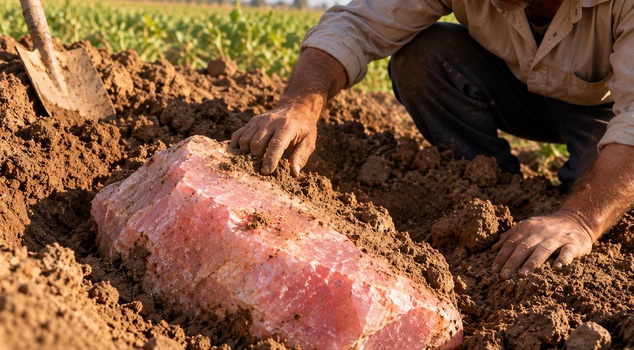
A pink granite stone found by a farmer cultivating his field in Egypt brought a thousands-year-old secret to light. Upon the farmer's report, archaeologists who came to the region uncovered pieces of two colossal statues believed to belong to Ramses II, one of the most famous rulers of Ancient Egypt. It was stated that one of the statues could be approximately 8.5 meters tall, and it was expressed that the discovery could provide new information about the history of the region.
An unusual stone encountered by a farmer in his field in Egypt's Nile Delta set archaeologists in motion. As a result of the excavations, important remains dating back approximately 3,000 years were reached.
THE PINK STONE HE FOUND IN HIS FIELD CHANGED EVERYTHING
Khaled El-Shahat, living in the village of Behbeit el-Hagar about 130 kilometers north of Cairo, noticed a pink-colored stone bearing ancient inscriptions while working in his field.
Realizing that the stone was not an ordinary piece of rock, the farmer reported the situation to the authorities. The work initiated by archaeologists who came to the area following the report resulted in the discovery of pieces of two large statues dating from the reign of Ramesses II.
In the discovery announced by Egypt's Ministry of Tourism and Antiquities, inscriptions bearing the pharaoh's royal titles were also identified alongside the statues.
THE HEAD SECTIONS OF THE GIANT STATUES WERE REVEALED
The head section of the first statue uncovered in the excavations was determined to be approximately 1.5 meters high. In this statue, Ramesses II was seen depicted with the double crown representing his dominion over Upper and Lower Egypt.
On another piece belonging to the back of the statue, the pharaoh's official royal title was found. Taking into account the dimensions of the pieces found, archaeologists assessed that the statue, together with its base, may have reached a height of approximately 8.5 meters.
In the approximately 2.4-meter-long piece belonging to the second statue, the 'nemes', the traditional striped headcloth of the pharaohs, drew attention. The legs and base of the statue have not yet been found.
THE SECRET OF THE INSCRIPTIONS ON THE PINK STONE HAS BEEN SOLVED
The pink granite stone, which was the starting point of the discovery, was determined to be more than 1.2 meters long. In examinations on the stone found approximately one meter from the second statue, traces of two royal titles of Ramesses II were detected.
It was determined that one of the inscriptions was 'Nesw-Bity', meaning king of Upper and Lower Egypt, and the other was 'Sa-Ra', meaning son of the sun god Ra in Egyptian mythology.
The farmer Khaled El-Shahat, who said he experienced great astonishment at the finds, reported that officials told him the discovery could change what is known about the region's history.
IT HOSTS THE REMAINS OF A TEMPLE DEDICATED TO ISIS
Behbeit el-Hagar, where the statue pieces were uncovered, hosts the remains of a temple dedicated to the goddess Isis, associated with motherhood, healing, and protection in Ancient Egypt.
In excavations continuing west of the temple complex, the connection between the two statues and their historical importance in the region are being investigated.
Ramesses II, who reigned between 1279 and 1213 BC, is known as one of the pharaohs of Ancient Egypt who built the most monuments. The magnificent temples at Karnak and Abu Simbel are also among the important works of his reign.