29.10.2026 19:24
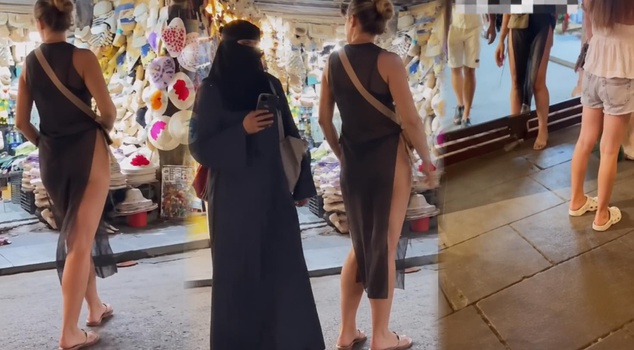
After a Turkish tourist family was denied entry to the historical area in Hoi An Ancient Town in Vietnam due to their revealing clothing, details of the dress code in the region emerged. While entry to some historical and religious structures is not permitted with clothing that leaves the shoulders and knees exposed, it was learned that no special fine is imposed on tourists who do not comply with the rules. It was stated that in August as well, a foreign tourist dressed similarly was turned away from the historic Japanese Bridge.
A Turkish tourist family traveling to Hoi An Ancient Town, one of Vietnam's most visited tourist destinations, had been turned away by officials because their clothing was deemed unsuitable for the cultural and spiritual fabric of the historic area.
The incident brought Vietnam's dress code rules enforced at historical and religious sites back onto the agenda.
Hoi An, a UNESCO World Heritage Site, is among the country's important tourism centers with its traditional architecture, temples, historic houses, and Japanese Bridge.
COVERING SHOULDERS AND KNEES IS REQUIRED
In Vietnam, tourists visiting temples, pagodas, religious structures, and historical sites in particular are expected to dress in accordance with the cultural characteristics of the environment they are in.
The country's official tourism information states that shoulders and knees must be covered when entering such areas.
Similar warnings are given to tourists who will visit the historic houses, temples, and traditional meeting halls in Hoi An. Long trousers made of lightweight fabric and T-shirts that cover the shoulders are listed among suitable clothing options.
TOURISTS WHO DO NOT DRESS APPROPRIATELY MAY NOT BE ALLOWED IN
The dress code practice in Hoi An is not new. Cultural heritage authorities in the region ask visitors to pay attention to their clothing in order to protect historical sites and maintain respect for these areas.
Officials can warn tourists whose clothing is deemed inappropriate at the entrances. Visitors may be asked to change their clothes or make them more appropriate.
Vietnamese authorities had also announced in 2021 that a practice was planned to provide clothing to visitors who do not have appropriate attire at historical and religious sites.
ANOTHER TOURIST WAS TURNED AWAY IN AUGUST
A similar incident occurred in Hoi An on August 4, 2026.
A foreign woman who wanted to visit the historic Japanese Bridge was stopped by an official because of her transparent clothing with a high slit.
The female guide, stating that the tourist's clothing did not comply with the visiting rules of the historic structure, explained the situation in English and asked the visitor to leave the area.
Following the warning, the tourist and the people accompanying her left the historic structure.
After the incident, officials from the Hoi An World Cultural Heritage Conservation Center also made a statement regarding the dress code.
IS THERE A FINE FOR THOSE WHO VIOLATE THE DRESS CODE?
According to the statement made by officials in August 2026, there is no specific fine regulation for inappropriate clothing in museums and monumental structures in Hoi An's historic area.
Therefore, officials' primary method is to inform tourists, warn them, and ask them to make their clothing appropriate.
However, the absence of a fine does not mean that visitors can enter historic structures in any kind of clothing. Officials may not allow people who are not dressed in accordance with the rules to enter the relevant structure.
TRADITIONAL CLOTHING HAD ALSO BEEN A SUBJECT OF DEBATE
In June in Hoi An, two foreign tourists touring in ao dai, Vietnam's traditional clothing, had also caused debate.
The tourists were warned on the grounds that the clothing was not in accordance with its traditional form of use, and after the incident the local administration launched an investigation.
The Hoi An local administration had announced that informational efforts were continuing to explain the region's cultural characteristics to tourists and to encourage the choice of appropriate clothing during visits.
WHAT SHOULD TOURISTS GOING TO VIETNAM PAY ATTENTION TO?
Tourists traveling to Vietnam should check the dress code before visiting temples, pagodas, historic houses, and religious structures in particular.
It is recommended to choose clothing that covers the shoulders and knees and to avoid transparent or overly revealing garments. In some sacred areas, visitors may also be asked to remove hats and shoes.
The recent incidents in Hoi An show that general strolling areas in tourist regions and historical and religious structures where entrance rules are enforced can be evaluated differently from one another.
While no new official decision has been announced regarding the incident experienced by the Turkish tourist family, the existing dress code practices in the region remain important for visitors.