17.07.2026 10:10
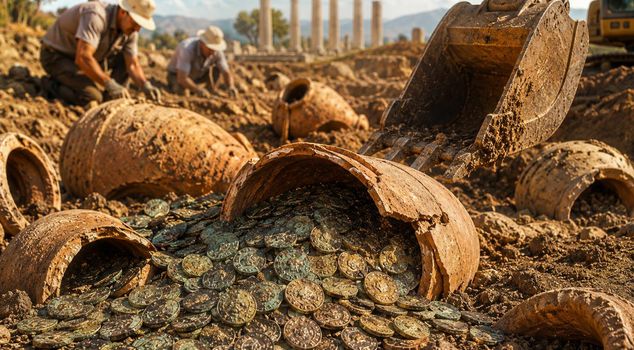
Municipal workers digging to lay a water pipe near Seville, Spain, accidentally uncovered a large treasure from the Roman Empire. The coins, weighing approximately 600 kilograms and estimated to number over 50,000, date back to 290-310 AD. They are believed to have been almost unused and may have been stored for soldiers' salaries or tax revenues. Examination and restoration work on the discovered coins is ongoing.
A historic discovery was made during water pipeline works in the town of Tomares, in the Seville region of southern Spain. An excavator digging at a depth of about one meter in El Olivar del Zaudín Park hit hard objects underground.
After work was halted, an inspection revealed numerous ancient clay jars (amphorae) placed side by side and stacked on top of each other. During the excavation, 10 amphorae were damaged, while 9 were found intact and brought to the surface.
RESCUE EXCAVATION LAUNCHED
Experts from the Seville Archaeological Museum and local cultural authorities were dispatched to the area, securing the site with a safety perimeter and launching a rescue excavation. Thousands of coins from the damaged amphorae were taken to the museum for restoration and examination.
COINS ALMOST UNUSED
Ana Navarro, Director of the Seville Archaeological Museum, stated that the coins found in the amphorae are silver-plated bronze follis, dated between 290-310 AD.
It was reported that the coins bear the busts of Roman Emperors Constantine I and Galerius, along with official mint marks of the period. Experts noted that the coins were almost unused, preserving their appearance as if freshly minted.
600-KILOGRAM TREASURE
According to archaeologists, the amphorae, normally used to transport olive oil, were employed as a money chest this time. The coins, found in a special compartment hidden with bricks and mortar, are thought to possibly belong to a military garrison depot or a tax collection center.
Historians speculate that the coins may have been stored for paying Roman soldiers' salaries or sending collected taxes to the imperial center, but were buried due to a possible attack or internal turmoil.
Restoration, cleaning, and cataloging work on the coins, weighing approximately 600 kilograms and estimated to number over 50,000, continues in the laboratories of the Seville Archaeological Museum.