19.10.2026 15:21
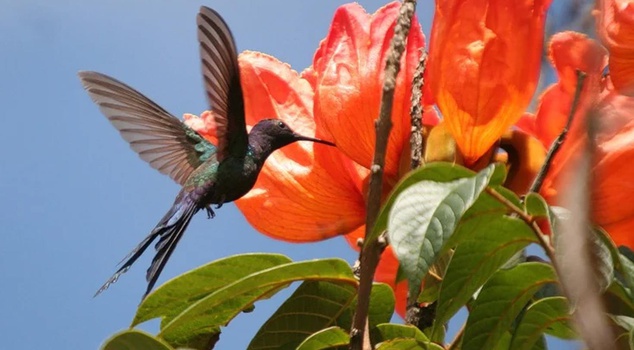
The African tulip tree, grown in Australia for its showy flowers, has begun spreading into natural areas and threatening the ecosystem. The tree, whose flowers are said to be toxic to native bees, has been declared an invasive species in Queensland and added to the list of plants banned from sale.
In Australia's Queensland state, the African tulip tree, grown as an ornamental plant for its orange flowers, has turned into a serious threat to nature. While it is stated that the flowers of the rapidly spreading tree can have a lethal effect on native bees, authorities have banned the sale of the plant, which is classified as an invasive species.
PLANTED FOR ITS BEAUTY, IT SPREAD INTO NATURE
The African tulip tree, native to tropical Africa and with the scientific name Spathodea campanulata, was grown as an ornamental plant in Queensland for many years because of its showy orange flowers. However, the tree, which can grow up to 24 meters tall and grows rapidly, over time began to spread from gardens into natural areas.
The species, which multiplies especially along stream banks, in waterside vegetation and in degraded rainforests, has become a threat to the region's natural vegetation.
ITS FLOWERS CAN BE LETHAL TO BEES
One of the most notable dangers of the African tulip tree has been the effect of its flowers on native stingless bees. The Queensland government states that the flowers are toxic to these bees.
In a study conducted by researchers at the Federal University of Bahia in Brazil, a total of 104 dead insects were found in 86 flowers collected from three different trees. It was determined that about 98 percent of the dead insects belonged to the order Hymenoptera, which includes bees and their close relatives.
The researchers, assessing that the flowers may contain toxic compounds capable of having a lethal effect on insects, emphasized that the tree should not be planted in gardens, public spaces or near beehives.
EVEN A SINGLE TREE CAN START AN INVASION
The African tulip tree can spread over large areas thanks to its seeds being carried by wind and water. The dumping of garden waste in natural areas is also effective in the spread of the species, which can also reproduce through root suckers.
Authorities point out that even a single tree can be the start of a new invasion. It is noted that the decline of native bees can negatively affect plant pollination and the renewal of the natural ecosystem.
SALE BANNED
The Queensland government has included the African tulip tree among category 3 restricted invasive plants under the Biosecurity Act. With this classification, selling, giving away and releasing the tree into the environment have been banned.
While it is stated that fines may be imposed on those who do not comply with the rules, it is recommended that trees, especially those located in areas close to natural areas, be removed.
Authorities state that in addition to removing the tree by physical methods, appropriate herbicide applications can also be used in control efforts.