11.11.2026 18:20
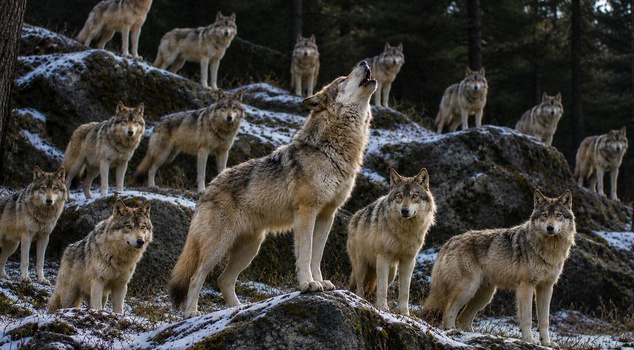
The 14 gray wolves released into Yellowstone National Park in the US, where wolves had not lived for about 70 years, played an important role in the revival of nature. With the return of the wolves, the deer's grazing habits changed, while trees began to grow again and suitable habitats for beavers began to form. The change in the ecosystem revealed the impact of a single species on nature.
A nature conservation project launched in Yellowstone National Park in the USA in 1995 has produced remarkable results over the years. Fourteen gray wolves brought from Canada were released into an area where wolves had not lived for about 70 years. Initially aiming only to restore wolves to their natural habitat, the project over time became an important part of an ecological change extending from vegetation to other animal species.
14 WOLVES RELEASED INTO THE WILD AFTER 70 YEARS
The wolves in Yellowstone were eliminated in the early 20th century due to intensive hunting. After the last wolf pack was killed in 1926, grazing pressure by deer living in the park on young trees increased. Officials seeking to re-establish the natural balance released 14 gray wolves brought from Canada into the area in 1995. A year later, 17 more wolves were placed in the park, and over time new packs formed as the wolves reproduced.
THE WOLVES CAME, AND THE DEER'S BEHAVIOR CHANGED
With the reintroduction of wolves to Yellowstone, changes were observed in the deer population and their feeding habits. The return of predators caused deer to spend less time in certain areas. Young trees, especially those heavily consumed along riverbanks, had the opportunity to grow again as grazing pressure decreased. Thus, the impact of wolves on the ecosystem was not limited to the animals they hunted.
TREES GREW AGAIN, AND BEAVERS RETURNED
With the change in the deer's feeding habits, trees such as willows, poplars, and quaking aspens began to grow again in some areas. The recovery of vegetation helped create suitable habitats, especially for beavers. The dams built by beavers slowed the flow of water and created new habitats for fish, birds, and other living creatures.