05.08.2026 10:01
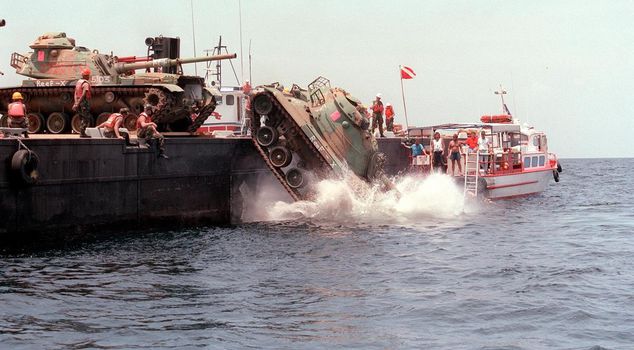
As part of a project implemented off the coast of the U.S. state of Alabama, 100 decommissioned M60 battle tanks were sunk into the Gulf of Mexico. With all environmentally harmful parts removed, the tanks gradually transformed into artificial reefs for corals and marine life over the years, contributing to the marine ecosystem.
100 decommissioned M60 battle tanks placed in the Hugh Swingle and Don Kelley North artificial reef zones off the coast of Alabama in the US have been repurposed through an interesting project that contributes to the marine ecosystem.
The tanks, placed at a depth of approximately 21 to 34 meters, became part of an artificial reef project aimed at increasing fish populations and creating new habitats.
ALL ENVIRONMENTAL RISKS ELIMINATED
Before being deployed into the sea under the REEF-EX program, all fuel, oil, hydraulic fluids, ammunition, and any components that could harm the environment were removed from the tanks.
Throughout the process, detailed environmental inspections were carried out by the US Environmental Protection Agency (EPA), the US Army Corps of Engineers, and relevant agencies.
THEY BECAME NEW HABITATS FOR MARINE LIFE
Over time, the tanks settled on the seafloor became covered with corals, sponges, and various marine organisms.
Today, these structures have turned into natural habitats for red coral fish, groupers, and many marine species. The area also stands out as one of the popular spots visited by diving enthusiasts.
BROUGHT BACK TO NATURE INSTEAD OF BEING SCRAPPED
The US Army decommissioned thousands of M60 tanks in the early 1990s when more modern M1 Abrams tanks entered service.
Instead of being scrapped, the tanks were repurposed as artificial reefs, brought into the marine ecosystem through the project implemented in Alabama. Experts note that the biodiversity formed over the years shows that such artificial reef projects provide significant contributions to marine life.