07.11.2026 17:31
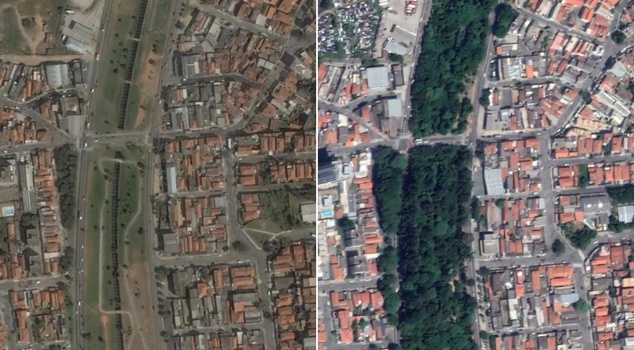
A riverside once littered with garbage and ignored by everyone has been transformed into a lush living space through one person's years-long struggle. Brazilian Hélio da Silva did not give up even though the first saplings he planted were destroyed. This effort, which began in 2003, has now become an exemplary environmental movement reaching 45 thousand trees.
In Brazil, the reforestation effort that Hélio da Silva began on his own in 2003 has turned into a major environmental project over the years. Despite the destruction of the first saplings he planted on the bank of a neglected stream covered in garbage in São Paulo, da Silva did not give up and has led the creation of a green area that today contains about 45,000 trees.
HIS FIRST SAPLINGS WERE DESTROYED, AND HE STARTED AGAIN
Hélio da Silva's story began in 2003 on the banks of the Tiquatira Stream in São Paulo. Wanting to green the area, which was full of garbage and neglected, da Silva planted 200 saplings he had bought with his own money.
However, the destruction of the first 200 saplings he planted did not stop him. Refusing to give up, da Silva planted 400 new saplings this time. When his second attempt was also damaged, he expanded his goal and continued his efforts to bring thousands of trees to the area.
THE DUMP SITE BECAME A GREEN LIVING SPACE
The work he carried out alone and with his own means for years gradually turned into a major reforestation project. The area, now known as Parque Linear Tiquatira, is home to about 45,000 trees and more than 170 native tree species.
The stream bank, once known for accumulating garbage and its neglect, has now become one of São Paulo's important green areas.
HIS NEW GOAL IS 50,000 TREES
After years of effort, Hélio da Silva continues his work, and his new goal is to increase the number of trees to 50,000.
Da Silva's years-long struggle, choosing to replant rather than give up when his first saplings were destroyed, has become a striking example showing how one person's determination can change the nature of a city.