02.06.2026 00:40
Dr. Erdem Saka, a faculty member at Bayburt University, stated that the Celali Revolts, which began in the late 16th century, radically transformed Anatolia's social and demographic structure, completely emptying villages around Bayburt and Erzurum. Citing historical sources from the era of Kuyucu Murad Pasha, who stood out in suppressing the revolts, Saka noted that a tower was built at the Ottoman headquarters in Bayburt's Sünür village using the heads of 3,000 Celali brigands captured in İspir.
Dr. Erdem Saka, a faculty member of the Department of History at Bayburt University's Faculty of Humanities and Social Sciences, stated that the Celali rebellions caused major changes in Anatolia and that Bayburt and its surroundings were severely affected by this process. Drawing attention to the impact of the rebellions on Ottoman history, Saka noted that this process was not merely a military movement but also had significant consequences for the social and demographic structure of the empire.
"THE SOCIAL STRUCTURE OF ANATOLIA CHANGED"
Stating that "One of the events that transformed the Ottoman state is the Celali rebellions," Saka expressed that the rebellions began around the 1590s and continued intermittently until the mid-17th century.
Explaining that the settlement structure in Anatolia changed significantly during this process, Saka described the impact of the period with the words, "During the Celali rebellions, most of the settlements in Anatolia were emptied, and the social and demographic structure of Anatolia underwent substantial change."
Saka noted that many settlements along the Erzurum and Bayburt line were directly affected by this process. Explaining the change in the region with examples, Saka stated, "These rebellions seriously affected Bayburt and the region. It is known that in Erzurum, most villages were left with no one, settlements in Bayburt changed, people left, or tried to sustain their lives by establishing new settlements on more fortified mountain tops in their own areas."
"KUYUCU MURAD PASHA TURNED TO MOVEMENTS IN ANATOLIA"
Emphasizing that Kuyucu Murad Pasha was one of the prominent military actors in suppressing the Celali rebellions, Saka also conveyed that there are different accounts in sources regarding Murad Pasha's nickname.
Stating that Kuyucu Murad Pasha fell into a well in 1585 during Özdemiroğlu Osman Pasha's Tabriz campaign and was captured by the Safavids and imprisoned in Alamut Castle, Saka said there is information that he was called "Kuyucu" because of this incident.
Saka expressed the other account regarding the nickname with the words, "It is also known that he was called 'Kuyucu' due to falling into this well, or that he was given the nickname 'Kuyucu' by burying those he killed in wells."
Stating that Kuyucu Murad Pasha was summoned from the Austrian front in 1606 and appointed as the serdar for the Iranian campaign, Saka expressed that Murad Pasha turned to quell the disturbances in Anatolia before the Iranian campaign.
Adding that during this process, action was taken against prominent figures of the Celali movements such as Canboladoğlu, Kalenderoğlu, and Tavil Ahmed, Saka said, "But first, he started by eliminating these fugitive movements in Anatolia, the major bandit leaders such as Canboladoğlu, Kalenderoğlu, Tavil Ahmed, and their armies."
Reporting that significant military moves were made in 1607 and 1608 to ensure tranquility in Anatolia, Saka noted that Murad Pasha largely dispersed the armies of these groups and defeated them.
"KALENDEROĞLU'S ARMY WAS DISPERSED AROUND MARAŞ GÖKSUN"
Emphasizing that Kalenderoğlu, one of the important figures of the Celali movements, was also defeated in this process, Saka stated that in 1608, Kalenderoğlu's army was dispersed around Maraş Göksun.
According to the information provided by Saka, after Kuyucu Murad Pasha fell ill, the command and administration of the army were left to Hüseyin Pasha. Hüseyin Pasha continued the pursuit and caught the Celali bandits around İspir.
Providing information about this process, Saka said, "It is known that Kuyucu Murad Pasha fell ill and entrusted the command and administration of the army to Hüseyin Pasha. Hüseyin Pasha continued the pursuit and caught the bandits around İspir."
"THE OTTOMAN HEADQUARTERS WAS ESTABLISHED IN SÜNÜR"
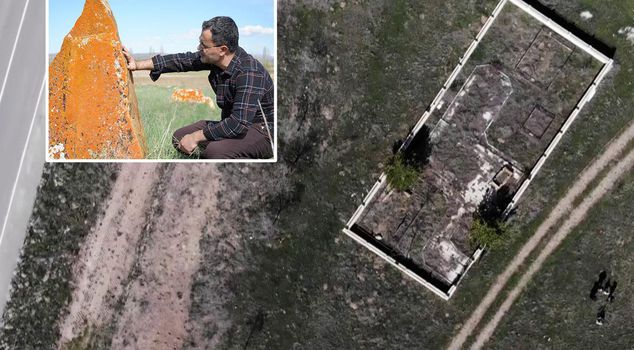
Stating that during the pursuit of the Celali bandits, the main headquarters of the Ottoman army was established in the village of Sünür, connected to Bayburt, and the name Sünür originates from the word 'border,' Saka described the importance of the village for the Ottoman army with the words, "Meanwhile, the Ottoman headquarters, the main headquarters, was established in this historical village, now named Çayıryolu, whose name comes from border."
Emphasizing that Çayıryolu was not only significant during the Celali rebellions but also for Ottoman and Akkoyunlu history, Saka noted that the village was one of the places where Ottoman sultans encamped with their armies.
Stating that Yavuz Sultan Selim and IV. Murad are associated with the region, Saka expressed that IV. Murad encamped in the village with his army. Saka said, "Sünür is also one of the central settlements of the Akkoyunlus. The tomb of Hacı Kutlu Bey, the father of Kara Yülük Osman Bey, the founder of the Akkoyunlus, is located here."
"THERE ARE DATA IN SOURCES THAT A TOWER WAS MADE FROM THE HEADS OF 3 THOUSAND PEOPLE"
Saka stated that notable information is found in sources regarding this process. According to the information provided by Saka, Hüseyin Pasha killed 3,000 of the 3,500 Celali bandits caught around İspir and brought the remaining 500 alive to the Ottoman headquarters established in Sünür.
Reporting that this event is detailed in period narratives, Saka said, "While Kuyucu Murad Pasha was encamped here, Hüseyin Pasha captured 3,500 Celali bandits around İspir and beheaded 3,000 of them. There are data in sources that, by bringing 500 alive, a tower was made from the heads of the bandits in front of the pasha's tent established here."
Saka also conveyed that there are witness statements indicating that the remaining 500 people were executed and stacked in three large dug wells. Expressing that the accounts of village residents finding bone fragments in the area also support this claim, Saka noted that Çayıryolu village in Bayburt is one of the last stops where the Celali rebellions were substantially brought under control.