11.11.2026 07:40
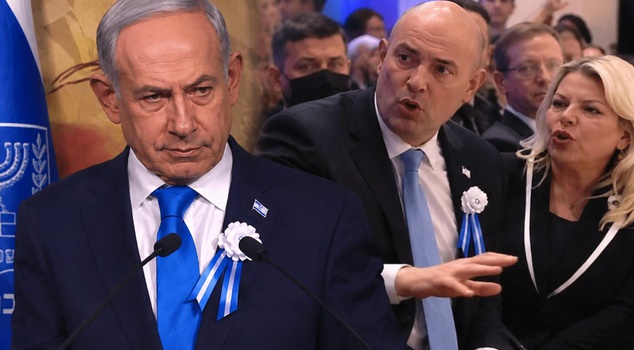
As the search for a new government continues in Israel, an argument in parliament between Netanyahu's wife Sara Netanyahu and former Prime Minister Naftali Bennett caused tension. Meanwhile, the British press claimed that Netanyahu calls US President Trump every day to restart attacks on Iran.
As political uncertainty continued after the elections held in Israel on October 27, the first meeting of the newly elected parliament was marked by heated debates. While Prime Minister Benjamin Netanyahu's rivals continued their efforts to form a new government, verbal tension occurred between Netanyahu's wife Sara Netanyahu and former Prime Minister Naftali Bennett. In the same period, a report published by the British newspaper Financial Times brought to the agenda Netanyahu's pressure on the US administration regarding Iran.
DISPUTE BETWEEN NETANYAHU'S WIFE AND FORMER PRIME MINISTER
According to a Washington Post report, Netanyahu, speaking at the first session of Israel's parliament, the Knesset, on November 10, targeted the new government that could be formed against him. Opposing a coalition that could be formed especially with the support of Arab parties, Netanyahu argued that such a government would endanger Israel's future.
During the speech, former Prime Minister Naftali Bennett asked Netanyahu why he did not describe Qatar as an enemy of Israel. Thereupon, Sara Netanyahu responded to Bennett with harsh words. Because of the dispute between the two, Prime Minister Netanyahu had to pause his speech. The opposition's candidate for prime minister, Gadi Eisenkot, remained silent during the argument.
SEARCH FOR A NEW GOVERNMENT AGAINST NETANYAHU
Israeli President Isaac Herzog, after the elections, tasked former Chief of Staff Gadi Eisenkot with forming the government. However, the bloc led by Eisenkot has not yet reached the 61-seat majority required to form a government. The opposition leader has about six weeks to complete coalition negotiations.
Netanyahu, meanwhile, continues his duties as interim prime minister until a new government is formed. Opposition parties have taken action to launch a state investigation into the October 7, 2023 attacks and to repeal the Netanyahu government's controversial judicial regulations.
CLAIM THAT NETANYAHU CALLS TRUMP EVERY DAY
In addition to the political tension in Israel, Netanyahu's pressure on US President Donald Trump regarding Iran also received wide coverage in the international press.
According to a Financial Times report based on sources familiar with the talks, Netanyahu calls Trump every day by phone to restart military operations against Iran. A source briefed on the talks said that Netanyahu wants to restart the war, while figures inside and outside the White House who oppose military intervention are trying to block these efforts.
However, another source close to developments in Israel, while confirming that Netanyahu wants the attacks to restart, did not agree with the claim that an organized pressure campaign was being waged to persuade Trump.
TRUMP DISTANT FROM NEW ATTACKS
Although Netanyahu wants military operations against Iran to restart, Trump is said to be considering the diplomatic solution option. After his meeting with Qatari Prime Minister Mohammed bin Abdulrahman Al Thani, the US President stated that a new military operation against Iran is currently unlikely.
Trump announced that regional countries such as Qatar, Saudi Arabia, the United Arab Emirates, Bahrain and Kuwait want the current situation to be maintained. It was reported that the Washington administration prefers to allow an opportunity for negotiations while continuing the naval blockade and economic pressure against Iran.
ERDOĞAN ALSO AMONG THE LEADERS WHO MET WITH TRUMP
According to the Financial Times report, President Recep Tayyip Erdoğan, Saudi Crown Prince Mohammed bin Salman, UAE President Mohammed bin Zayed Al Nahyan and Emir of Qatar Tamim bin Hamad Al Thani were among the leaders who contacted Trump.
It was reported that regional leaders conveyed to the US President the message that time should be allowed for diplomatic talks instead of increasing military tension. The Iranian administration, while announcing that it would respond if a new attack were carried out, did not completely close the door to the possibility of a diplomatic solution.