24.08.2026 00:40
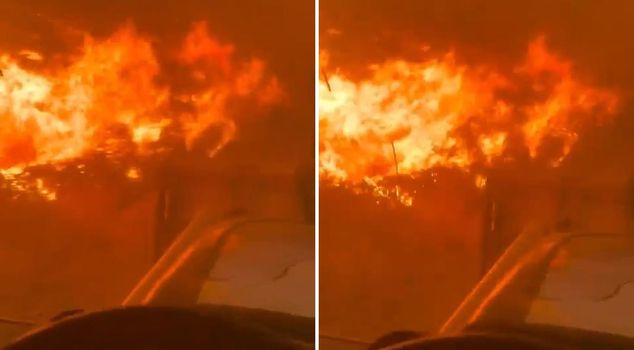
The Hawk Fire, which broke out near Reno in the U.S. state of Nevada, grew out of control due to strong winds and reached residential areas. As the fire burned more than 10,500 acres, evacuation orders were issued for approximately 14,000 households, and numerous homes and businesses were damaged by the flames.
The Hawk fire, which broke out near Reno in the U.S. state of Nevada, spread rapidly across a wide area due to strong winds. With more than 10,500 acres burned, evacuation orders were issued for approximately 14,000 households in the region, and numerous homes and businesses were affected by the flames.
FLAMES REACH RESIDENTIAL AREAS
The fire, which started around Peavine Mountain in the Humboldt-Toiyabe National Forest, advanced toward populated areas. It was reported that the fire intensified in mountainous regions near the California-Nevada border, and some structures became unusable.
Evacuation orders were also issued for some areas around the University of Nevada campus, and it was noted that crews continued their efforts to prevent the flames from advancing further into residential zones.
THOUSANDS OF HOMES AND BUSINESSES LEFT WITHOUT POWER
Due to the fire, approximately 10,000 homes and businesses in Washoe County experienced power outages. Transportation in the region was also adversely affected. Sections of Highway 395, one of the major north-south routes in the U.S., were closed to traffic.
Nevada Governor Joe Lombardo declared a state of emergency in Washoe County and requested the deployment of National Guard units to support firefighting efforts.
AIR SUPPORT AND SECURITY MEASURES INCREASED
It was announced that two helicopters would join firefighting operations, and 60 soldiers would support police teams to ensure security in evacuated areas.
Governor Lombardo stated that the fire's behavior was changing rapidly and urged residents to follow evacuation instructions from authorities.
Washoe County Fire and Rescue Chief Richard Edwards said strong winds caused the flames to spread quickly, and the fire advancing toward residential areas, in particular, made intervention difficult.
WIND AND DRY VEGETATION FUELED THE FIRE
Authorities noted that severe winds, low humidity, and dry vegetation played a role in the fire's growth.
Reno Mayor Hillary Schieve also urged those living in areas under evacuation orders to move to safe locations without delay. Schieve emphasized that early evacuation was important both for the safety of residents and for facilitating the work of firefighting teams.
CURRENT STATUS AT AIRPORTS
Reno-Tahoe International Airport remained outside the evacuation zone, and no disruptions to commercial flights have occurred so far.
Reno-Stead Airport, however, was closed to civilian air traffic due to the fire. It was reported that the airport would continue to be used for firefighting aircraft operations.