14.05.2026 08:30
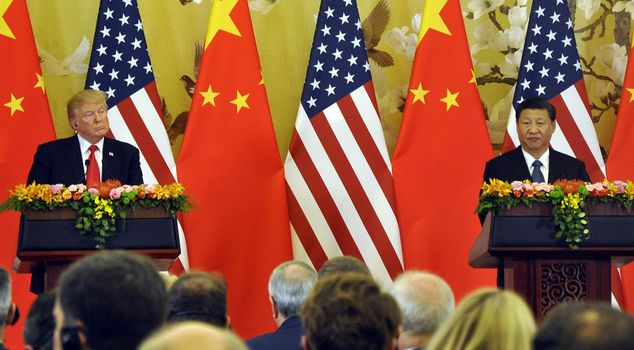
During US President Donald Trump's visit to China, the Taiwan issue once again took center stage in world news. Chinese President Xi Jinping told Trump that if the Taiwan issue is mishandled, the two countries could face the risk of conflict.
During US President Donald Trump's critical visit to China, the Taiwan issue emerged as one of the prominent topics in the meetings.
According to Chinese state media, Chinese President Xi Jinping emphasized in his meeting with Trump that the Taiwan issue is the most sensitive matter in China-US relations.
State television CCTV reported that Xi Jinping stated, "The Taiwan issue is the most important issue in China-US relations."
Xi also issued a pointed warning to the Washington administration, saying, "If mishandled, the two countries could face off or even conflict. It could put the entire China-US relationship in an extremely dangerous situation."
FOCUS ON THE US TAIWAN POLICY
Experts closely following China assess that Xi Jinping may exert pressure on Trump during the talks to halt arms sales to Taiwan.
The US administration announced in December 2025 a $11 billion arms deal with Taiwan, which drew a strong reaction from the Beijing administration.
Meanwhile, last Friday, a bipartisan group of US senators sent a letter to President Trump requesting that Washington clearly maintain its support for Taiwan.
The letter, referencing economic negotiations with China, stated, "You can clearly convey to Beijing that US support for Taiwan is not a matter for negotiation."
Trump previously stated in a comment that Xi Jinping sees Taiwan as part of China, adding, "What he will do is up to him."
ORIGINS OF THE CRISIS BETWEEN CHINA AND TAIWAN
China considers Taiwan as its own territory and views the island as a breakaway province that should ultimately come under Beijing's control.
Taiwan, which today possesses many features of an independent state, still has a disputed official status in the international arena. The number of countries that officially recognize Taiwan is limited to only 12.
The Beijing administration argues that countries cannot maintain formal diplomatic relations with both China and Taiwan simultaneously.
Currently, the political structure in power in Taiwan advocates for independence from China, while the main opposition party supports establishing closer ties with Beijing.
HISTORICAL TENSION DATES BACK TO 1949
The foundation of the political division between Taiwan and China was laid in 1949 after the Chinese Civil War. Following the victory of Mao Zedong's communist forces, Chiang Kai-shek and his supporters retreated to Taiwan.
While Chiang Kai-shek established an exile government there, Taiwan remained the center of the Republic of China's administration for many years.
Over time, as the democratization process accelerated in Taiwan, the Beijing administration proposed the "one country, two systems" model for Taiwan as well. However, the island's administration did not accept this model.
Despite political crises, economic relations between the two sides continued to grow over the years. It is reported that Taiwan's investments in China reached $193.5 billion between 1991 and 2021.