24.01.2026 12:01
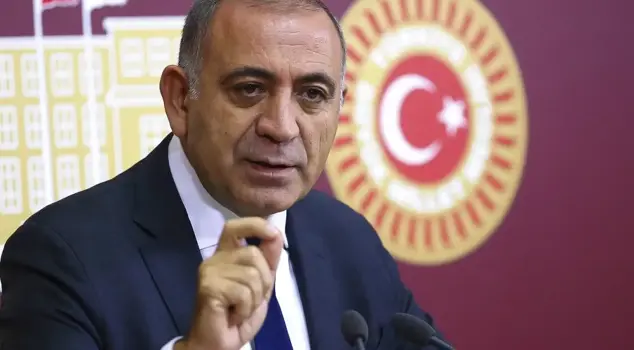
CHP's Gürsel Tekin stated that the rapidly increasing substance addiction in Turkey has become a multidimensional crisis that threatens not only health but also social security and the future of young people. Tekin said, "Turkey is silently but heavily fighting a war against substance addiction. If we ignore this issue, we will lose our future."
CHP's Gürsel Tekin drew attention to the rapidly increasing substance addiction in Turkey, stating that the issue has now become a multidimensional crisis that threatens not only health but also family structure, social security, and the future of young people. Tekin emphasized that the fight against addiction is a national issue that goes beyond political positions and party calculations, saying, "If we ignore this issue, we will lose our future."
"TURKEY IS IN THE MIDST OF A SILENT WAR"
In his written statement, Tekin expressed the following: "Turkey is unknowingly in the midst of a silent war. The name of this war is substance addiction. This problem, which opens deep wounds in our streets, schools, homes, and the hearts of our families, is no longer an individual health problem; it is a national crisis that threatens social security, disrupts families, alienates young people from life, and mortgages our future. The issue is not just addiction; it is a matter of supply, demand, crime, poverty, hopelessness, social decay, and most importantly, neglect. Therefore, the fight against substance addiction should become one of the top priorities of the state and should be addressed as a national issue beyond political positions.
"WE ARE ALSO LOSING THE FUTURE OF SOCIETY"
The most critical step in combating substance addiction is to correctly define the problem. At the core of addiction are low self-esteem, curiosity, traumas, family issues, psychological sensitivities, and economic collapse. To explain this picture solely with individual choices is a tragic misconception. Addiction is not a weakness of will; by definition, it is a brain disease.
Today, the addicted individual is not only losing their own body and soul; we are also losing the entire order of their family, their social environment, and the future of society. More alarmingly, the likelihood that today's young users will become part of the supply chain on the streets tomorrow is very high. In other words, addiction creates a criminal economy that not only consumes but also produces.
"THE ROLE OF THE FAMILY IN TREATMENT IS VALUABLE BUT NOT SUFFICIENT"
The current system only relies on detox applications. However, detox is the beginning of treatment, not the end. Treatments that are not supported by a rehabilitation process lack permanence. Therefore, detox, psychotherapy, rehabilitation, social integration, vocational training, and employment should form a closed chain that follows one another.
Locking addicts in prison does not solve the problem, as usage resumes after incarceration. Treating, rehabilitating, providing vocational training, and supporting employment for addicts in prisons is strategic for social security.
The role of the family in the treatment process is valuable but not sufficient on its own. Because the addicted individual often denies their addiction, while the family remains in helplessness and ignorance. Therefore, mandatory persuasion and treatment mechanisms should be reorganized within a scientific, legal, and ethical framework.
"THIS FIGHT IS NOT A BURDEN THAT ONLY THE MINISTRY CAN BEAR"
This fight is not a burden that the Ministry of Health can shoulder alone. Health, the Ministry of National Education, Interior, Justice, Family and Social Services, local governments, and civil society should come together at the same table and prepare a national strategy plan. In this context, the Drug Control Commission of the Grand National Assembly of Turkey, which was closed in 2018, should be re-established immediately.
In countries like Switzerland, Italy, and Portugal, conducting addiction treatment through private rehabilitation centers + state support models has increased success rates. The applicability of similar models in our country should be evaluated. It is important for social transformation to include individuals who have recovered from addiction in a disadvantaged employment quota similar to Article 30 of the Labor Law No. 4857.
The fight against substance addiction is not just a health policy or a security operation; it is a defense of the future. We must protect our children, our youth, our families, and our social fabric. The resources of this country, its institutional capacity, and the strength of social solidarity are sufficient to solve this problem. There is a need for will, determination, and coordination."