29.06.2026 06:30
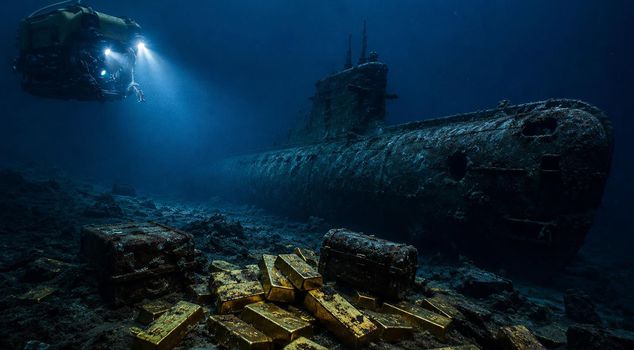
The approximately 2.2 tons of gold carried by the Japanese submarine I-52, which was sunk in the Atlantic Ocean during World War II, has been lying at the bottom of the ocean for 82 years. The treasure, estimated to be worth over $280 million today, has remained unreachable due to the wreck's location at a depth of 5.2 kilometers. Experts suggest that future advancements in deep-sea technology may enable new recovery efforts.
The millions of dollars worth of gold carried by the Japanese submarine I-52, which sank during World War II, still lies in the depths of the Atlantic Ocean 82 years later. The gold, estimated to be about 2.2 tons, is believed to be worth over 280 million dollars today.
SUNK DURING A SECRET MISSION
The I-52 submarine, under the command of Captain Kameo Uno, departed from Japan's Kure Port on March 10, 1944, heading to Nazi-occupied France. The submarine's mission was to transport strategically important materials and technologies between Germany and Japan. Besides the gold, the submarine also carried tungsten, molybdenum, tin, rubber, and various war materials.
However, U.S. code-breaking teams had pre-detected I-52's route. The submarine was hit by a torpedo and sunk into the depths of the Atlantic Ocean on the night of June 23, 1944, during an attack by a Grumman TBF Avenger aircraft launched from the USS Bogue aircraft carrier.
WRECK FOUND, GOLD STILL UNREACHABLE
The wreck of I-52 was located in 1995 by a team led by American wreck researcher Paul Tidwell using advanced sonar systems. During exploration dives carried out three years later, the submarine's hull was imaged, and some of its cargo, including opium boxes and tin ingots, was reached.
Researchers believe the gold is located in a much harder-to-reach section of the submarine. The depth of approximately 5,200 meters (17,060 feet) is cited as the biggest obstacle to recovery efforts.
Thus, the approximately 2.2 tons of gold cargo has remained at the bottom of the Atlantic Ocean for 82 years. Experts state that future deep-sea technologies could enable new recovery attempts.