29.10.2026 11:15
During excavations carried out at Tavşanlı Höyük in the Tavşanlı district of Kütahya, approximately 4,000-year-old dog paw prints were found on mudbrick among the rubble of a building that collapsed after a fire in the Bronze Age. Excavation officials stated that the prints preserve a small moment of daily life 4,000 years ago.
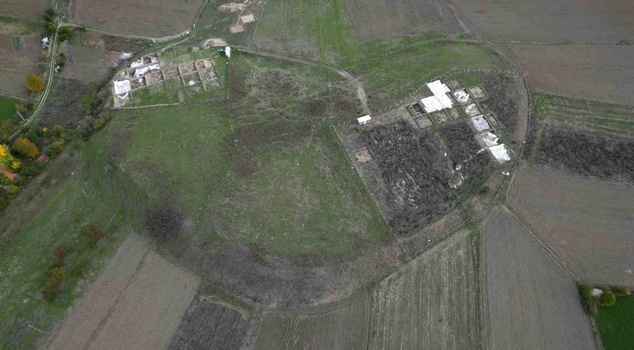
Archaeological excavation works carried out at Tavşanlı Höyük, which resembles a heart shape when viewed from the air in the Tavşanlı district of Kütahya, continue to shed light on the region's thousands of years of history. While the approximately 4,000-year-old dog paw prints unearthed during the excavations stand out as a remarkable finding regarding people's lives in the Bronze Age and the daily life of the period, the finds both excited and delighted the district's residents.
The excavation works, which have been ongoing since 2021 under the leadership of Prof. Dr. Erkan Fidan, a faculty member at Bilecik Şeyh Edebali University (BŞEÜ), aim to illuminate the history of Tavşanlı Höyük, known as one of the largest Bronze Age cities in Western Anatolia. Within the scope of the works, while the architectural structure of the mound is being examined, important archaeological discoveries regarding the lifestyles of the communities that lived here in the past are also being brought to light. It was reported that the dog paw prints unearthed during the excavations were preserved on mudbrick found among the rubble of a building that burned down and was destroyed in the Bronze Age. It drew attention that the prints, dated to approximately 4,000 years ago, have survived to the present day despite thousands of years having passed. Excavation officials, stating that the paw prints seen on the mudbrick carry a small moment of daily life from the past to the present, used the expressions, “The paw prints on it preserved a small moment of daily life from 4,000 years ago.”
AN ORDINARY MOMENT FROM 4,000 YEARS AGO HAS REACHED THE PRESENT DAY
Such traces unearthed in archaeological excavations provide information not only about the architectural features of the structures and the materials used, but also about the animals that were around people in the past and the natural flow of daily life. The paw prints found at Tavşanlı Höyük also took their place among the finds that enabled an ordinary moment experienced thousands of years ago to reach the present day.
IT SHEDS LIGHT ON TAVŞANLI'S DEEP-ROOTED HISTORY
While excavation works continue at Tavşanlı Höyük, which resembles a heart shape when viewed from the air, each new find unearthed once again reveals the historical importance of the region. The mound, one of the important settlements of Western Anatolia in the Bronze Age, carries the traces of past life to the present day with its architectural remains and archaeological finds.
Citizens from Tavşanlı Tuna İşleyen, Hasan Ramazan and Ahmet Özdemir also stated that the approximately 4,000-year-old dog paw prints unearthed during the excavations excited them. Stating that the find is important in terms of showing that the district has a deep-rooted past, the citizens expressed that it is gratifying that new traces regarding the history of Tavşanlı are being brought to light.