13.05.2026 18:40
It has been suggested that the US and China are close to agreeing on a new mechanism in the upcoming summit between Trump and Xi Jinping, which would reduce tariffs on approximately $30 billion worth of non-sensitive product trade. Under the plan called the "Board of Trade," the aim is to increase trade in energy, agriculture, and consumer goods, while restrictions on technologies critical to national security will continue.
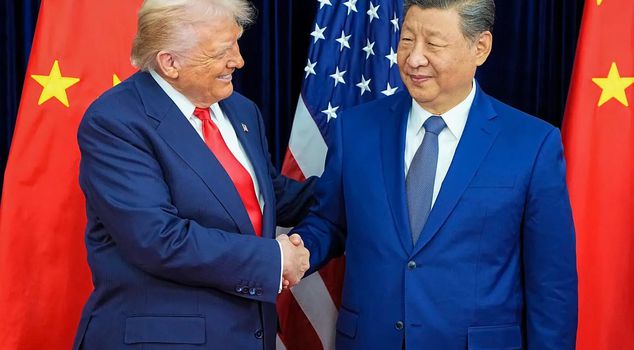
It has been claimed that the US and China are close to agreeing on a new mechanism that will revive trade in non-sensitive products during the Trump-Xi Jinping summit to be held this week.
According to the claim, the parties plan to increase mutual trade by reducing tariffs on approximately $30 billion worth of product groups that do not pose a risk to national security.
“BOARD OF TRADE” MECHANISM
The mechanism called “Board of Trade,” brought to the agenda in March by US Trade Representative Jamieson Greer, is expected to be one of the most important topics of this week's summit.
It is stated that in the new approach, the Washington administration no longer demands that Beijing change its economic model, but instead focuses on the trade balance in non-strategic sectors.
Greer said, “We do not want China to change the way it manages its economy. But a way can be found to make trade between the two systems more balanced.”
ENERGY AND AGRICULTURAL PRODUCTS ON THE AGENDA
It was stated that the talks will also address increasing US sales of energy and agricultural products to China. It is noted that reducing the additional taxes China imposes on imported US oil, liquefied natural gas, and coal products is on the table.
It was reported that the US side could introduce new exemptions on tariffs applied to consumer electronics, footwear, and some industrial products.
INVESTMENT TOPIC ALSO ON THE TABLE
The parties are also expected to discuss a new investment-focused structure called the “Board of Investment.” However, US politicians and the automotive, steel, and technology sectors have warned the Trump administration that Chinese investments could weaken the American manufacturing sector.
WILL DIRECTLY AFFECT GLOBAL MARKETS
Experts assess that a potential agreement to reduce tariffs between the US and China could directly affect not only the economies of the two countries but also global markets. It is noted that with the easing of tensions in the trade war, pressure on stock markets, commodity prices, and global supply chains may decrease, and particularly the technology and manufacturing sectors could benefit from this. It is also stated that easing tariffs could lower costs for some products, providing a relieving effect on inflation.
Furthermore, it is evaluated that easier access for China to the US market could give the Beijing administration some economic breathing room, while American companies could increase their sales to China in energy, agriculture, and consumer products. However, due to ongoing restrictions in technology, chips, and security areas, comments suggest that a "controlled trade" model, rather than full normalization, is emerging between the parties.