20.03.2026 07:50
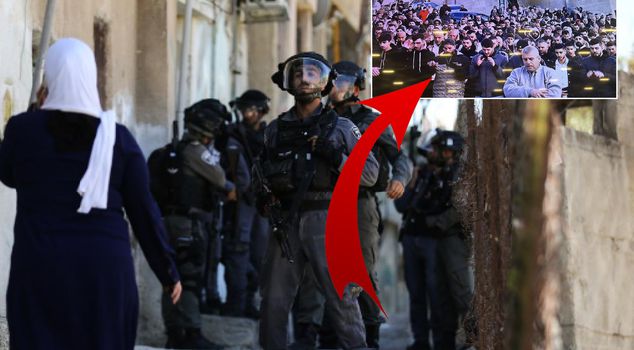
Israel closed the Al-Aqsa Mosque to Muslims for the first time on a holiday morning, citing tensions with Iran as the reason. Those prevented from entering the holy site gathered in front of the Old City walls to pray. During this time, the Israeli police intervened harshly with sound bombs and batons against thousands of Palestinians. Thus, for the first time in 59 years, holiday prayers could not be held at Al-Aqsa, which had been closed for a period in 1967.
For the first time in 54 years, no holiday prayer was held at Al-Aqsa Mosque, which Israel closed under the pretext of restrictions following its attacks on Iran.
Occupied East Jerusalem is entering Ramadan with a sense of sadness under the unprecedented restrictions and interventions by the Israeli administration towards Al-Aqsa Mosque.
Since the beginning of Ramadan, Israel has increased its pressure on Al-Aqsa Mosque, using the tensions with Iran and security justifications as an excuse, while for the first time, the doors of the holy site were closed to Muslims during a holiday prayer.
FOR THE FIRST TIME IN 59 YEARS
For the first time in 59 years, no holiday prayer was held at Al-Aqsa Mosque since it remained closed during the Six-Day War in 1967 when the West Bank was occupied by Israel.
SOUND BOMBS FOR THOSE WANTING TO PRAY
After the closure of Al-Aqsa Mosque for worship, thousands of Palestinians gathered in front of the Old City walls and at the closest points to Al-Aqsa to perform the holiday prayer. The crowd, showing the will to "not leave Al-Aqsa alone," attempted to carry out their worship in the streets while chanting takbirs.
However, the Israeli police intervened harshly against civilians gathered in many places, especially on Sultan Suleiman and Salah al-Din streets in East Jerusalem. Israeli forces, which threw sound bombs at Palestinian youths and families, used sound bombs and batons to disperse the crowd wanting to worship.
DISPROPORTIONATE USE OF FORCE BY POLICE
According to the information reported by TRT News reporter Mücahit Aydemir from the scene, this disproportionate use of force against the peacefully gathered crowd on the holiday morning escalated tensions in the region.
Residents of the area, stating that Israel views the process with Iran as an "opportunity," emphasize that the restrictions are not limited to worship. The historic streets of the Old City, which are usually so crowded that you could not drop a needle during the holiday eve, resemble a ghost town this year.
Due to security barriers and gathering bans, Palestinian shopkeepers were unable to open their shutters, and it was observed that only essential points like pharmacies and markets were open. A Palestinian shopkeeper, who wished to remain anonymous due to Israeli pressure, expressed their grievances by saying, "The arbitrary restrictions of the Tel Aviv administration have brought us to the brink of economic collapse. The Iran issue is just an excuse; the real aim is to suppress the Muslim presence in Jerusalem."
SAD HOLIDAY AT THE HISTORICAL WALLS
In front of the historical walls, the joy of the holiday, which is celebrated with happiness every year, was replaced this year by the noise of sound bombs and police violence. While Palestinians called on the international community for the immediate lifting of the blockade on Al-Aqsa Mosque, resistance and sorrow intertwined once again in occupied East Jerusalem this holiday.