12.10.2026 17:33
The 78-year-old file concerning the suspicious death of Sabahattin Ali, one of the unforgettable names of Turkish literature, in 1948 was brought to the Ministry of Justice with a request for re-examination. Five organizations, including the Turkish Journalists' Association, requested that the writer's death be investigated in all its aspects, that state archives be scanned, and that his grave be found. In the application, attention was drawn to questions that have been awaiting answers for years.
Five professional organizations took a joint step to shed light on the debates surrounding the death of Sabahattin Ali, one of the unforgettable names of Turkish literature. In the application made to the Ministry of Justice, it was requested that past investigation files be re-examined and the writer's lost grave be found.
JOINT APPLICATION FROM 5 INSTITUTIONS FOR THE 78-YEAR-OLD FILE
The Turkish Journalists' Association (TGC), the Turkish Publishers Association, the Turkish Journalists' Union, the Turkish Writers' Union and PEN Writers' Association made a joint application to the Ministry of Justice to shed light on Sabahattin Ali's death in 1948. In the application, it was emphasized that despite the 78 years that have passed, official statements regarding the writer's death have not eliminated the question marks. It was requested that the claims that he was captured while under the supervision of the security and intelligence units of the period and that he lost his life as a result of mistreatment or torture be comprehensively investigated.
FATE OF THE BODY AND AUTOPSY DOCUMENTS UNDER SCRUTINY
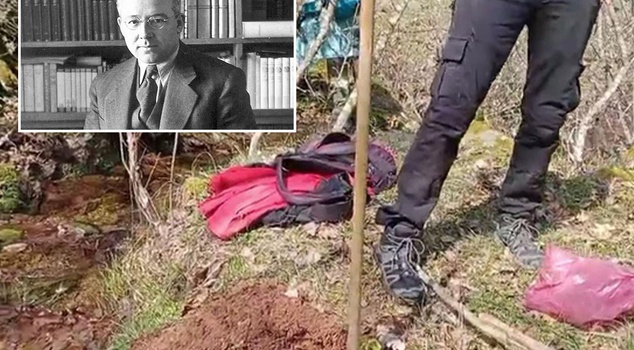
One of the most important points highlighted in the application was that Sabahattin Ali's body could not be definitively identified. It was stated that uncertainty continues regarding what happened to the writer's remains after the autopsy and where they were buried. It was expressed that deficiencies in the trial documents also increased doubts about the manner in which the death occurred. The five organizations emphasized that the incident is not merely the death of a writer, but also important for shedding light on one of the most controversial unsolved files in the history of the Republic.
3 CRITICAL DEMANDS FROM THE MINISTRY OF JUSTICE
In the joint application, three main demands stood out to shed light on Sabahattin Ali's death. First, it was requested that all investigation and trial documents, including the case file against Ali Ertekin and the amnesty decision, be re-examined under the coordination of the Department of Investigation of Unsolved Crimes. In the second demand, it was stated that documents related to the incident in police, gendarmerie, intelligence and other state archives should be investigated. In the third demand, it was requested that Sabahattin Ali's burial place be determined and, if possible, DNA and anthropological examinations be carried out with the approval of his relatives.
STATUTE OF LIMITATIONS IS NOT AN OBSTACLE TO INVESTIGATING THE TRUTH
In the application, it was argued that although statute of limitations provisions might come into question due to the many years that have passed since the death, this does not constitute an obstacle to investigating historical truths. Attention was drawn to Article 17 of the Constitution, which guarantees the right to life, and Article 2, which regulates the principle of the rule of law. It was emphasized that DNA analysis, forensic medicine methods and archival research used today can contribute to shedding light on past events.
WHO IS SABAHATTIN ALI, HOW DID HE DIE?
Sabahattin Ali, born on February 25, 1907 in Komotini, is one of the important writers, poets and journalists of Turkish literature. Known for his novels Madonna in a Fur Coat, Yusuf of Kuyucak, and The Devil Within Us, Ali addressed social problems, human relationships and the individual's inner world in his works. The famous writer, who was arrested at various times due to his political views and writings, was killed near the Bulgarian border in 1948 while trying to leave the country. Ali Ertekin, who confessed to killing Sabahattin Ali, was convicted in the trial in which he was tried. However, debates about the background of the murder, the manner in which the incident occurred and whether other people had a role continued for years. It is still not definitively known today where the grave of Sabahattin Ali, who lost his life at the age of 41, is located.