10.11.2026 20:33
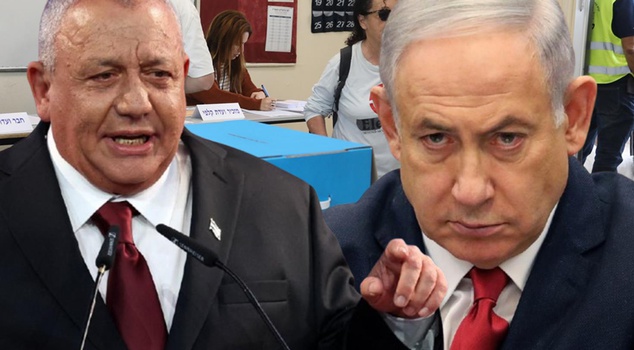
In Israel, after the October 27 elections, which Netanyahu left in defeat, the parliament was sworn in and took office before a government could be formed. President Isaac Herzog called for compromise to prevent another election, while Gadi Eisenkot, tasked with forming the government, has not yet completed the coalition.
After the general elections held in Israel on October 27, with a government not yet formed, the parliament was sworn in and began its work. Israeli President Isaac Herzog, addressing lawmakers, said, "You must do everything you can to prevent another election."
ISRAEL'S PARLIAMENT BEGAN ITS WORK
After the general elections held in Israel on October 27, while efforts to form a government continue, the parliament began its work as lawmakers were sworn in. Israeli President Isaac Herzog, who presided over the swearing-in ceremony, said in his speech addressing lawmakers, "You must do everything you can to prevent another election. Even rivals should extend a hand to each other for compromise. Treat each other with tolerance. There is a lot of work to be done here, and for that, the talent and experience found in every part of the parliament are needed."
HERZOG HAD GIVEN THE TASK OF FORMING A GOVERNMENT TO EISENKOT
On November 8, Herzog had tasked Gadi Eisenkot, leader of the Yashar Party, who had received the support of a majority of lawmakers, with forming the government. Eisenkot has not yet reached an agreement with parties that could bring him to power. If Eisenkot and Netanyahu fail to form a coalition, the country could face another election. Until a government is formed, Binyamin Netanyahu will continue to serve as interim prime minister.
ARAB PARTIES MAY SUPPORT EISENKOT
Although Netanyahu's right-wing Likud party's alliance with far-right and ultra-Orthodox parties received more votes than expected in the elections, it lost its majority in parliament. The alliance in question has 53 seats in the 120-seat Knesset. Eisenkot's center-right Yashar party and its allies from various political groups won only 48 seats. However, Eisenkot has a chance of receiving support from Arab parties with a total of 19 seats. These parties are aligned with Eisenkot due to their strong opposition to Netanyahu.
EISENKOT HAS TIME UNTIL DECEMBER 20
Eisenkot has until December 6 to form a government, but he can request a two-week extension to extend this period until December 20. Eisenkot acknowledged that the path to power was "extraordinarily complex." Ultra-Orthodox parties have announced that they will not, so far, join a government led by Eisenkot.