20.11.2026 17:16
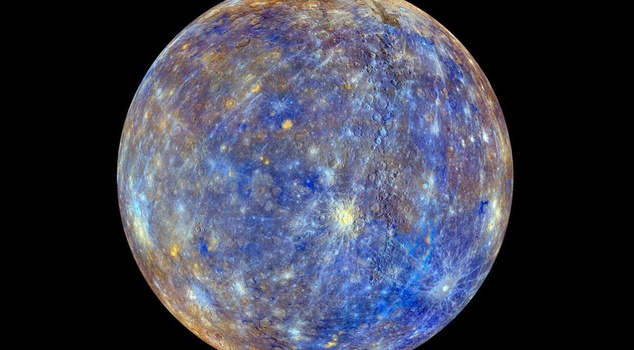
The European-Japanese joint spacecraft BepiColombo, launched in 2018 and having traveled 10 billion kilometers, is preparing to enter the orbit of Mercury, the planet closest to the Sun. The mission aims to solve the mystery of the ice in craters and the mysterious pits.
The BepiColombo spacecraft, which set off eight years ago and has traveled approximately 10 billion kilometers, is preparing to enter orbit around Mercury, its final destination. According to BBC News, the craft will study the planet closest to the Sun for at least a year.
Mercury is an extremely harsh environment for the spacecraft: temperatures on the planet rise to as high as 430 degrees, then drop to as low as minus 180 degrees. The planet is also constantly exposed to intense solar radiation.
11-MINUTE CRITICAL BRAKING MANEUVER
BepiColombo, launched from French Guiana in 2018, spent its entire journey "braking" to cope with the Sun's powerful gravitational pull. To slow down, it flew around Earth once, Venus twice, and Mercury six times. The journey, expected to take seven years, was extended by one year due to a fault in the propulsion system.
The final maneuver to enter orbit is also risky. For the spacecraft to be captured by the planet's gravity, it must perform an 11-minute "handbrake turn." If something goes wrong, the craft could pass by Mercury.
ICE IN CRATERS AND MYSTERIOUS PITS
To date, only two spacecraft have visited Mercury: Mariner 10, which flew past the planet three times in the 1970s, and Messenger, which entered orbit in 2011 and stayed for four years. Both were NASA missions.
Scientists hope that with BepiColombo, they will solve why ice is found in craters in Mercury's polar regions despite its being so close to the Sun. The mission will also study thousands of mysterious pits scattered across the planet's surface, which are known not to be impact craters and are thought to be about 100,000 years old.
Time also works strangely on Mercury, which is slightly larger than the Moon: the planet orbits the Sun in 88 days, but rotates so slowly on its axis that one day corresponds to 59 Earth days. The fact that this small planet has a giant metal core is also among the questions researchers want to answer.
BepiColombo actually contains two separate spacecraft. Of the craft, which will separate a few weeks after reaching Mercury, the one belonging to the European Space Agency (ESA) will closely examine the surface, while the one belonging to the Japan Aerospace Exploration Agency (JAXA) will observe the planet from a distance. Jessica Marshall, a systems engineer at Airbus, which built the spacecraft, said the moment the two craft, which have remained tightly attached to each other for eight years, separate will be "nerve-racking" for the team.
Source: BBC