17.11.2026 18:04
China reacted sharply to the US’s new export restrictions on advanced chips. Chinese Foreign Ministry Spokesperson Guo Jiakun described the rule requiring licenses for chip shipments to Singapore, Malaysia, Thailand, Indonesia, and Brazil as “economic coercion and extraterritorial jurisdiction.” Guo said they would take the necessary measures to protect their legitimate rights and interests. The rule was published ahead of Trump’s visit to China.
The US Commerce Department’s new rule aimed at preventing Chinese companies from accessing advanced artificial intelligence chips through third countries has sparked new tensions between Washington and Beijing.
“A TYPICAL EXAMPLE OF ECONOMIC COERCION”
Chinese Foreign Ministry Spokesperson Guo Jiakun, at Tuesday’s regular press conference, answered questions about the interim final rule published by the US Commerce Department on Monday that regulates remote access to US advanced chip technology.
Guo argued that the US has repeatedly over-expanded the concept of national security and abused export control measures. According to Guo, the US is arbitrarily interfering in normal trade and scientific and technological cooperation between China and other countries in order to unfairly suppress the development of China’s high-tech sectors.
Saying that such practices are typical examples of economic coercion and extraterritorial jurisdiction, Guo asserted that these steps are contrary to the common understandings reached between the two countries. Guo stressed that the restrictions harm the legitimate rights and interests of Chinese companies and disrupt the stability of global industrial and supply chains. He added that China will take necessary measures to firmly safeguard its legitimate rights and interests.
LICENSE REQUIREMENT FOR 5 COUNTRIES
The rule published on November 16 by the Bureau of Industry and Security (BIS) under the US Commerce Department makes exports of advanced artificial intelligence chips to Singapore, Malaysia, Thailand, Indonesia and Brazil subject to a US license. The rule states that these 5 countries pose above-normal risk in terms of illegal diversion of chips to China. US-based companies are exempt from the license requirement if they fulfill their monthly reporting obligations.
RESTRICTIONS ON DATA CENTERS TOO
The rule also requires a license for data centers anywhere in the world to provide large-scale computing power to companies headquartered in China, Macau, or countries subject to a US arms embargo such as Russia and Iran. Existing data centers providing such services must obtain a license within 90 days after the rule takes effect. The new regulation also replaces the Biden-era “AI Diffusion Rule,” which the Trump administration allowed to expire last year.
BIS announced that the 166-page rule was prepared under the guidance of the Treasury Department and the White House National Security Council.
AHEAD OF TRUMP’S CHINA VISIT
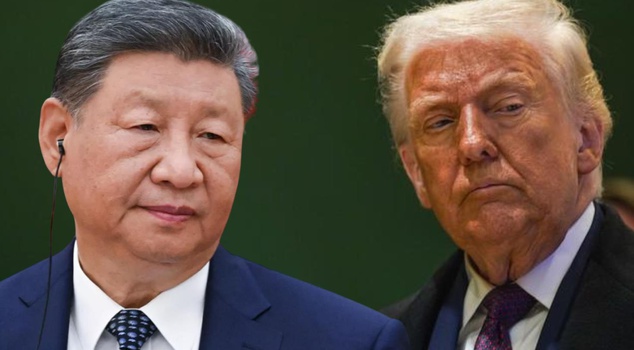
The rule was published shortly before US President Donald Trump travels to China for the APEC Summit to be held in Shenzhen on November 18-19. Trump is expected to hold a bilateral meeting with Xi Jinping on November 19.
SINGAPORE ASSESSING THE IMPACT
Singapore’s Ministry of Digital Development and Information and Ministry of Trade and Industry, among the countries subject to restrictions, also issued a joint statement. Singapore said it is assessing the effects of the regulation and is in contact with the US to ensure reliable access.