25.10.2026 12:50
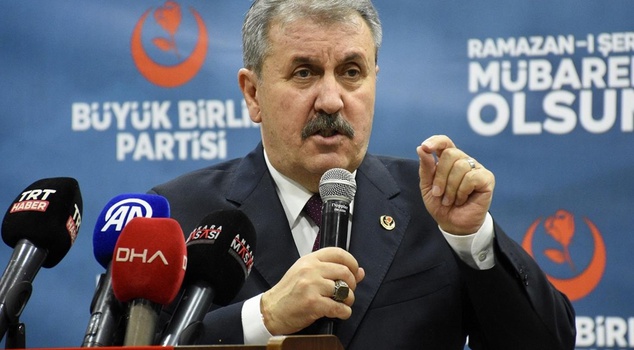
Mustafa Destici, Chairman of the Great Unity Party, reacted sharply to Greece's mufti appointments for the Turkish minority in Western Thrace. Stating that the Turkish minority's right to elect its own religious representatives cannot be ignored, Destici said, "The religious will of the Turks of Western Thrace cannot be appointed from Athens!"
Mustafa Destici, Chairman of the Great Unity Party (BBP), in a statement made on his social media account, criticized the Greek government's practice of appointing muftis for the Turkish minority in Western Thrace.
Arguing that rights guaranteed by international treaties are being violated, Destici said, “No appointment that ignores the will of the Turkish minority can gain legitimacy.”
HE POINTED TO THE ELECTED MUFTIS
Noting that Greece has resorted to similar practices in the past as well, Destici said that the Turks of Western Thrace have not given up their will to determine their own religious representatives.
Emphasizing that İbrahim Şerif in Komotini and Mustafa Trampa in Xanthi are the legitimate muftis elected by the Turkish minority, Destici stated that the Athens administration must respect this will.
CALL ON TURKEY FOR DIPLOMATIC ACTION
Calling on the Greek government to comply with its obligations arising from the Treaty of Lausanne and international law, Destici demanded that the practice of appointing muftis be abandoned immediately.
Also calling on the Government of the Republic of Turkey, Destici stated that, within the framework of the reciprocal minority rights regulated in Article 45 of the Treaty of Lausanne, diplomatic and legal initiatives must be pursued resolutely to protect the rights of the Turks of Western Thrace.
Destici concluded his statement with the following words: “The religious will of the Turks of Western Thrace cannot be appointed from Athens!”
WHAT HAD HAPPENED?
The right of the Turkish minority in Western Thrace in Greece to elect its muftis has for many years been a matter of dispute between the Athens administration and the Turkish minority. While the Greek government bases its position on appointment by the state to the office of mufti, the Turks of Western Thrace want to determine their religious leaders by their own will.
For this reason, especially in Komotini and Xanthi, disputes over representation and legitimacy are occurring between the muftis appointed by the state and the muftis elected by the Turkish minority.
While the Turkish minority argues that the election of muftis should be considered within the scope of freedom of religion and conscience and minority rights, the Greek administration cites the fact that muftis have certain legal powers in addition to their religious duties among the justifications for the appointment system.
Turkey, for its part, argues that the right of the Turkish minority in Western Thrace to elect its religious representatives must be protected. This long-running dispute has come back onto the agenda with developments regarding mufti appointments.