22.10.2026 10:40
Today, October 22, is Phelan-McDermid Syndrome Awareness Day. This rare genetic condition, which can manifest with low muscle tone, significant speech delay, and learning difficulties, affects each individual differently. Awareness efforts aim to improve recognition of the syndrome and help families access the support they need.
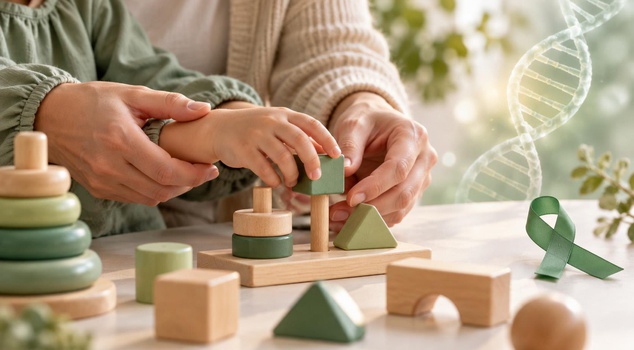
Phelan-McDermid Syndrome Awareness Day, held every year on October 22, draws attention to the experiences of individuals living with this rare genetic condition and their families. On this special day, which began through the initiative of families and has become an international awareness effort, the aim is to share information about the syndrome and strengthen social support. The color green, used as a symbol of awareness, represents hope, solidarity, and strength.
A guide prepared by Unique, an organization that provides information and support to individuals and families affected by rare chromosomal and genetic disorders, provides information about the symptoms of Phelan-McDermid syndrome and its effects on daily life.
WHAT IS PHELAN-MCDERMID SYNDROME?
Phelan-McDermid syndrome is a condition often associated with the loss of genetic material in the 22q13.3 region on the long arm of chromosome 22. Pathogenic changes in the SHANK3 gene, which plays an important role in communication between nerve cells, can also cause the syndrome. Therefore, the syndrome is not limited to the absence of a piece of the chromosome. Diagnosis is made with appropriate genetic tests.
FIRST SYMPTOMS
According to the Unique guide, the features of the syndrome may not be obvious at birth. One of the first findings noticed in infancy is hypotonia, which means low muscle tone. This can lead to difficulties with sucking and swallowing, as well as affect the acquisition of skills such as sitting, crawling, and walking.
Marked delay or absence of speech, learning difficulties, and in some individuals features associated with the autism spectrum may be seen. However, not all symptoms appear in every individual; developmental and support needs vary from person to person.
THEY MAY UNDERSTAND MORE THAN THEY CAN EXPRESS
Speech and communication are among the areas in which children affected by the syndrome may need the most support. Some children can understand more than they can express in words. For this reason, it is important not to evaluate communication skills solely by the number of spoken words.
The Unique guide notes that children can benefit from games, music, and regular repetition of skills in the learning process. Educational support should be planned according to each child's skills and needs.
INDIVIDUAL SUPPORT IS IMPORTANT IN DAILY LIFE
Low muscle tone and difficulties with hand skills can affect daily activities such as dressing, eating, brushing teeth, and using a pencil. In some individuals, seizures, sleep, nutrition, kidney, or hearing problems may also be seen. For this reason, it is important that the follow-up and support plan be created according to the individual's needs.
Practices that support development include physiotherapy, occupational therapy, speech and language therapy, and alternative and augmentative communication methods.
GENETIC COUNSELING FOR FAMILIES
The genetic change that causes the syndrome often occurs spontaneously, without having been seen previously in the family. In some cases, inherited chromosomal changes may be involved. Genetic counseling is important to evaluate the possibility of recurrence in another pregnancy.
Awareness efforts carried out on October 22 aim to promote understanding of the different needs of individuals living with the syndrome, help families access information, and support access to education and health services.