02.06.2026 18:11
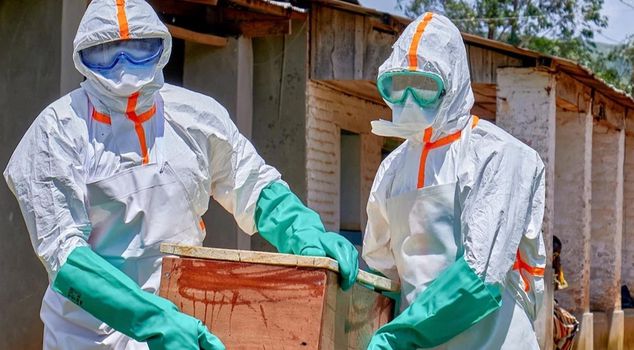
The Ebola outbreak caused by the Bundibugyo strain in the Democratic Republic of Congo, which has reached a death toll of 42, has turned into a global threat due to international flights. Although the WHO reports recovery news with early diagnosis, health protocols have been raised to the highest level in Italy and Brazil, where virus suspicions have emerged.
The deadly Ebola outbreak that emerged and spread rapidly in the Democratic Republic of the Congo (DRC) has crossed the boundaries of the African continent, becoming a global threat. The World Health Organization (WHO) and international health agencies have gone on alert after suspicions of the virus reached Brazil and Italy for the first time.
This wave, the 17th Ebola outbreak in the country's history, is recorded as the third largest outbreak since the virus was discovered. The Africa Centers for Disease Control and Prevention stated that due to delays in international response, the risk of regional and global spread of the virus has become a reality. Across the continent, more than 1,100 suspected cases are currently under investigation.
RECOVERY NEWS BRINGS HOPE
Despite the alarming spread, the WHO has made a hopeful statement to the global health community. It was announced that four nurses and one laboratory worker being treated in the city of Bunia have fully recovered and been discharged.
WHO Director-General Tedros Adhanom Ghebreyesus delivered important messages during his visit to Bunia, the capital of Ituri province, the epicenter of the outbreak. Ghebreyesus acknowledged that there is no licensed vaccine or specific treatment for this particular "Bundibugyo" strain of Ebola; however, he emphasized that with good supportive medical care and early intervention, the disease can become less deadly.
NUMBER OF CASES RISES TO 282
Officials stated that early diagnosis saves lives but reported that despite all interventions, the toll in the Congo is worsening. According to the latest data, the number of confirmed cases in the country has risen to 282, and the death toll from the virus has reached 42.
EMERGENCY ALARM IN BRAZIL AND ITALY
With individuals who have travel history to outbreak areas returning to their countries, fears of the virus spreading have jumped to South America and Europe:
In Brazil, two people who applied to hospitals in Sao Paulo and Rio de Janeiro with high fever complaints were diagnosed with meningitis and malaria. However, Brazilian health officials stated that these diagnoses do not completely rule out the possibility of Ebola and are keeping the patients under close monitoring.
In Italy, on the island of Sardinia, emergency protocols were activated for a passenger returning from the DRC showing Ebola symptoms. The Italian Ministry of Health announced that the patient's initial test result was negative and stated that the risk in the country is currently very low.
International health organizations are calling for increased inspections at border gates and airports to prevent the outbreak from turning into a global pandemic.