02.06.2026 23:10
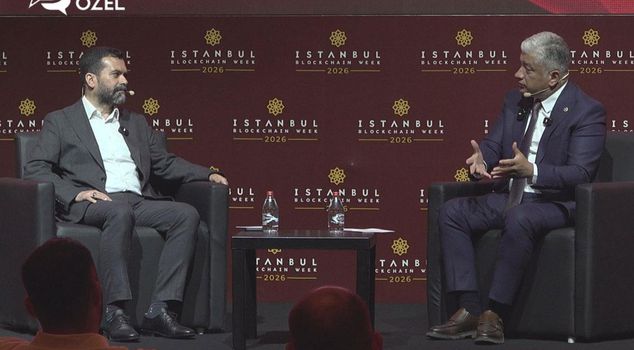
Speaking at Istanbul Blockchain Week 2026, Chairman of Haberler.com Ekrem Teymur and DEVA Party MP Sadullah Kısacık evaluated legal regulations and taxation efforts regarding crypto assets. The speakers, noting that Türkiye has significant potential in the crypto field, emphasized the need for regulations that increase investor confidence while warning that practices such as transaction taxes could drive investors abroad.
Istanbul Blockchain Week 2026 continues with intense participation from domestic and international industry representatives, addressing legal regulations on crypto assets, taxation efforts, and Turkey's position in the global crypto ecosystem. In the relevant session, Dr. Ekrem Teymur, Chairman of the Board of Haberler.com, and Sadullah Kısacık, DEVA Party Adana Deputy, made assessments.
"A SIGNIFICANT STAGE HAS BEEN REACHED IN THE CRYPTO MARKET"
Speaking at the opening of the program, Dr. Ekrem Teymur recalled that only framework regulations were discussed in the crypto market a year ago, stating that significant progress has been made at the current point. Teymur noted that pre-licensing processes have begun, central registry systems have been implemented, and license studies for custody institutions are ongoing, emphasizing that the regulations aim to both discipline the sector and secure investors' assets. Teymur stated that in addition to the state's regulatory role, taxation efforts are also on the agenda, and assessments should be made regarding the future of tax regulations for the crypto market.
RECALLED THE OMNIBUS LAW BROUGHT TO PARLIAMENT IN MARCH
Deputy Sadullah Kısacık expressed that the state naturally wants to collect taxes from commercial activities, but the characteristics of the crypto market must be considered. Kısacık explained that the omnibus bill submitted to the Turkish Grand National Assembly Planning and Budget Commission on March 5, 2026, included three separate taxation arrangements for crypto assets. Accordingly, the proposal envisaged a transaction tax of 0.03 percent on crypto purchase and sale transactions, a 10 percent tax deduction on earned gains, and another 0.03 percent tax on transfers between wallets.
"THIS REGULATION WOULD BE LIKE PLACING DYNAMITE UNDER THE DEVELOPING CRYPTO MARKET"
Kısacık, who stated he opposed these regulations in the Planning and Budget Commission, said that Turkey's crypto ecosystem is still in its development phase. Emphasizing that Turkish banks have only recently begun investing in crypto platforms and that foreign exchanges are entering authorization processes to operate in Turkey, Kısacık argued that transaction taxes introduced at this stage would drive investors and companies abroad and would mean "placing dynamite under the developing crypto market." Pointing out that the commission rates of platforms in Turkey are already high compared to global competitors, Kısacık stated that adding a transaction tax could cause investments destined for Turkey to shift to other countries.
"THE REGULATION WAS WITHDRAWN AFTER PUBLIC PRESSURE"
Kısacık noted that the bill accepted in the commission later came to the General Assembly agenda, and during this process, crypto investors, industry representatives, and platforms expressed intense reactions on social media. Kısacık stated that following the resulting public pressure, the government decided to withdraw the tax regulations, describing this as an example where social reaction has been effective in legislative changes in Turkey.
"THE BUREAUCRACY HAS NOT GIVEN UP ON THE TAX"
Kısacık said that despite the withdrawal of the tax regulation, the issue is not completely closed, and he has observed that the bureaucracy of the Ministry of Treasury and Finance continues its work on taxing crypto transactions. Kısacık, who believes the 0.03 percent transaction tax could come back on the agenda, stated that investors conducting large-volume transactions might turn to different platforms in this case. Drawing attention to the complex structure of the tax system, Kısacık cited the FIFO system applied in Forex markets as an example, noting that investors can face tax burdens even on unrealized gains, and similar issues could drive investors away from the crypto market.
"CRYPTO ASSETS ARE DIFFERENT FROM OTHER INVESTMENT TOOLS"
Dr. Ekrem Teymur emphasized that crypto assets are different from other investment tools, stating that investors can transfer their assets to platforms in other countries within seconds. Teymur noted that taxes on gains could be debated, but transaction taxes do not align with the working logic of the crypto market, especially in high-frequency trading systems where thousands of transactions occur, and even small taxes on each transaction would create significant costs for investors. Teymur said that some bureaucrats evaluate crypto transactions like real estate or car sales, but the crypto market has very different dynamics.
"TAX POLICY MUST BE ALIGNED WITH INTERNATIONAL PRACTICES"
Kısacık also stated that regulations for the crypto market should be compatible with practices in other countries. Kısacık expressed that due to the decentralized nature of crypto assets, it is difficult for states to act with a traditional tax understanding, and excessive tax burden in an area where borders are not easily drawn could push investors out of the system. Reminding that Turkey is moving towards the Istanbul Finance Center goal, Kısacık noted that approaching the crypto market solely from a tax perspective would not be correct, and the main goal should be to create a climate that enables the sector's growth.
"TURKEY HAS A HISTORIC OPPORTUNITY AHEAD"
The panel also evaluated Turkey's potential to become a regional and global crypto hub. Teymur drew attention to capital mobility in Gulf countries, stating that a strong legal infrastructure must be established to attract crypto investments to Turkey. Teymur said that regulations should neither be too loose nor overly strict, emphasizing the importance of balancing investor confidence with market freedom.
"ARTIFICIAL INTELLIGENCE AND CRYPTO ARE TWO AREAS TURKEY MUST NOT MISS"
Sadullah Kısacık stated that Turkey has missed significant opportunities in the past, such as the industrial revolution and digital transformation, and now the country has two major opportunities ahead. Kısacık emphasized that these areas are artificial intelligence and crypto technologies, stating that Turkey should direct all its energy and regulatory capacity toward these fields. Kısacık said that a vision and roadmap capable of attracting international investors in the crypto space must be announced, noting that eliminating uncertainties is critical for investor confidence.
"TURKEY HAS STRONG ADVANTAGES"
Teymur stated that Turkey has significant advantages in the crypto ecosystem thanks to its advanced e-Government infrastructure, strong banking system, and technology-friendly investor profile.
Stating that Turkish investors quickly adapt to new technologies and financial innovations, Teymur said that Turkey is already one of the world's largest crypto markets.
"BUYING CRYPTO WITH TRY IS A SIGNIFICANT ADVANTAGE FOR TURKEY"
Kısacık also noted that being able to buy crypto assets directly with Turkish lira on Turkish platforms is a significant advantage. Stating that if investors turn to foreign platforms, they would first have to convert Turkish lira to dollars, Kısacık stated that the current system creates an effect that reduces foreign currency demand. Noting that if tax pressure directs investors abroad, both investment and foreign currency could leave Turkey, Kısacık said that domestic platforms should be supported for this reason.
"INDUSTRY REPRESENTATIVES SHOULD CONVEY THEIR VIEWS TO THE PARLIAMENT"
At the end of the program, Kısacık touched upon the importance of the crypto ecosystem acting more organized and called on investors and industry stakeholders to share their views with members of parliament. Stating that the crypto community can demonstrate strong solidarity through social media, Kısacık said that this joint reaction played an important role in the withdrawal of the tax regulation in March. Kısacık stated that the experiences and suggestions of industry representatives will contribute to the regulation processes, and added that new regulations regarding the crypto market may come to the agenda again and that the views of the sector are important in this process.