05.05.2025 17:40
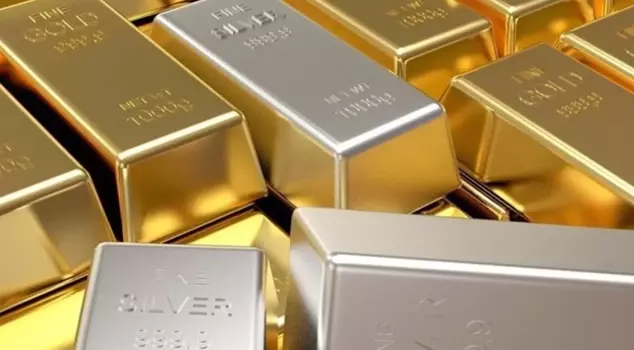
The American investment bank Goldman Sachs stated that strong central bank demand for bullion is a factor that structurally raises the gold-silver price ratio, indicating that gold will continue to perform better than silver.
Global market fluctuations and economic uncertainties continue to direct investors towards safe havens. In this process, where inflation remains high and geopolitical risks are increasing, the demand for gold has notably risen. Since the beginning of the year, gold has gained more than 26% in value, providing strong returns for its investors.
GOLD OR SILVER?
Goldman Sachs, one of the leading financial institutions in the U.S., shared striking analyses regarding both gold and silver with the public. The bank suggested that factors such as the slowdown in solar energy production in China due to oversupply, the rising risk of global recession, and central banks continuing to purchase gold will maintain gold's superiority over silver.
GOLD-SILVER RATIO AT HISTORICAL LEVELS
The gold-silver ratio, which shows the value difference between gold and silver, was around 84.7 last year, while it has now reached levels of 102. This indicates that gold has significantly strengthened against silver. Although Goldman Sachs noted that the rise in gold prices could indirectly support silver, it does not expect silver to experience a rally to the same extent. Spot silver has increased by approximately 12% since the beginning of the year, reaching $32.4 per ounce.
NEW PEAK FOR GOLD: $4,500 SCENARIO
In April, with the increase in geopolitical tensions and the rising demand for gold-based exchange-traded funds, gold reached $3,502 per ounce, marking an all-time high. Goldman Sachs predicts that this momentum could continue until the end of the year, with gold potentially rising to $3,700 per ounce. By mid-2026, this level is expected to exceed $4,000. If a possible recession occurs and there is an acceleration in ETF purchases, it is stated that gold could reach $3,880 by the end of the year.
In more extreme scenarios, the bank also mentioned that if there are concerns about the independence of the U.S. Federal Reserve (Fed) or radical changes in the country's reserve policies, gold could rise to $4,500 before the end of 2025.