22.06.2026 01:20
For the first time in years, the US and Iranian delegations came together in the same hall, restarting diplomatic traffic in critical talks that began in the Swiss town of Bürgenstock. However, the images from the table, established with the goal of lasting peace and normalization after the war, revealed that the distrust between the parties has still not been overcome. The delegations, which did not shake hands, did not pose for a joint photo, and maintained their distance, made a cold start to the negotiations being closely watched by the world.
The US-Iran peace talks held in the Swiss town of Bürgenstock on the shores of Lake Lucerne witnessed one of the highest-level direct contacts in nearly 10 years. Despite the parties being in the same room, the lack of handshakes and joint photos once again highlighted the deep trust crisis hindering the diplomatic process.
FIRST TIME IN THE SAME ROOM IN 10 YEARS
The Swiss town of Bürgenstock brought together the US and Iran, long-standing adversaries, under one roof. As part of the new diplomatic process following the recently signed memorandum of understanding between the two countries, the parties gathered to discuss post-conflict normalization, regional security, and the future of economic sanctions. This meeting also marked the first time US and Iranian officials were in the same room in 10 years.
CRITICAL TOPICS ON THE TABLE
During the talks held on the shores of Lake Lucerne, critical issues such as Iran's nuclear activities, the lifting of oil sanctions, the release of frozen Iranian assets, and the re-securing of maritime traffic in the Strait of Hormuz were addressed.
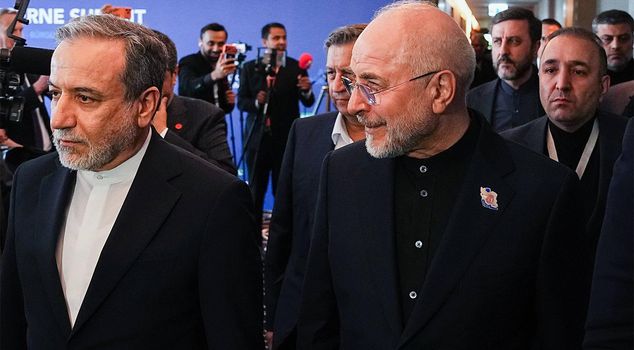
The US delegation was led by Vice President JD Vance, while the Iranian side was represented by Parliament Speaker Mohammad Bagher Ghalibaf and Foreign Minister Abbas Araghchi. Qatar and Pakistan also participated as mediators in the talks.
IN THE SAME ROOM BUT NO HANDSHAKES
Images released from the summit showed that although both delegations were in the same room, they avoided direct contact. It was notable that the Iranian delegation did not shake hands with the US delegation upon entering the room and directly headed to their own table.
VANCE WATCHED FROM A DISTANCE
In the footage captured by cameras, moments where US Vice President JD Vance observed Iranian Foreign Minister Abbas Araghchi and his delegation from a distance stood out. The parties' refusal to appear in a joint photo or exchange formal greetings indicated that the strained relationship spanning over half a century has yet to be overcome.
Diplomatic sources stated that direct contacts between the parties were limited, with a significant portion of the talks conducted through mediator countries.
60-DAY CRITICAL NEGOTIATION PROCESS
It was reported that the 60-day negotiation process initiated between the parties will focus particularly on technical details regarding Iran's nuclear program. The talks are also expected to address the future of energy and financial sanctions against Iran and the release of frozen foreign assets belonging to the Tehran administration.
While the Washington administration demands stricter oversight mechanisms regarding Iran's nuclear activities, Tehran emphasizes its desire to see concrete steps on lifting sanctions and economic normalization.
TRUMP'S STATEMENTS ESCALATE TENSIONS
As talks progressed, US President Donald Trump's harsh statements against Iran and its regional allies cast a shadow over the negotiation atmosphere.
Iranian officials argue that threatening remarks made during ongoing negotiations harm the diplomatic process, while Washington signals that it will not abandon its policy of pressure.
Despite all tensions, it is stated that the parties have not completely abandoned the negotiation table, and talks are expected to continue at the technical level in the coming days.
Experts note that the process initiated in Switzerland could yield decisive outcomes not only for US-Iran relations but also for the security of the Strait of Hormuz, energy markets, and the future of the Middle East.