05.12.2025 09:10
In 2025, when conflicts marked many parts of the world, peace continued to prevail in five countries.
As global conflicts intensified in 2025, border security policies tightened, and trade wars continued unabated. According to the Global Peace Index (GPI), the number of state-level conflicts this year reached its highest level since World War II.
Many countries are responding to this situation by increasing their militarization levels.
On the other hand, some countries continued to prioritize peace.
The GPI, developed by the Institute for Economics & Peace, is calculated using 23 indicators such as military expenditures, external conflicts, terrorism, and homicide.
The top ten countries in the index have remained almost unchanged for the past 20 years.
We asked people living in these countries how peace policies affect their daily lives.
ICELAND: 'BABIES CAN SLEEP SAFELY OUTSIDE'
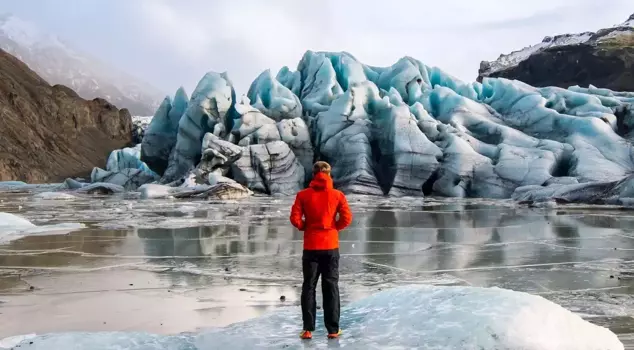
Since 2008, Iceland has remained at the top of the rankings, continuing to be the world's most peaceful nation.
The country leads in three main areas: security, ongoing conflicts, and militarization.
This sense of security forms the fabric of daily life for Icelanders.
Inga Rós Antoníusdóttir, a lifelong Icelander, says, "You can walk outside at night without fear; you see babies sleeping in strollers while their parents eat in a café or shop in a store, and the police don’t carry guns."
Inga states that the country's pioneering gender policies make women feel safe:
"Equal opportunities and resilient social systems create a fairer and safer society for everyone."
She suggests that visitors to the country participate in daily routines to feel this inner peace.
"The real Iceland is discovered in nature and in all kinds of weather, rather than at popular spots, through the country's strong music and art scene," she says.
IRELAND: 'PEOPLE LOOK OUT FOR EACH OTHER'
Although Ireland went through conflicts in the late 20th century, it continues to prioritize peace today.
It has risen in the index by reducing its militarization level over the years.
Today, it is among the countries experiencing the least conflict both internally and externally.
Irishman Jack Fitzsimons says, "A deep sense of community and friendship makes you feel at home and comfortable, whether you are in a small town or a big city."
He believes that inequalities and tensions have been reduced through strong social support systems and community well-being-focused initiatives.
Ireland maintains a neutral military stance and prefers diplomacy in conflict resolution.
Internally, it prioritizes the protection of its natural and cultural assets.
NEW ZEALAND: 'THE SLOW PACE OF LIFE CAN CHANGE YOUR PERSPECTIVE'
New Zealand rose two places in the index this year to become third.
This was influenced by improvements in the country's security sectors and the low incidence of protests and terrorism-related events.
As an isolated island nation in the Pacific, New Zealand's geography provides natural protection for the country.
However, residents say that internal policies are also important.
Mischa Mannix-Opie, who has lived in New Zealand all her life, says, "New Zealand is one of the countries with the strictest gun laws in the world. This contributes to the sense of security."
She describes how all children walk to school, people do not lock their doors, and when a car breaks down on the road, drivers stop to offer help.
"Overall, there is a prevailing trust in the community and the system, which creates a real sense of community in daily life," she says.
New Zealanders prioritize their connections with nature alongside strong social security networks and access to universal healthcare.
"Beyond the postcard-like images, New Zealand has a real depth. People are genuine, Maori culture is rich and still thriving, and the slow pace of life can change your perspective," Mannix-Opie says.
AUSTRIA: 'SECURITY IS NOT JUST A STATISTIC, IT'S A REALITY OF LIFE'
Austria dropped one place in the GPI this year, ranking fourth.
Like Ireland, the country follows a policy of constitutional neutrality, which prevents it from joining alliances like NATO.
This allows Austria to focus its attention and resources internally.
Austrian Armin Pfurtscheller says, "A strong social security network, high standards of healthcare, and excellent educational opportunities foster stability and trust."
He describes how people in his area take walks by the river at midnight, do not lock their doors, and park their bicycles outside without chains.
"Security is not just a statistic; it's a reality of life," he says.
Pfurtscheller adds that people coming to the country also benefit from this sense of security.
"After a few days, their shoulders relax, stress melts away, and they start sleeping like they did in their childhood," he says.
SINGAPORE: 'THE FREEDOMS THAT SECURITY BRINGS'
Ranked sixth after Switzerland, Singapore became the only Asian country to enter the top 10 this year.
Despite being one of the countries with the highest military spending per capita, its particularly high score in security played a significant role.
For Singaporeans, the absence of ongoing conflict and internal security is a reinforcing factor for peace.
Xinrun Han says, "I go for walks at night and I’m not afraid. Walking home is not tense or overwhelming, as it is in many metropolises."
Han recommends that visitors to the country experience the freedoms that security brings, such as walking by the river at 2:00 AM, tasting street food, or going to the park at night.
"Whether you are a local or a visitor, it all feels liberating," he says.