03.11.2026 03:40
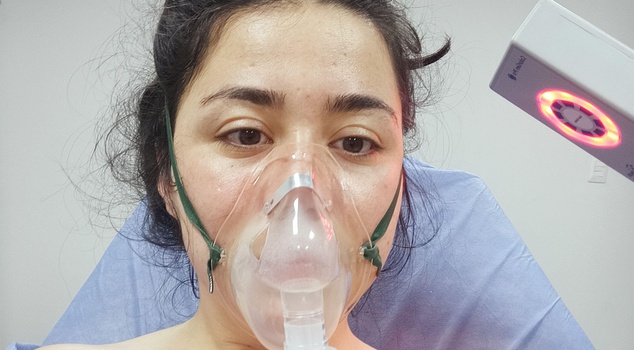
In Colombia, 26-year-old Melisa Gaona, whose pain doctors did not take seriously for 20 years, was finally diagnosed with advanced endometriosis. Despite seven surgeries, Melisa's pain did not subside, and her request for medical euthanasia was rejected on the grounds that not all treatment options had been tried. The young woman, who filed a lawsuit against the decision, says, 'I don't want to die, I want to stop feeling pain.'
Almost no one took Melisa Gaona's pain seriously. Doctors sent her away from the emergency department repeatedly, saying the stabbing pain she felt in her pelvic area did not pose a life-threatening danger.
Some claimed she was a hypochondriac or faking it.
Melisa went from doctor to doctor for 20 years in her native Colombia. But the cramps in her abdomen, bloating and unbearable menstrual pain gradually increased.
Melisa, 26, tells the BBC World Service: “Since I was little, I did not know what illness I had.” “My pain, my vomiting, the pain I felt when urinating… They always told me there was nothing wrong with me, that I was exaggerating. ”
Being admitted to intensive care dozens of times, using countless medications and undergoing seven surgeries did not ease her symptoms either. Her symptoms were attributed first to appendicitis, then to a hormonal imbalance, and then to cancer.
Finally, during a surgery performed to find the cause of the pain, it emerged that she had severe endometriosis (also known as chocolate cysts).
This chronic disease, for which there is no definitive cure, occurs when tissue similar to the tissue lining the inside of the uterus grows in other parts of the body.
But neither the diagnosis nor the many subsequent interventions relieved the pain attacks that brought Melisa's life to a standstill.
During a particularly severe 30-day period in hospital, she felt she could no longer endure it.
On July 31 last year, without informing her family, she requested medical euthanasia.
“Not because I don't want to live,” she says, “but because I don't want to continue suffering. ”
Hoping that sharing her story publicly might earn her understanding, Melisa made a video for TikTok.
“I was trapped inside a cycle of pain,” she said.
The video spread quickly. But this visibility also came at a price.
Strangers suddenly began discussing details of her health, debating who should have the right to euthanasia and questioning doctors' approach to women's pain.
HER EUTHANASIA APPLICATION WAS REJECTED; SHE FILED A LAWSUIT
In Colombia, a dignified death is recognized as a constitutional right. Colombia became the first Latin American country to allow euthanasia, in which a healthcare worker ends the patient's life, and to regulate it by law. Medically assisted suicide, in which the patient performs the final act that ends life, was also decriminalized. However, no regulation has yet been made on this matter.
According to Colombia's Ministry of Health, more than 350 euthanasia procedures were carried out in 2024.
This figure corresponds to about 30% of applications.
Melisa's application, however, was rejected.
According to her account, the medical board of San José Hospital decided that she had not yet tried all possible treatment options.
With the support of the rights advocacy organization called the Economic, Social and Cultural Rights Laboratory, Melisa filed a lawsuit against the decision. But she emphasizes this: “I don't want to die. I want to stop feeling pain. ”
Neurosurgeon Pedro Henrique Cunha, who coordinates the pain treatment team at a hospital in São Paulo, says that what Melisa experienced should be seen as a warning: “No patient should have to ask for death in order to finally be taken seriously. ”
Cunha continues: “Often this does not mean that the person's true wish is to die. It shows that a person who has lost the ability to carry out daily tasks, their independence, sleep, work, relationships and hope of recovery has reached the limit of endurance. ”
“We must be extremely careful that assisted death does not become a substitute for lack of access to healthcare, delays in diagnosis or leaving the patient to their own fate. ”
Melisa's pain and general feeling of being unwell began when she was only five years old. When she had her first period at ten, her symptoms worsened. Sometimes she fainted from the pain.
She was told that it was normal to feel that way during menstruation and that “everyone gets cramps.”
“What upset me most was not being heard and not being able to get help,” Melisa says. “Even my own family did not believe me. I was alone against the world. ”
As she grew up, her illness made even the most ordinary daily tasks difficult. It also made it impossible for her to realize her dream of studying medicine.
BEING CONDITIONED TO SUFFER
According to obstetrician-gynecologist Raquel Magalhães, although endometriosis affects about one in every 10 women, it usually takes eight years for a patient to start receiving appropriate treatment. During this process, the patient undergoes four unnecessary surgeries and consults 10 different specialists.
One reason for the problem is that women consider it normal to experience pain even during basic functions such as eating, defecating, urinating and having sex.
“Women are made to believe that suffering is part of being a woman,” Magalhães says.
The hormonal implant Melisa used between the ages of 15 and 20 eased her pain enough for her to run a dessert business, take professional makeup courses and study information technology in higher education.
But when the implant had to be removed because it was suspected of affecting her blood circulation, her symptoms returned even more severely than before.
A new drug she began using after her endometriosis diagnosis caused a numbness in Melisa that made her feel detached from her body.
“My partner says he feels as if he is talking to a zombie when he talks to me,” she says.
Unable to work, study, walk her dog or sleep properly, Melisa reached her breaking point about a year later.
“Living is not just your heart continuing to beat,” she says. “Living is also being able to preserve your dignity, your independence and your quality of life as much as possible. ”
A RIGHT TO DIE?
In most countries and legal systems, medically assisted death is not permitted. Where it is permitted, this right is usually subject to strict conditions.
In New Zealand and US states such as Oregon, only patients estimated to have six months or less to live can make this request.
Switzerland bans euthanasia. However, it does not punish assisting suicide if the person helping does not pursue their own interest.
In the Netherlands, Belgium and Luxembourg, it is required that the patient has a serious or incurable illness, is suffering unbearable pain and has no chance of recovery.
In Colombia, courts in 2021 removed the requirement that a person requesting euthanasia be in the final stage of a terminal illness. This opened the way for anyone suffering advanced and irremediable pain to apply.
Colombia recognizes endometriosis as a chronic, progressive disease that weakens a person's ability to maintain daily life. Nevertheless, the hospital's medical board recommended that Melisa undergo more extensive surgical interventions.
These included the removal of her uterus, as well as the removal of her ovaries and fallopian tubes. It was stated that colostomy and urostomy procedures—which allow feces and urine to be removed through holes made in the abdominal wall—might also be necessary.
Melisa and her partner Mateo, unhappy with the healthcare she received, launched a fundraising campaign so that she could have surgery abroad.
In December, Melisa went to India to have the diseased tissue removed without removing any organs. As part of the operation, radiofrequency treatment and nerve blocks were also administered to reduce pain.
Melisa says this significantly alleviated her endometriosis symptoms. However, it did not solve her other conditions, including increased central nervous system sensitivity to pain and overactive bladder syndrome.
Melisa, who is continuing her recovery with a physiotherapy program, is raising funds to have another surgery in Mexico to check whether any diseased tissue remains.
Melisa has also begun advocating for the rights of other endometriosis patients in Colombia. She hopes the foundation she established in July will help people learn about the disease and build the kind of support network she felt was lacking.
"People can never fully understand another person's pain because they haven't experienced it themselves," says Melisa.
"But that doesn't mean we can't empathize. Even if something doesn't hurt me, we can understand that it might hurt someone else. "
Mariana Alvim from BBC News Brasil contributed to this report.
We used artificial intelligence to translate this article, whose original is in English. A BBC journalist checked the translation before publication.