18.02.2026 11:53
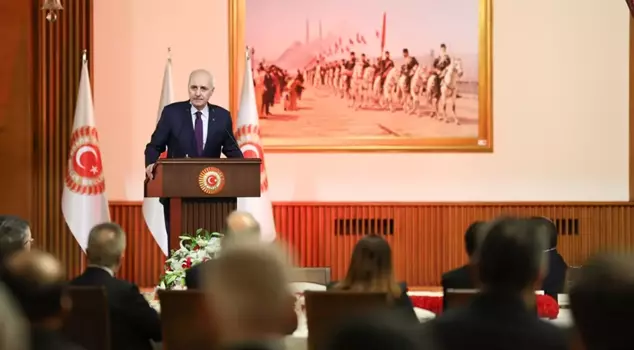
The 'Terror-Free Turkey' report, prepared after months of work by the TBMM National Solidarity, Brotherhood, and Democracy Commission, is being announced to the public today. Stating that the report provides a broad framework, TBMM President Numan Kurtulmuş said, "The report is not of a nature to grant amnesty. It is our collective responsibility to remove terrorism from the agenda."
A critical threshold is being crossed towards the goal of a terrorism-free Turkey. The comprehensive report prepared after months of work by the Turkish Grand National Assembly's (TBMM) National Solidarity, Brotherhood, and Democracy Commission has been completed. TBMM President Numan Kurtulmuş stated that the report, which was prepared with 88 hours of work and 4,199 pages of minutes, provides a broad framework from the dissolution and disarmament process of the terrorist organization PKK to steps towards democratization.
THE REPORT CONSISTS OF 7 SECTIONS
Kurtulmuş expressed that the report consists of 7 sections and 60 pages, stating that the first section includes the commission's work, the second section includes the commission's main objectives, the third section covers the history of Turkish-Kurdish brotherhood, the fourth section includes analyses of the individuals heard by the commission, the fifth section discusses the PKK's self-dissolution, the sixth section contains legal regulation proposals related to the process, and the seventh section includes recommendations for democratization.
"THE REPORT IS NOT OF AMNESTY NATURE"
TBMM President Numan Kurtulmuş also addressed the highly anticipated amnesty issue. Kurtulmuş stated, "By fortifying Turkey's internal stronghold, ensuring peace and stability in the region will create new opportunities and possibilities for both its own security and regional order. The report is not of amnesty nature. It is our collective responsibility to remove terrorism from the agenda. 88 hours of work was done, and 4,199 pages of minutes were recorded."
THE FIRST 4 SECTIONS OF THE REPORT CONTAIN THE CHRONOLOGY OF THE PROCESS
The report consists of 60 pages and 7 sections. The first 4 sections contain the chronological flow of the terrorism-free Turkey process. The 5th, 6th, and 7th sections include the steps to be taken and recommendations.
SECTION 5 COVERS THE DISSOLUTION OF THE ORGANIZATION AND THE DISARMAMENT PROCESS
The 5th section addresses the dissolution of the organization and the disarmament process, emphasizing that internal and external security elements should be part of a verification mechanism for the PKK's disarmament. The section refers to the possibility of legal regulations progressing over time alongside disarmament. It emphasizes that the regulations should be situation-specific and temporary while drawing attention to the need to create an amnesty perception.
LEGAL REGULATIONS ARE IN SECTION 6
The 6th section contains legal regulation proposals. The report includes the disarmament of the organization and the subsequent process, the legal status of organization members, and steps towards integration with society. Providing legal assurance to those involved in the process is also among the legal proposals.
THE LAST SECTION CALLS FOR COMPLIANCE WITH ECHR AND CONSTITUTIONAL COURT DECISIONS
The 7th section also includes a call for compliance with ECHR and Constitutional Court decisions. The report refers to the removal of obstacles to fundamental rights and freedoms. Inherent rights are among the notable headings. The report also states that non-violent actions should be excluded from terrorism. It is expressed that the definition of the Anti-Terror Law should be redefined based on a decisive definition.
THERE IS NO RIGHT TO HOPE IN THE REPORT
The mention of the right to hope regarding Abdullah Öcalan is not included in the report.
WHAT IS THE RIGHT TO HOPE?
The term "Right to Hope," used in criminal law, refers to the right of convicted individuals to be reintegrated into society and released under certain conditions.
This concept particularly encompasses individuals who have received heavy sentences or are sentenced to life imprisonment. The right to hope allows the convict to have the prospect of release after a certain period, taking into account factors such as remorse during the execution of the sentence, the potential for reintegration into society, and good behavior.