27.06.2026 21:30
In Kırıkkale, archaeological excavations at Büklükale, which draws attention with its thousands of years of history under the direction of a Japanese archaeologist, have uncovered traces of settlement from the period of Alexander the Great. Additionally, bronze needles, animal-figured seals, animal-headed remains, and seal-imprinted artifacts whose historical period has not yet been determined were unearthed.
In Büklükale, located in the Karakeçili district of Kırıkkale, significant discoveries shedding light on thousands of years of history have been made during excavations that have been ongoing for 17 years.
LED BY A JAPANESE ARCHAEOLOGIST
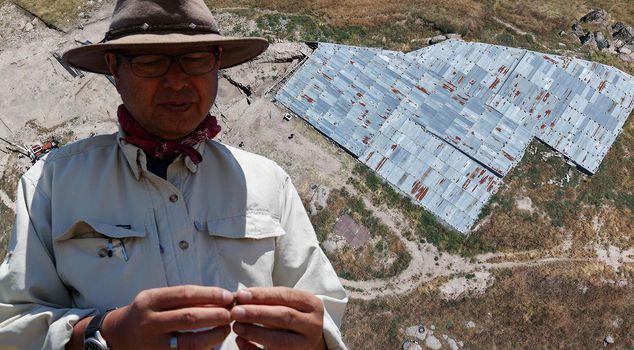
The excavations conducted by the Japanese Institute of Anatolian Archaeology under the leadership of Associate Professor Dr. Kimiyoshi Matsumura continue in two archaeological areas: the "Lower City" and the "Upper City." In Büklükale, situated right next to the Kızılırmak River, settlement traces from different civilizations are being unearthed. Archaeological finds include bronze needles, animal-figured seals, and animal-headed and seal-impressed remains. It has been stated that the period to which the newly discovered historical remains belong will become clear after detailed examinations.
"WE IDENTIFIED SETTLEMENT TRACES FROM THE ALEXANDER THE GREAT PERIOD"
Excavation Director Associate Professor Dr. Kimiyoshi Matsumura, in a statement to an İHA reporter, said that Büklükale is an ancient city located approximately 60 kilometers southeast of Ankara. Matsumura stated, "This place is located right next to the Kızılırmak River. Since it was a crossing point of the Kızılırmak in every period, it held great strategic importance."
Providing information about the settlement layers in the region, Matsumura said, "If we describe from top to bottom, at the very top there was a settlement from the Ottoman period. It is highly likely that soldiers also lived here. Beneath that, we identified settlement traces from the Hellenistic Period, that is, the period of Alexander the Great. In the lower layers, we saw that various civilizations from the Iron Age lived here."
Matsumura, stating that traces of different civilizations are found in Büklükale, said, "For example, there are traces from the Achaemenid Persian period. We think that before them, the Lydians, and later the Cimmerians who lived north of the Black Sea, came this far. We consider that the rampart wall seen behind might have been built during their period. In the lower layers, traces belonging to the Phrygians have been identified."
"WE IDENTIFIED ARCHITECTURAL STRUCTURES BELONGING TO THE ENTRANCE OF A PALACE COMPLEX"
Explaining that one of the remarkable finds in the excavations was a handled stamp seal, Matsumura noted the following in his statement: "One of the most striking artifacts found today was a handled stamp seal. This stamp seal features a motif of two animal figures. At the bottom, there is a motif with very small holes. What this is is not entirely clear for now. However, this type of stamp seal is known to be a type generally used in the period from the end of the Karum Period of the 2nd millennium to the Old Hittite Period. As a result of the research conducted so far, we have identified architectural structures here that likely belong to the entrance of a palace complex. In the excavations at Büklükale, Hittite cuneiform tablets located furthest west to date have been uncovered. Since 2019, Hurrian tablets have also been found here."
"IT WAS AMONG THE CITIES WHERE THE HITTITE ROYAL FAMILY RESIDED"
Matsumura, emphasizing that the Hurrian tablets increase the importance of the region, said, "Hurrian tablets had previously been identified in only three settlements in Anatolia: Hattusa, the capital of the Hittites, Ortaköy, and Kayalıpınar. These three settlements were among the cities where the Hittite royal family resided. As the fourth settlement, Hurrian tablets have been identified in Büklükale."
Stating that the excavations continue, Matsumura said, "Therefore, we are focusing on what kind of city this is and how important a position it holds. We are trying to reveal the historical significance of Büklükale by continuing the excavation work."