15.10.2026 11:40
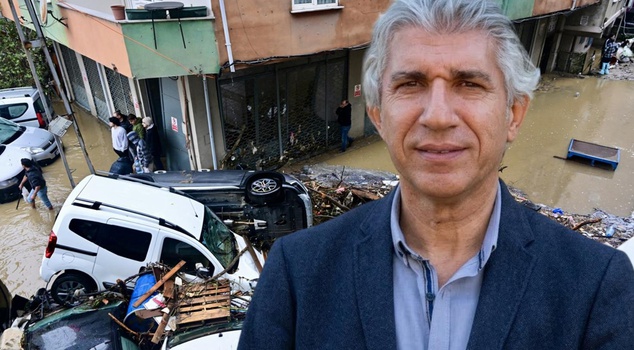
Ahmet Köse, Second President of the Chamber of Meteorological Engineers, evaluated the downpour that affected Istanbul. Reminding that the rains seen in this period are called "Virgin Mary Storm" among the public, Köse said that rainfall equal to one third of the annual precipitation fell on Istanbul in 24 hours. Köse emphasized that infrastructure should now be planned according to the duration, intensity, and frequency of rainfall.
Evaluating the downpour that flooded many homes and workplaces in Istanbul and uprooted trees, Ahmet Köse, Second Chairman of the Chamber of Meteorological Engineers, explained what happened by the warm water of the Black Sea and the low-pressure system settling over the city.
“OUR ANCESTORS CALLED IT THE VIRGIN MARY STORM”
Responding to Melis Yaşar’s questions on Haberler.com, Köse stated that the General Directorate of Meteorology had been issuing warnings for several days and that the expected rainfall had occurred. Drawing attention to the fact that the rains seen in this period are not new, Köse said, “From past to present, the rains that occur on these dates of the year are not the first. Our ancestors called the rain that occurs on these dates the Virgin Mary Storm. Generally, thunderous, showery, bora-windy, and lightning-heavy rains occur in this period. These rains occurred this year as well.”
WHAT IS THE VIRGIN MARY STORM?
The Virgin Mary Storm is one of the storms in the folk calendar formed over centuries through the observations of sailors, fishermen, and farmers. This period, which corresponds to October 14 in the folk calendar, is associated with the beginning of thunderous downpours. This year too, the heavy rainfall that took hold of Istanbul showed its effect exactly on October 14.
In the folk calendar, there are other storms in October besides the Virgin Mary Storm. The Swallow Storm on October 17 is associated with the migration of swallows from Anatolia, while the Koz Kavuran Storm on October 18 is associated with the southwesterly wind and the leaf fall of walnut trees. The Fish Storm on October 27 is commemorated with the migration of fish from the Marmara to the Black Sea. It is stated that these names are not exact weather forecasts and are based on traditional observations.
BLACK SEA 21-22 DEGREES, AIR 14-15 DEGREES
Explaining the reason why the rainfall was so effective, Köse drew attention to the difference between the Black Sea’s water and the air temperature. Köse continued his explanation as follows:
“The cold air coming over the Black Sea, together with the continuous rotational movement of the low pressure settling right over Istanbul... The Black Sea water is currently around 21-22 degrees, and the air temperature is around 14-15 degrees. It brought the air continuously evaporating over the Black Sea over us through the low-pressure area, and the continuous rainfall activity continued.”
“WE RECEIVED ONE-THIRD OF A YEAR’S RAINFALL IN 24 HOURS”
Recalling that around 242 kilograms of rainfall per square meter was recorded in Istanbul, Köse explained with the following words how high this amount is when compared with the city’s annual rainfall average:
“We can think of this rainfall as follows: Istanbul’s annual rainfall is around 700 kilograms on average. In 24 hours, we received one-third of a year’s rainfall. Therefore, this is an inevitable result.”
“THE INFRASTRUCTURE SYSTEM IS IN A STATE OF COLLAPSE”
Stating that the character of rainfall has changed with global warming and climate change, Köse argued that the data used in infrastructure planning is now insufficient. Köse said, “We generally build infrastructure according to 100-year average rainfall data. However, this system has been in collapse in recent years. Because the frequency, duration, and intensity of rainfall have changed.”
“WE WILL CONTINUE TO EXPERIENCE SIMILAR EVENTS”
Emphasizing that infrastructure must be planned according to new data, Köse concluded his words as follows:
“We now need to build our infrastructure according to the duration, intensity, and frequency series of rainfall. Unless we do this, unfortunately, we will continue to experience similar events in the coming years.”