03.11.2026 19:21
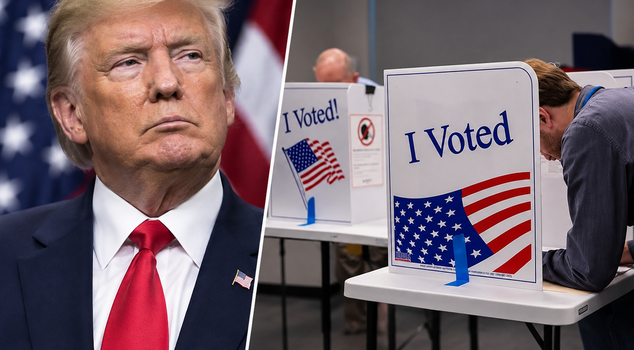
As midterm elections continue in the US, debates over ballot security have also moved to the center of the agenda. The Trump administration assigned approximately 1,000 federal observers across all 50 states, signing off on an unprecedented practice on election day. While the Department of Justice defended the decision on the grounds of ensuring election security, the limits of federal government intervention in state election processes were reopened to debate.
A noteworthy development occurred in the midterm elections in the US that will determine the new structure of Congress. The US Department of Justice assigned approximately 1,000 federal observers in all 50 states for the first time in the country's history to monitor the election process. The Department announced that the practice aims to protect election security and citizens' right to vote, while the Trump administration's expansion of federal oversight in the election process also brought debates. Critics point out that an assignment at this scale carries the risk of interfering with states' election administration.
THE MOST COMPREHENSIVE ELECTION MONITORING OPERATION IN US HISTORY
The US Department of Justice announced that approximately 1,000 federal observers and monitors were assigned within the scope of the midterm elections held on November 3. According to the Department's statement, the operation covers all 50 states of the country for the first time and constitutes the widest election monitoring effort in the agency's history.
The work, carried out under the coordination of the Civil Rights Division, includes Department of Justice personnel as well as officials from US Attorneys' offices and the Office of Personnel Management. The main duty of the observers is to monitor compliance with federal voting rights laws and report possible violations to the relevant units.
OBSERVERS' AUTHORITIES ARE LIMITED
The assignment of federal observers also brought debates over authority in the election process. The Department of Justice reported that observers will monitor compliance with federal voting rights laws and report possible violations encountered by voters.
However, observers do not have the authority to stop voting procedures, prevent voters from voting, or conduct direct investigations at polling places. Local regulations in some states can also restrict federal officials from entering polling centers.
THE TRUMP ADMINISTRATION'S DECISION CREATED CONTROVERSY
The Trump administration defends the broad observer assignment on the grounds of ensuring election security and protecting the right to vote. In contrast, some state officials and voting rights organizations express concern that the heavy presence of federal officials in the field could create pressure on voters and could mean interference in states' election administration.
According to Reuters, some states sent new guidelines to local election officials to determine the limits of federal observers' powers at polling centers. At the center of the debate are the federal government's authority to oversee election security and states' right to manage their own election processes.
EYES ON CONGRESS FOR ELECTION RESULTS
In the US midterm elections, votes are being cast for 435 seats in the House of Representatives and 35 seats in the Senate. The election results will also determine President Donald Trump's political power in Congress during the next two-year term.
According to the Associated Press's assessment, it may take days to determine which party will control Congress due to vote counting in some areas. Especially mail-in ballots and close results are among the factors that may prolong the finalization process.