19.07.2026 07:40
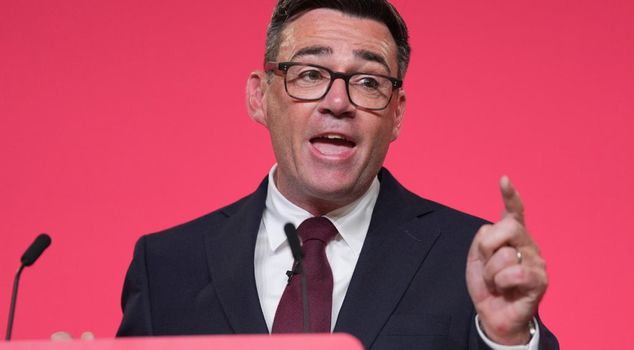
The UK's new Prime Minister, Andy Burnham, apologized to the Palestinian people for the events in Gaza and announced that new sanctions could be imposed on Israel. Burnham's statements drew sharp reactions from leading Jewish organizations in the country, with him being accused of antisemitism. Experts assess that the new prime minister may take cautious steps in foreign policy, taking into account relations with the US and Israel.
Following the resignation of Prime Minister Keir Starmer in the UK, Andy Burnham, who was elected leader of the Labour Party and assumed the role of Prime Minister, sparked debate in the country with his statements regarding Israel and Gaza. Burnham's apology to the Palestinian people for the events in Gaza and his suggestion that new sanctions could be imposed on Israel drew backlash from prominent Jewish organizations in the country.
With the Labour Party coming to power in the UK general elections on July 4, 2024, partial changes in Israel policies had occurred. However, the statements made by Andy Burnham, who took office after Prime Minister Keir Starmer resigned on June 22, led to comments that this shift could be taken even further.
APOLOGIZED TO THE PEOPLE OF GAZA
According to a report in Yeni Şafak, Burnham, in a statement made on July 10, apologized to the Palestinian people, noting that the UK had not adopted a sufficiently tough policy toward Israel despite the events in Gaza. Stating that he would consider new sanctions against Israel upon taking office, Burnham said his country needed to take more decisive steps in this regard.
BACKLASH FROM JEWISH ORGANIZATIONS
Burnham's statements drew the ire of the Board of Deputies of British Jews and the Jewish Leadership Council, two of the largest Jewish organizations in the UK.
In a joint statement, the two organizations accused Burnham of engaging in antisemitic rhetoric and expressed their discomfort with his remarks. The statement argued that it was concerning for political criticism to turn into anti-Jewish hostility.
HOW DID THE UK'S ISRAEL POLICY CHANGE?
In the early period of the war in Gaza, the then-Conservative Party government strongly supported Israel. Under former Prime Minister Rishi Sunak, the UK provided intelligence support to Israel while remaining distant from calls for a ceasefire.
With the Labour Party coming to power in July 2024, changes occurred in London's policies. The Keir Starmer government suspended some arms export licenses, withdrew its objection to the International Criminal Court's arrest warrant for Israeli Prime Minister Benjamin Netanyahu, and imposed sanctions on some Israeli officials in 2025. That same year, the UK's formal recognition of the Palestinian state also stood out as a significant step in foreign policy.
LEADERSHIP CHANGE AFTER LOCAL ELECTIONS
The success achieved by Reform UK in the local elections held on May 7, 2026, triggered leadership debates within the Labour Party. Following the elections, Keir Starmer stepped down from his position, and Andy Burnham was elected as party leader.
In an interview with The Guardian, Burnham argued that there was sufficient evidence of war crimes in Gaza and said the Labour Party's response so far had been insufficient.
The new Prime Minister stated that pressure on the Israeli government should be increased, adding that new sanctions, as well as a potential ban on trade with Israelis operating in occupied Palestinian territories, could be considered.
"PRESSURES COULD BE EFFECTIVE"
Following Burnham's statements, the strong reaction from Jewish organizations prompted comments that political pressure on the new Prime Minister could increase.
Dr. Ziya Meral, a researcher at the London-based think tank European Leadership Network, said Burnham would also have to consider relations with the US after taking office and noted that he might initially act more cautiously in foreign policy.
Meral also stated that the profile of the Foreign Minister appointed by Burnham would be decisive in shaping the UK's policies toward Israel and the US.